
Introduction
The Netherlands, much like the rest of Europe, is grappling with persistent labour shortages. These shortages are particularly acute in the information and communication technology (ICT) sector, which is critical to the country’s digital transition. While traditional levers such as labour migration, reskilling and upskilling the local population remain essential, they fall short in addressing the structural and long-term nature of this challenge. Moreover, current political constraints in addition to demographic trends and housing shortages complicate the prospect of large-scale labour migration as a viable solution. This brief shows that embedding such models in bilateral migration partnerships allows the Netherlands to ease labour market constraints while supporting sustainable job creation in partner countries.
This brief will present three case studies, beginning with Egypt followed by Nigeria and Tunisia. It builds on an initial study that explored the possibilities of nearshoring in Egypt, one of the Netherlands’ partner countries.[3] The chosen countries boast a strong pipeline of ICT professionals as well as a strategic interest in digital cooperation. In combination with time-zone alignment and proficiency in English, they offer Dutch firms a promising basis for partnership. The brief outlines both opportunities and barriers of partnering in nearshoring and explores relevant measures and solutions.
The brief starts by providing an overview of the Dutch context, focusing on current shortages and their significant impact on the ICT sector. It then considers why traditional measures to address these shortages are reaching their limits, creating the need for alternative approaches. In response, nearshoring is introduced as a potential complement to existing strategies. To explore this option further, the brief turns to emerging markets in Africa as valuable partners in meeting this challenge, approaching nearshoring as a mutually beneficial tool that can be used in partnerships between the Netherlands and African countries. The upcoming country-specific briefs will delve deeper into nearshoring opportunities and risks in each country, outlining how the Dutch government can help mitigate those risks.
This collection of briefs is aimed primarily at policymakers, highlighting the role of government in creating an environment in which nearshoring can be scaled up and succeed. The brief posits that, with targeted support, nearshoring can become an important additional strategy that Dutch firms can use to address their skills gaps, demonstrating that nearshoring can both strengthen competitiveness at home while at the same time fostering sustainable development in partner countries, thereby contributing to balanced international partnerships.
This research is also situated in a broader European landscape of migration cooperation. As other EU Member States invest in digital partnerships and talent pathways, it is essential for the Netherlands to develop a strategic approach that aligns with both EU initiatives and national interests.
Methodology
To explore whether and how nearshoring models can be deliberately designed, supported and embedded in bilateral migration partnerships, this study employs a qualitative and exploratory case study design. Data is collected through semi-structured interviews with stakeholders from the public and private sectors in the Netherlands and in-country research missions to the selected countries, which involved semi-structured interviews with government representatives, ICT companies, ICT professionals and graduates.
Dutch labour shortages
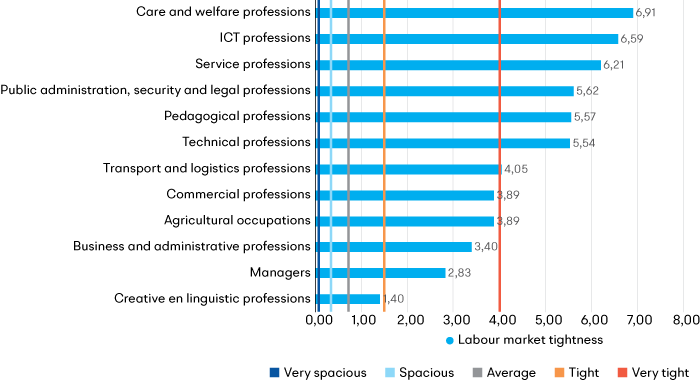
The Netherlands is facing persistent and widespread labour market shortages, an issue felt by two-thirds of Dutch businesses.[5] This challenge is widespread across Europe but especially pressing in the Netherlands as shown in figure 1. To address the shortage of workers, the EU has implemented an action plan[6] aimed at closing the talent gap. This initiative underscores the growing competition for skilled professionals both within and between EU member states, especially in sectors such as healthcare, education and information and communication technology (ICT). The urgency of the issue is further heightened by deep demographic and economic shifts that will continue to shape the availability of talent and skills, intensifying labour shortages across the EU in the years ahead.
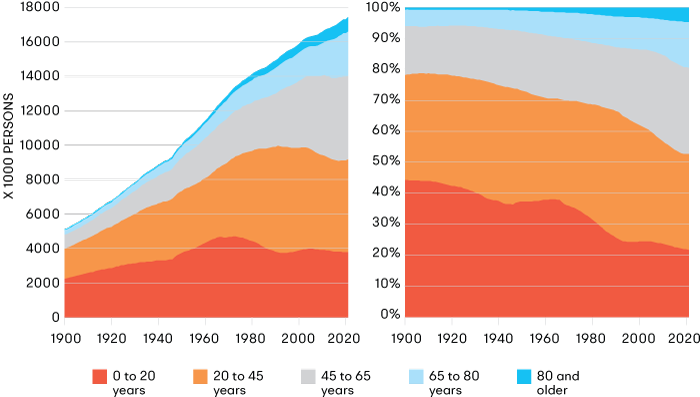
Demographically, the Netherlands is experiencing “double ageing”: not only is the share of people aged 65 and over growing, within that group the share of those aged 80 and over is also rising (see figure 2).[8] This aligns with patterns observed in the EU as whole, projecting a population decline in the EU after 2027.[9] Falling birthrates, longer life expectancy and shifting migration patterns are driving these changes. Consequently, the ratio of the older population to the working-age population is estimated to increase by 5 per cent by 2030,[10] contributing to stagnating productivity.[11]
At the same time, the twin green and digital transitions are fundamentally reshaping the labour market. Automation and digitalisation in the ICT sector are impacting lower-skilled tasks harder, while increasing demand for highly specialist skills.[12] Between 2022 and 2035, more than two-thirds of job openings in the Netherlands are expected to require higher education (HBO or WO, ISCED level 5 or above).[13] The ability to attract and retain highly skilled workers is thus becoming a core determinant of competitiveness and the inability to secure such talent risks widening productivity gaps, affecting the economy as a whole.
While the shortages are felt across the economy, small and medium-sized enterprises (SMEs) are particularly vulnerable in this race for talent. Large multinationals can use strategies such as offering competitive salaries, extensive remuneration packages and relocation support to attract (global) talent.[14] SMEs, on the other hand, often lack resources, capacity and global visibility to compete for highly skilled professionals. Many SMEs are left with little choice but to adjust their production based on the labour force available.[15]
The race for talent in ICT
The ICT sector epitomises these challenges. Digitalisation has embedded ICT roles across virtually every industry, rendering ICT professionals critical beyond the technology sector itself.[16] As a result, shortages in ICT staff create ripple effects across several sectors of the Dutch economic landscape.
Over recent years, ICT occupations have been among the most constrained in the Dutch economy, particularly ICT roles requiring higher or university education.[17] Although there are signs of a slight easing since its peak in 2022, the market remains extremely tight, with demand for experienced ICT specialists continuing to outpace supply.[18] While employers may currently be feeling slight short-term relief when hiring, the long-term outlook remains troubling. With a stagnant domestic workforce, combined with an ageing population, the Netherlands is not on track to meet its target of 1 million ICT professionals by 2030, an essential benchmark for realising its digitalisation goals.[19]
The effects of the rise of artificial intelligence (AI) on these developments are still largely uncertain. While automation is expected to displace some existing jobs, it will also create new roles, reshaping the ICT labour market.[20] The expansion of AI inevitably requires an increased investment in skilled professionals to develop, implement, operate and maintain AI systems. For companies seeking to adopt digital technologies, such as AI, the primary obstacle is the skills gap, with three out of four companies citing lack of experience as their main challenge.[21] This again reflects a persistent mismatch between available skills in the labour market and those required for effective AI implementation. The shortage is most acute at mid to senior levels, with companies highlighting the need for specialised skills and ‘deep tech talent’.[22] Without sufficient investment in developing and attracting this talent, the Netherlands risks falling behind in the race to harness AI, jeopardising its broader digital transformation ambitions.
Limits of traditional levers
Traditional policy levers, though important, have proved insufficient to fully address the structural and persistent nature of the Netherlands’ labour shortages, especially in the ICT sector.
Domestic strategies, such as increasing labour market participation, reskilling and upskilling remain important policy priorities. However, their impact is gradual and, on their own, insufficient to meet labour needs in the ICT sector.[23] The domestic pool of workers who could realistically be reskilled into ICT roles is limited, and raising participation rates has proved to be difficult.[24] Meanwhile, the World Economic Forum projects that new technological developments will lead to an increase in demand for AI-savvy professionals,[25] roles so new that the supply of graduates able to adapt quickly is still too small. This makes it necessary to tap into a broader talent pool, including from other countries.
Recruiting and retaining international talent, both from within and beyond the EU, is recognised as essential for supporting growth in the Dutch tech sector.[26] However, the scalability of labour migration is constrained. A shortage of around 400,000 houses[27] and mounting pressure on public services limit the capacity to accommodate large inflows of foreign workers.[28] Furthermore, political and public support for (labour) migration is limited: 87 per cent of the Dutch population opposes further population growth,[29] which in recent years has been driven primarily by immigration.[30] Beyond these constraints, migration alone cannot fully resolve the demographic challenges of an ageing population as migrant populations will also age. Moreover, increased (labour) migration can exacerbate pressures on housing, infrastructure and integration capacity, fuelling social tensions.[31] Together, these factors restrict the potential of labour migration as a (sole) solution to ICT labour market tightness and the growing demand for specialised skills.
These realities show that traditional levers alone cannot close the talent gap in the Netherlands. Alternative models are needed to give Dutch companies access to global ICT talent while avoiding additional strain on housing, infrastructure or public services.
Nearshoring as an opportunity
Remote hiring from abroad offers a natural starting point, particularly in the Netherlands – a country considered a European frontrunner in remote and hybrid work arrangements.[32] Unsurprisingly, the share of Dutch SMEs reporting that ‘easier procedures for hiring remote workers abroad would make recruiting staff with the required skills easier’ was 30 per cent higher than the EU average.[33]
Extending this model beyond national borders to partner countries through nearshoring is a logical next step. This holds particularly true for the tech sector, where much work can be done remotely.
In this policy brief and the accompanying research, nearshoring refers to meeting a company’s staffing needs by hiring and integrating personnel in another country through remote work arrangements.[34] The emphasis is on integrating staff into company operations, maintaining process control, and building a dedicated individual or team abroad that functions as part of the same organisation but from a different location.
This approach differs from outsourcing, where specific functions are delegated to a third-party provider or individual who operates independently from the company’s internal structure. Business Process Outsourcing is one such model, focused on contracting out a specific defined process. In these models, the external team is not integrated into the company’s own staff and operates with greater autonomy from the core business.
It is important to note that nearshoring is not a new concept but the context in which it operates has changed, strengthening the case for its expansion and scale-up. Eastern Europe, once a dependable remote talent hub, is itself experiencing demographic decline and tighter labour supply.[35] South Asia, another key sourcing region, poses challenges such as significant time-zone differences and intensifying global competition for its talent pool resulting in higher costs. This highlights the need for strategic diversification of global talent sources for the Netherlands.
Challenges in Eastern Europe and South Asia highlight the need for strategic diversification of global talent sources for the Netherlands.
Emerging markets
Against this backdrop, scaling-up nearshoring to include emerging but underutilised countries with large ICT talent pools offers a promising path forward for the Netherlands while at the same time generating benefits for its partner countries.
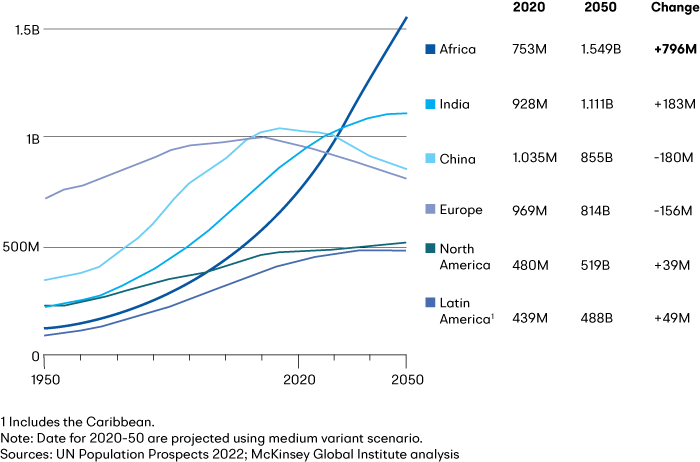
Several African countries illustrate this potential. As the region with the youngest population, it has a rapidly expanding pool of graduates (see figure 3).[37] Yet, local job creation often struggles to keep pace with this demographic growth. Nearshoring offers a way to harness this talent while ensuring that wages earned by professionals are largely spent at home, stimulating local economies, supporting business activity, generating value and contributing to tax revenues. At the same time, such investments foster broader development through knowledge transfer, infrastructure improvements and stronger international linkages.
Through collaboration with Dutch companies, professionals in partner countries gain international work experience and further develop their skills. By enabling talent to work for global companies without leaving their home country, nearshoring provides a sustainable alternative to emigration. It reduces brain drain and helps to address challenges of labour market absorption and unemployment, particularly among young people.[38]
By enabling talent to work for global companies without leaving their home country, nearshoring provides a sustainable alternative to emigration.
Embedding nearshoring in migration partnerships
The Dutch government is increasingly seeking forms of (migration) cooperation with partner countries that emphasise reciprocity and mutual benefit. Yet, currently, legal migration pathways to the Netherlands remain constrained by housing shortages, limited infrastructure and the current political climate. This makes it difficult to expand, or even sustain, cooperation through such channels. Against this backdrop, nearshoring offers an additional pathway to operationalise these ambitions without relying solely on legal migration.
By embedding nearshoring into migration partnerships, the Netherlands can pursue two goals: making cooperation tangible and generating goodwill. Tangibility comes through labour market linkages – addressing domestic labour shortages while improving labour market conditions in partner countries through concrete employment opportunities,[39] including for returning migrants. This business investment can spill over beyond the immediate sector, stimulating wide economic activity and supporting broader development. For such arrangements to be sustainable, they need to rest on strong protection of workers’ rights, with secondary employment conditions of a quality comparable to Dutch standards and adapted to local and personal needs. Framed in this way, partnerships become genuine investments that strengthen rights, empower communities, and preserve partner countries’ agency, balancing the interests of both sides, strengthening cooperation and fostering goodwill.
This approach aligns with the Netherlands government’s February 2025 policy memorandum, which reframed development aid as an instrument to advance three national interests: trade, security and migration.[40] Within the migration pillar, priorities include strengthening hosting capacity in the region, working with origin and transit countries on migration management, and developing new innovative solutions.[41] Nearshoring supports these objectives by advancing job creation and migration cooperation as parallel priorities, underlining that within development policy, trade and migration are interlinked and cannot and should not be pursued in isolation.
This underscores the need for migration cooperation to move beyond broad economic development and prioritise the creation of specific, high-quality employment opportunities through targeted investments. As the Netherlands Scientific Council for Government Policy (WRR) has argued, “migration should be approached as a development tool, and migration cooperation must be embedded within broader investment in job creation.”[42] The Migration Policy Institute (MPI) further warns that “fragmented policymaking weakens and can even reverse the effectiveness of migration in addressing skills shortages,”[43] emphasising the importance of linking the policy domains of trade and migration in a coherent strategy and approach.
With targeted government support, addressed further below in the partner country sections, nearshoring can become a strategic economic tool within Dutch bilateral migration partnerships. It would allow the Netherlands to effectively harness Africa’s demographic dividend while strengthening its own competitiveness, embedding trade and migration in a mutually reinforcing framework. This requires structured cooperation abroad and at home, as our research shows there is still work to be done domestically to build trust and engage businesses in nearshoring to migration partner countries.
About the authors
Robin Neumann is a Researcher at Clingendael’s EU & Global Affairs Unit. Her research work focuses on external strategic partnerships and migration policy. Robin is also the Personal Assistant to the Director where she provides strategic support.
Anouk Pronk is a Research Fellow at Clingendael’s EU & Global Affairs Unit. Her research work focuses on migration, including broad migration partnerships.
Eilyaa Abdin is a Research Assistant at the Clingendael’s EU and Global Affairs Unit, where she works on Dutch migration partnerships and nearshoring.
Monika Sie Dhian Ho is Director of the Clingendael Institute and vice-president of the State Committee on Demographic Developments.
Photo credits
© iStock