


Faces of Clingendael: Chiara Schrader
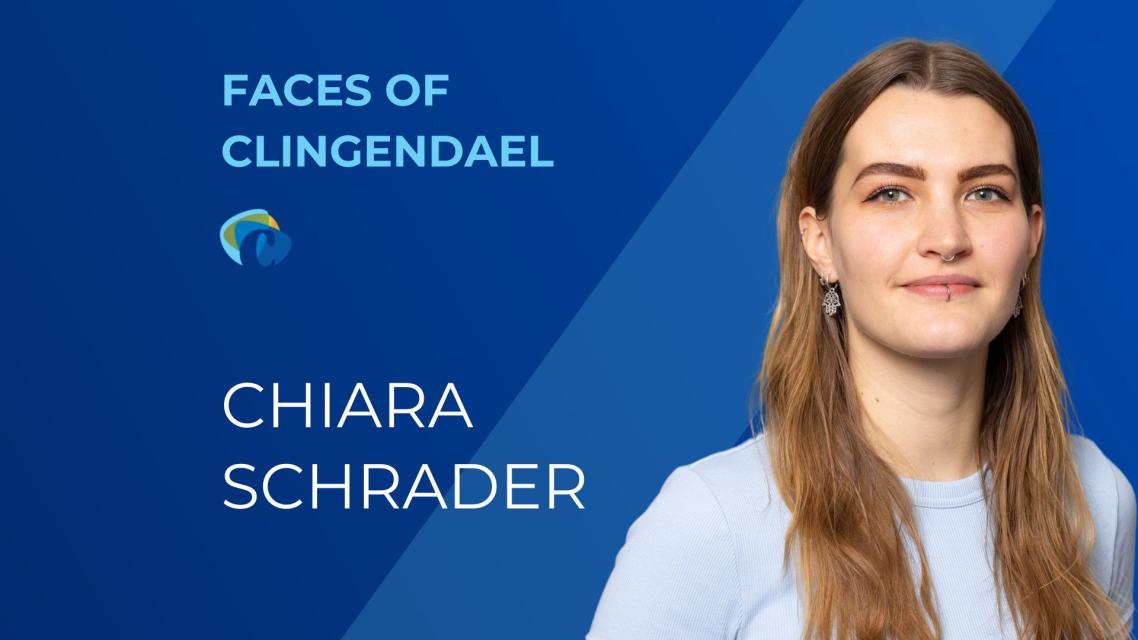
Who are our hard-working researchers and trainers and what drives them? You might have seen them in the media, explaining geopolitical topics or putting them on the agenda. We offer you a peek behind the scenes in our series Faces of Clingendael. Today with Researcher Chiara Schrader.
I didn’t have the means to do a lot of internships or build an extensive resume in this field, but I worked hard in every side job
What is your role?
I am Researcher in the Strategic Foresight & Intelligence programme, which is part of the Security Unit of Clingendael. Our team monitors broad developments, trends and uncertainties within international security. More specifically, we analyse how various scenarios could influence the Dutch or European national security.
What motivates you to do this job?
I think mostly curiosity and a drive to explore. From a young age, I’ve wanted to play a positive role in the world. My dad was a police officer and as a kid I was always proud of him for contributing to our national security. I think that’s where my desire to do something for the security of my community started to grow
What are your interests outside of work?
I enjoy reading - like most researchers here, I probably spend half my free time devouring books. Lately, I am trying to read more fiction, but preferably with a subtle historical perspective. I’m also learning Spanish because I’m interested in the Latin-American and Caribbean region. Besides that, I play field hockey and recently started ballet classes, because that has been a bit of a childhood dream!
What advice would you give to people aspiring to work in your field?
Always work hard, in every single job that you do. I used to feel like I was at a disadvantage since I didn’t have the means to do a lot of internships or build an extensive resume in this field. However, I’ve always did my best in the jobs I held alongside my studies, like in hospitality. During interviews, I could demonstrate my ability to grow fast through the better positions I earned and I’m confident that if my former employers were contacted, they’d speak highly of me.
Paula Stuurman, our previous guest is this series, left this question for you: since you are part of the strategic foresight programme, what do you see as the biggest risk and the biggest challenge of this work?
It's important to understand that we're not trying to predict the future but rather envision various scenarios that could unfold. This approach allows policymakers to focus on a preferred scenario and at the same time find ways to reduce the negative effects of undesirable scenarios. The greatest risk is that we don’t realise how much influence we do have to create a positive impact on our future. The biggest challenge is being creative enough to imagine these very diverse futures.