


Faces of Clingendael: Christopher Houtkamp
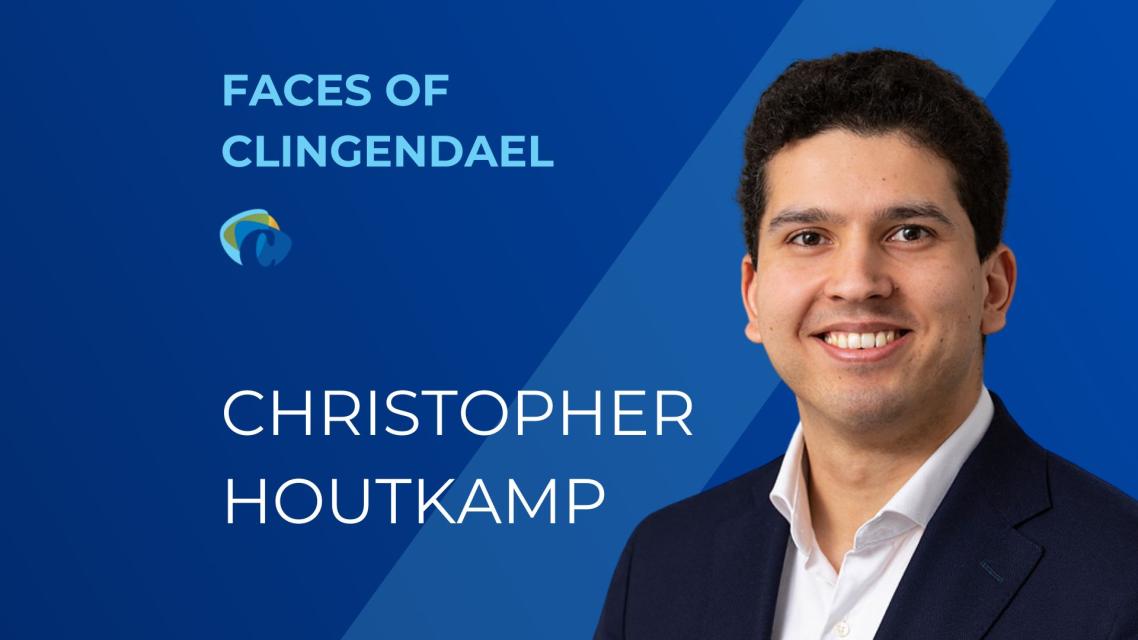
Who are our hard-working researchers and trainers and what drives them? You might have seen them in the media, explaining geopolitical topics or putting them on the agenda. We offer you a peek behind the scenes in our series Faces of Clingendael. Today with Senior Research Fellow Christopher Houtkamp.
'Originally, I am much more of a language-oriented person, but when I started my research master, I wanted to learn statistics.'
What is your role?
I am a senior researcher at the security unit and lead at the resilience programme. This means that I deal primarily with societal fractures and organised crime. I also deal with the topic of foreign involvement in the broadest sense, with a particular focus on diaspora policy and disinformation. And as head-analyst of the Foreign Barometer, I conduct survey research.
What motivates you to do this job?
Like many colleagues, I want to inform the public debate as much as possible through objective research. Personally, I also have a great craving for knowledge in many areas. I knew early on in my student days that I wanted to be a researcher, but I also seriously considered staying in academia. For me, a think tank is the perfect middle ground: you encounter many people from the policy field and you do a lot of research.
Do you have interests outside of work?
I go to the gym regularly, enjoy reading, and watching movies or TV shows. Every two weeks I have piano lessons, as I have always loved classical music. So I enjoy going to music performances, but recently started to explore ballet as well. Additionally, I have begun taking online Cantonese lessons. It is my partner's native language, and I want to be able to engage myself more in her culture and communicate with her family. Cantonese is an incredibly difficult language, especially since it’s tonal - depending on the tone, a word can mean something completely different.
What advice would you give to people aspiring to work in your field?
When it comes to networking, make sure you start reaching out in time. Contact that researcher who is in a place where you see yourself in five years. Just try to arrange a coffee chat or an online meeting. Besides that, and choosing an area of study you genuinely like, it can also be helpful to have a good command of a particular research method.
Have you focused on quantitative research from the start?
Originally, I am much more of a language-oriented person, but when I started my research master, I wanted to learn statistics. I think there is much added value in numbers and along the way it became increasingly interesting to me.
In the previous episode of this series, your colleague from Clingendael Research Vera Kranenburg asked: Which Barometer result surprised you the most?
In our last Barometer on transatlantic relations, I was surprised at how much our relationship with the U.S. and the robustness of their democracy caused concern for the Dutch public. Even slightly more so among young people. It does not surprise me because that view is unrealistic, it is certainly not, but because the Netherlands has traditionally been one of the most transatlantic European countries. The Dutch may be more concerned with geopolitical matters than some might think.
See the Barometer Results here: Separation Anxiety: how the Dutch see the United States, and the implications for Dutch foreign policy
