


Faces of Clingendael: Paula Stuurman
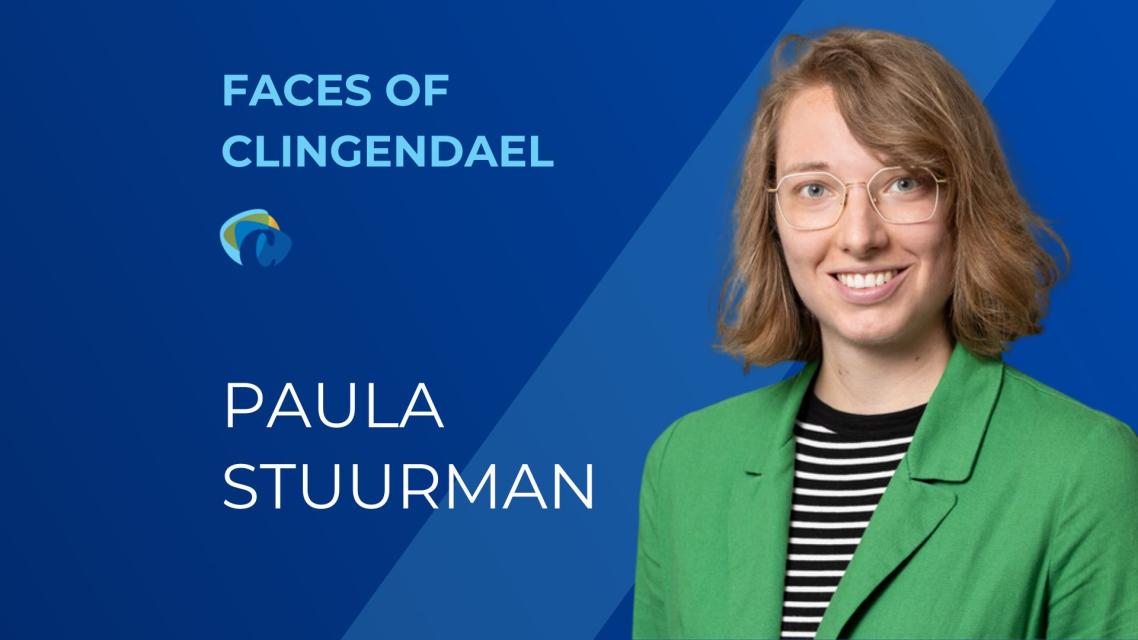
Who are our hard-working researchers and trainers and what drives them? You might have seen them in the media, explaining geopolitical topics or putting them on the agenda. We offer you a peek behind the scenes in our series Faces of Clingendael. Today with Academy Fellow Paula Stuurman.
'My interest in Middle Eastern literature during high-school, especially old-Persian, drew me into this field'
What is your role?
I am an Academy Fellow working in the fields of security and the diplomacy. I coordinate programmes for diplomats from the Middle East and North Africa as well as for the security domain, for instance national police and the defence sector. I also provide and develop trainings, primarily focused on crisis communication, management and diplomatic writing.
What motivates you to do this job?
What I like about the job is that it’s very diverse. I am practicing diplomacy while given the opportunity to broaden and deepen my expertise and to stay on top of current events. Besides that, the networking element of our work is very exciting: it is a privilege to meet so many people from all over the world. I always learn a great deal from them. The job keeps challenging me!
Where did your interest in the MENA region come from?
My interest in Middle Eastern literature during high-school, especially old-Persian, drew me into this field. Studies allowed me to exlore political science, anthropology, literature, and languages. I studied in Morocco for a year, which improved my Arabic and now benefits my current job. Ultimately, I chose international law and humanitarian action over a literary career. I wanted to make a societal impact.
Do you have interests outside of work?
I do various sports, including modern and classical ballet. While I am not necessarily very good, I enjoy it a lot! I also play the violin and I love to hike. Mostly in the Netherlands, but sometimes I hike a trail abroad.
What advice would you give to people aspiring to work in your field?
Don’t choose too strategically. Do something you really like. If you are intrinsically motivated, you will get energy from that, which is quite important in a highly competitive professional field. Also, having a topical or area specialization will give direction to your professional development.
Researcher Christopher Houtkamp, our previous guest is this series, left this question for you: ‘What are important character traits you need to have in order to deal with sensitivities at work?'
Being able to listen, without saying too much yourself, is very important. If you have an opinion, it is sometimes good to keep it to yourself. Offering other people the space to express themselves can be very helpful, but it also demands a certain intuition to decide when to share your own assessment and how to handle sensitivities strategically. It is always a good idea to ask for and offer feedback from and to your peers, of course without sharing confidential information!
