An unjust and unwinnable war in Gaza: a military planner’s perspective
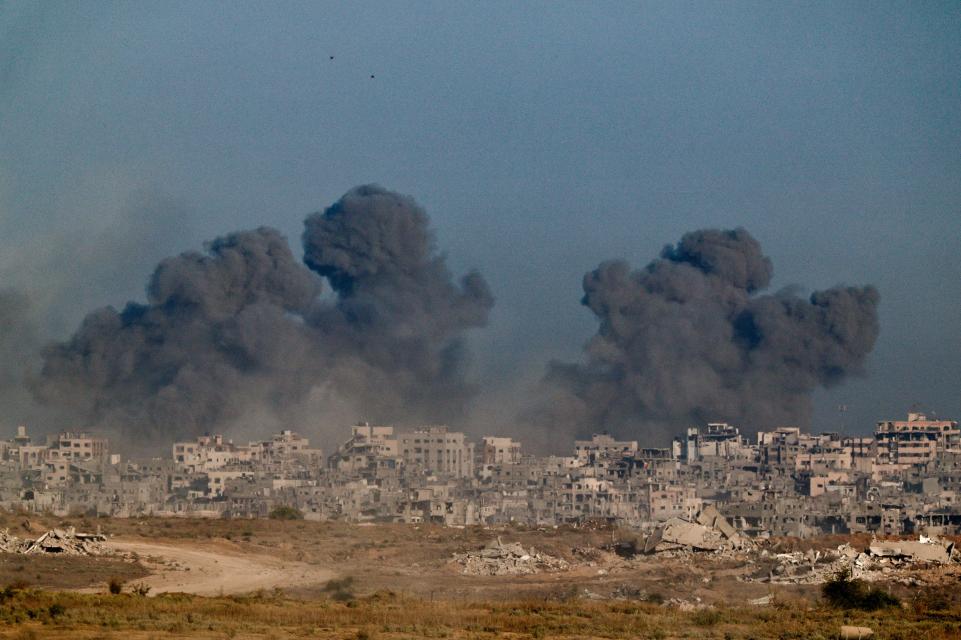
An unjust and unwinnable war in Gaza: a military planner’s perspective
The Commission of Inquiry on the Occupied Palestinian Territory, just recently stated that Israel and all countries should fulfil their obligations under international law “to end the genocide” and punish those responsible. However, this conclusion is not yet universally accepted by all UN organs.
And as the war continues and the humanitarian disaster unfolds in Gaza, Western democracies debate whether Netanyahu’s war, is a just war. This is peculiar, because it is becoming increasingly apparent that this war is neither just nor winnable.
Israel invoked UN-charter 51 right to self-defence after the horrific 7 October 2023 attack, in which 1,200 people were slaughtered in the large-scale, coordinated Hamas terrorist assault.
Although some countries debate whether a non-state actor can trigger the UN Charter, the invasion of Afghanistan following the 9/11 attacks already created a precedent. Hence, countries like America, Great-Brittain and the Netherlands strongly reaffirmed Israel’s right to self-defence.
Also, John Rawl’s Just War Theory states that any just war requires a proper cause, or jus ad bellum, such as preventing genocide, or stopping humanitarian catastrophe, or in this case self-defence. In short, there is certainly merit to the claim that Israel had a just cause to go to war.
But that is only the starting point.
From a military planner’s perspective, the means and the methods, should amount to the desired effect or political, strategic ends. Any application of force is bound by ethical considerations. As such, a just war must also meet the standards of conduct in war (jus in bello) and the transition to peace (jus post bellum). On both counts, the war in Gaza fails.
Jus in bello
Determining just conduct in this conflict (jus in bello) is complicated by information operations. Hospitals, for instance, are protected under the Geneva Conventions and are not a legitimate military target. Israel claims that Hamas’s use of civilian hospitals for military purposes, justifies treating them as valid military targets. To support this claim, Israel launched an extensive media campaign, including organized press tours. Hamas of course will contradict this, ensuring that truth remains in the eye of the beholder.
However, if we move beyond assessing individual incidents and examine Israel’s broader military strategy from a planner’s perspective, three major problems quickly emerge.
First, Israels stated goal of the war is ill-defined. Destroying Hamas’s governing and military capabilities, lacks a measurable end-state for military planners to work with. When is Hamas “defeated”? Are people providing passive support a terrorist? What application of force is justifiable to reach undefined objectives? Without an objectifiable end, war becomes endless and eventually will result in excessive use of force.
Second, conventional warfare is poorly suited against irregular forces. In the last decades, western military powers have developed a more nuanced approach to warfare: counterinsurgency. Counterinsurgency still has a highly debatable track record with early success in Malaysia and failures in Iraq and Afghanistan, but at least it includes an objective of winning hearts and minds, while surgically targeting high value targets. Israel’s current conventional, highly destructive warfare, unfortunately does not seek to address root causes of the conflict, nor reducing collateral damage to a minimum.
Third, other and less intrusive approaches to resolving the conflict have not been implemented. Partially perhaps, because Israel is unwilling to address the real root causes of the conflict from a Palestinian perspective. These include, amongst others, the circumstances and consequences associated with how the Israeli state was established, or the existence of illegal Israeli settlements in Palestine.
Jus post bellum
The third principle, jus post bellum, demands that the envisioned war will produce a better peace, as compared to when the war would not have taken place. Yet the devastation, more than 60,000 killed, flattened cities, famine, betrays this requirement. Rebuilding Gaza as a “resort” is not a credible reconstruction plan, especially as some voices within the Government of Israel openly call for Palestinians’ relocation or elimination.
An unwinnable war
The war is not only unjust, but also unwinnable. While the 2023 Hamas terror attacks were horrendous in which Hamas also recklessly gambled with Palestinian lives, Israel’s current military approach alienates itself from any possibility of a strategic victory.
Israel misidentifies tactical and operational wins with a strategic victory. A military planner should assess that Israel’s ill-defined, strategic objective cannot be achieved but will instead fuel further international isolation and perpetuating hatred.
More cynically, the absence of a clear end-state can also serve political purposes. A never-ending war shields Netanyahu from accountability for intelligence failures, hostage inaction and other internal problems. Vaguely stated strategic objectives may even conceal a more sinister objective, as the 1948 Genocide Convention requires an intent to destroy. Therefore, senior military planners should never accept vague mission objectives.
The targeted killing of Hamas negotiators in Qatar, the internationally acclaimed mediator in the Israel-Palestine conflict, also indicates that Israel is not interested in an inclusive peace. Although EU’s political pressure is unlikely to change this, it is still important to take a collective stance, as the silent bystander facilitates a perpetuation on the demise of the international legal order. History will judge, and this applies to both our actions and in-actions.
Erik Stijnman is a military researcher at the Security Unit, Clingendael Institute