


Mental Health and Psychosocial Support in Clingendael Peace Negotiations Programmes
In a world where, according to the United Nations, more than two billion people — one quarter of the global population — live in areas affected by conflict, the human costs of war are immeasurable. Beyond the visible devastation of loss of life, forced displacement, destroyed livelihoods, and depleted resources, conflict inflicts deep and lasting psychological wounds that can persist long after the violence subsides.
These invisible wounds can perpetuate cycles of violence across generations. The World Health Organization estimates that one in five people living in conflict-affected settings is likely to develop a mental health condition such as depression, anxiety, or post-traumatic stress disorder. When left unaddressed, these conditions can hinder the prospects for peaceful, resilient, and flourishing societies. Recognising this, the Clingendael Peace Negotiations Programme (CPNP) has begun integrating mental health and psychosocial support into its training curricula. By acknowledging the mental and emotional dimensions of peacebuilding, CPNP aims to equip mediators, facilitators, and peace practitioners with the awareness and tools needed to engage with more resilience and thus more sustainably in their work.
As one training participant noted:
“The focus on the mental health dimensions of mediation is extremely valuable given the evolving demands of peacebuilding work.”
Within the international community, there is increasing recognition that the mental, emotional, and psychosocial impacts of war are not peripheral but central to processes of recovery and reconciliation. As a result, Mental Health and Psychosocial Support has emerged as a critical component of humanitarian response, conflict prevention, and peacebuilding strategies. The term ‘Mental Health and Psychosocial Support’ (MHPSS) refers to a multi-layered system of care encompassing basic psychological support, community and family-based networks, and specialized mental health interventions. Addressing the psychological consequences of violence, such as trauma, grief, fear, and loss of trust, is now understood as essential to restoring social fabric and enabling sustainable peace.
In the field of peace mediation, this growing awareness has led to mounting calls for greater coordination, dedicated resources, and the systematic integration of MHPSS principles into mediation processes. Practitioners increasingly recognize that violence undermines both social cohesion and individuals’ capacity for dialogue and collaboration—abilities necessary for achieving lasting peace. Unresolved psychological wounds can perpetuate cycles of violence and obstruct dialogue, whereas psychosocial resilience fosters empathy, patience, and constructive engagement among conflicting parties.
At the same time, mediators and mediation support organizations are becoming more vocal about the emotional toll their work entails. Exposure to traumatic narratives, prolonged stress, and the burden of neutrality can affect mediators’ own mental well-being, highlighting the need for education, peer support structures, and professional guidance to sustain their psychological health. Despite this growing recognition, however, gaps persist in translating awareness into practical and actionable knowledge and initiatives.
Integrating MHPSS in negotiation and mediation trainings
CPNP has responded to the increasing demand for tailored training on MHPSS by integrating dedicated sessions on the topic into its mediation and negotiation courses. In July 2025, Clingendael piloted an MHPSS session as part of its inaugural Advanced Negotiation and Mediation training for women mediators who had previously completed training with the institute, marking an important step in embedding psychosocial awareness and resilience into its curriculum.
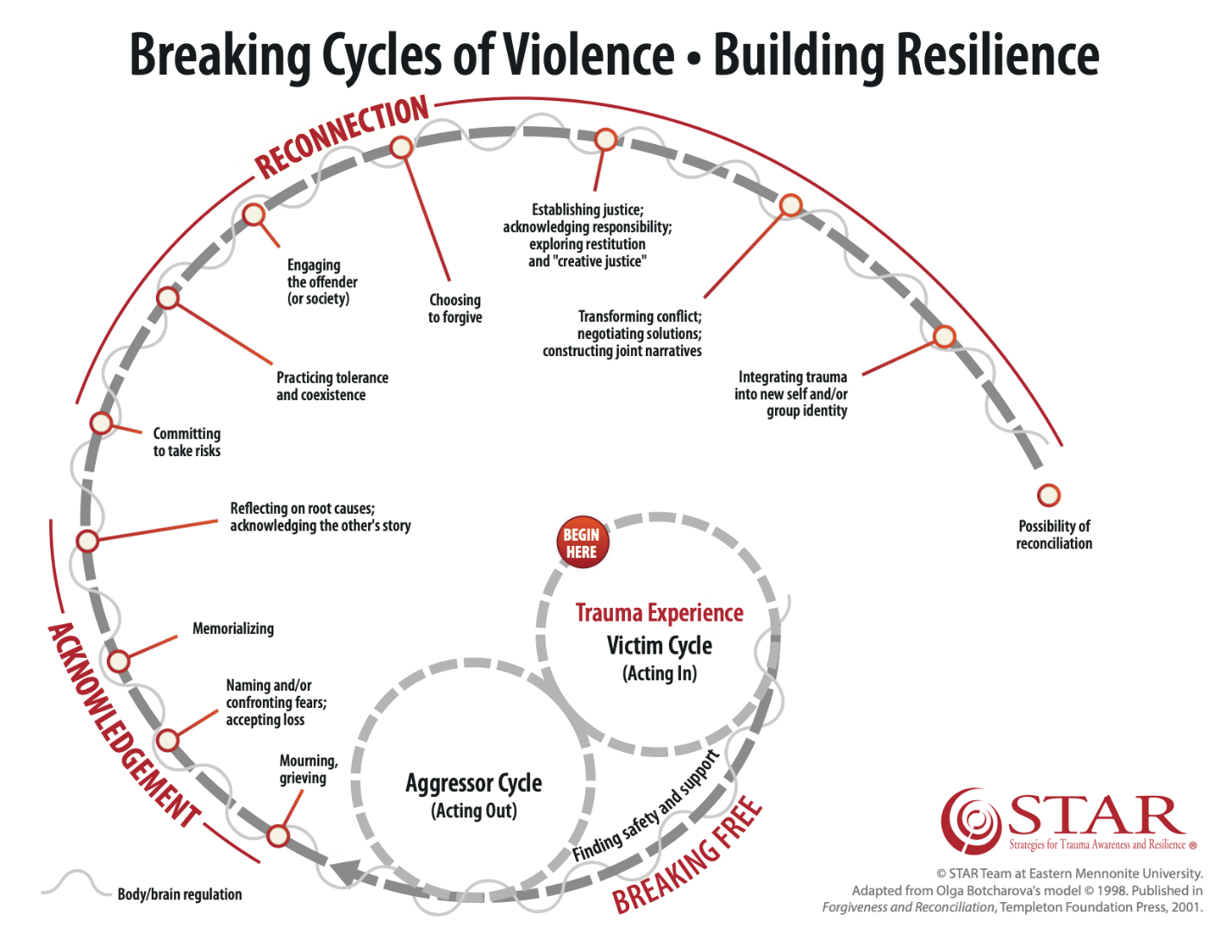
This two-week programme brought together experienced women mediators from around the world who often work in volatile and emotionally charged environments. The training aimed to deepen their expertise, strengthen professional networks, and exchange insights across generations. During the MHPSS sessions, participants explored psychological first aid for oneself and others, self-justice, different forms of trauma such as PTSD and moral injury, the impact of trauma on trust and relationships, and the various stages of trauma healing. The STAR (Strategies for Trauma Awareness and Resilience) cycle, developed by the Center for Justice and Peacebuilding at Eastern Mennonite University, was used to illustrate how trauma can perpetuate cycles of violence if left unaddressed, and how intentional healing and resilience-building can interrupt these cycles.
Participants expressed strong appreciation for the inclusion of MHPSS in the programme. One participant described it as “a great and important session,” while another noted that it was “an excellent session—rarely discussed, so it was valuable to include.” A third participant remarked that “the lesson introduced new perspectives I had not previously considered.”
The inclusion of the MHPSS sessions marked Clingendael Academy’s first step in integrating mental health and psychosocial well-being into its trainings, equipping participants with tools to sustain resilience and effectiveness in their work. Building on the success of this initiative, CPNP is further expanding its MHPSS training modules as a critical component of its curriculum. In tandem, CPNP has introduced a new focus on the ethics of peacemaking – an area that supports practitioners in navigating moral dilemmas and mitigating the risk of moral injury. These sessions are designed to strengthen the personal resilience of professionals operating in high-pressure environments, where emotional demands and exposure to trauma are common. By combining theoretical foundations with practical tools, participants are equipped to recognise and address psychosocial stressors. These efforts reflect Clingendael Academy's broader understanding that sustainable peace not only requires political and technical solutions but also robust emotional and psychological capacity-building.
Clingendael Academy
Would you like to know more about the Clingendael Academy and the Clingendael Peace Negotiations Programme? Reach out to [email protected] and have a look at this page.

