Everything on the Table - Three part series on US security and trade policy under Trump 2.0
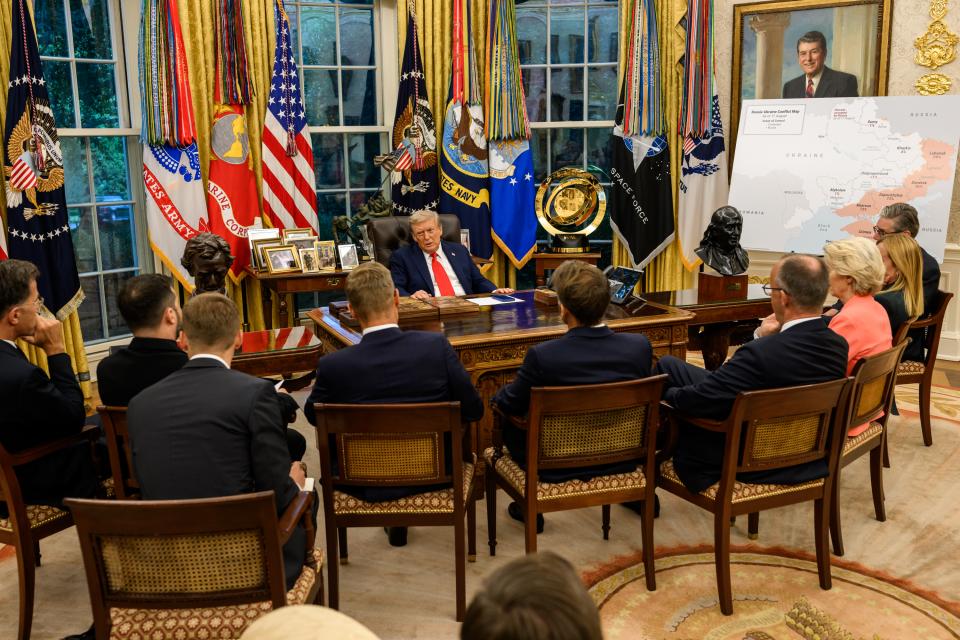
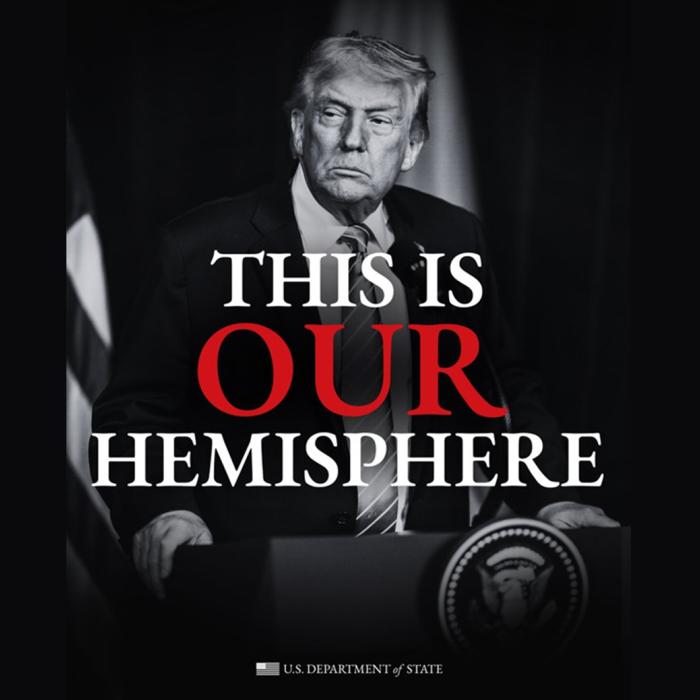
- The second Trump administration is reshaping both US trade and security policy around leverage, deals, and political conditionality
- Tariffs and security guarantees are increasingly used as tools of geopolitical pressure and coercion rather than instruments of cooperation
- For Europe, this translates into increased uncertainty about the transatlantic relationship and rising exposure to transactional bargaining across trade, technology, and defense
The second Trump administration marks a profound shift in how the United States approaches both international trade and its alliances. Instead of prioritizing multilateral rules and long-standing partnerships shaped around common values, US policy is increasingly informed by a transactional logic: concrete concessions in exchange for market access, security commitments, or political alignment.
This series of policy briefs examines the implications for Europe. Together, they show how tariffs have become a central tool of US statecraft, how trade policy is now intertwined with geopolitical objectives, and how America’s commitment to the transatlantic alliance is increasingly transactional. Security, economic cooperation, and regulatory disputes are no longer treated as separate domains, but are linked as part of a series of bargains.
For European policymakers, this raises urgent questions about the credibility of deterrence and the strength of resilience. What does it mean when US security guarantees become conditional? How durable is a trade order built on bilateral deals instead of shared rules? And how should Europe respond when pressure is applied simultaneously through defence, trade, and technology policy?
The series includes contributions by Peter E. Harrell (Georgetown Institute for International Economic Law), Max Bergmann (Center for Strategic and International Studies), Rem Korteweg (Clingendael Institute), and Diederick van Wijk (Clingendael Institute), providing complementary perspectives on US trade and security policy under Trump 2.0.
- No Longer Ironclad: America and the Transatlantic Alliance
This policy brief analyses what Trump’s foreign policy means for European security. The United States increasingly treats alliances less as strategic assets and more as bargaining instruments. This heightens uncertainty about US security guarantees, weakens deterrence, and increases the risk of tensions within the NATO alliance, at a time when Europe is pushed to assume greater responsibility for its own defence. - Making Sense of Trump’s Trade Policy
This policy brief shows that Trump’s seemingly chaotic trade policy follows a coherent logic. Tariffs are used as a source of revenue, as an instrument for reindustrialisation, and as a tool of geopolitical leverage, particularly vis-à-vis China. Rather than seeking to uphold a rules-based trading order, Washington is moving toward a system of bilateral deals focused on tangible outcomes such as investment commitments and reshoring manufacturing. - Coercive Extractivism: The mechanics of Trump’s transactional approach to Europe
This policy brief examines the operational logic behind Trump’s transactional approach to foreign policy. The United States is increasingly willing to use its economic and military power to extract political and economic concessions, including from allies. By explicitly linking security, trade, and regulation, this approach creates a pattern of continuous negotiation in which dependencies become sources of leverage.
Read together, these briefs offer an overview of an emerging US approach to trade and security that challenges certainties in the transatlantic relationship and the global economic order.