


Clingendael peace negotiations programme celebrates ten years of partnership with ECOWAS
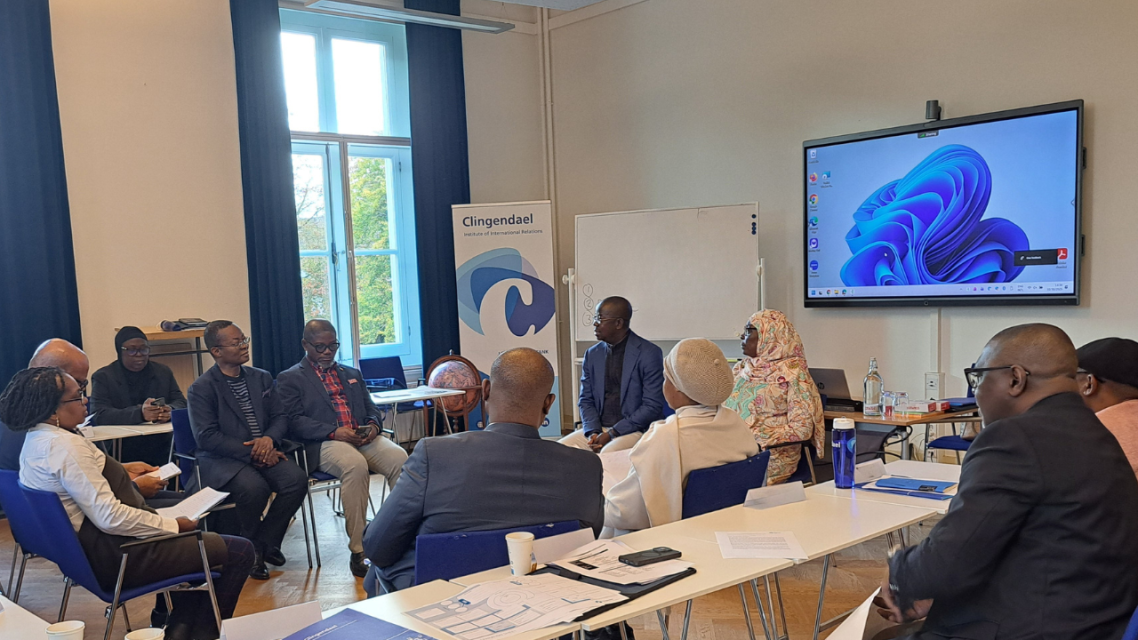
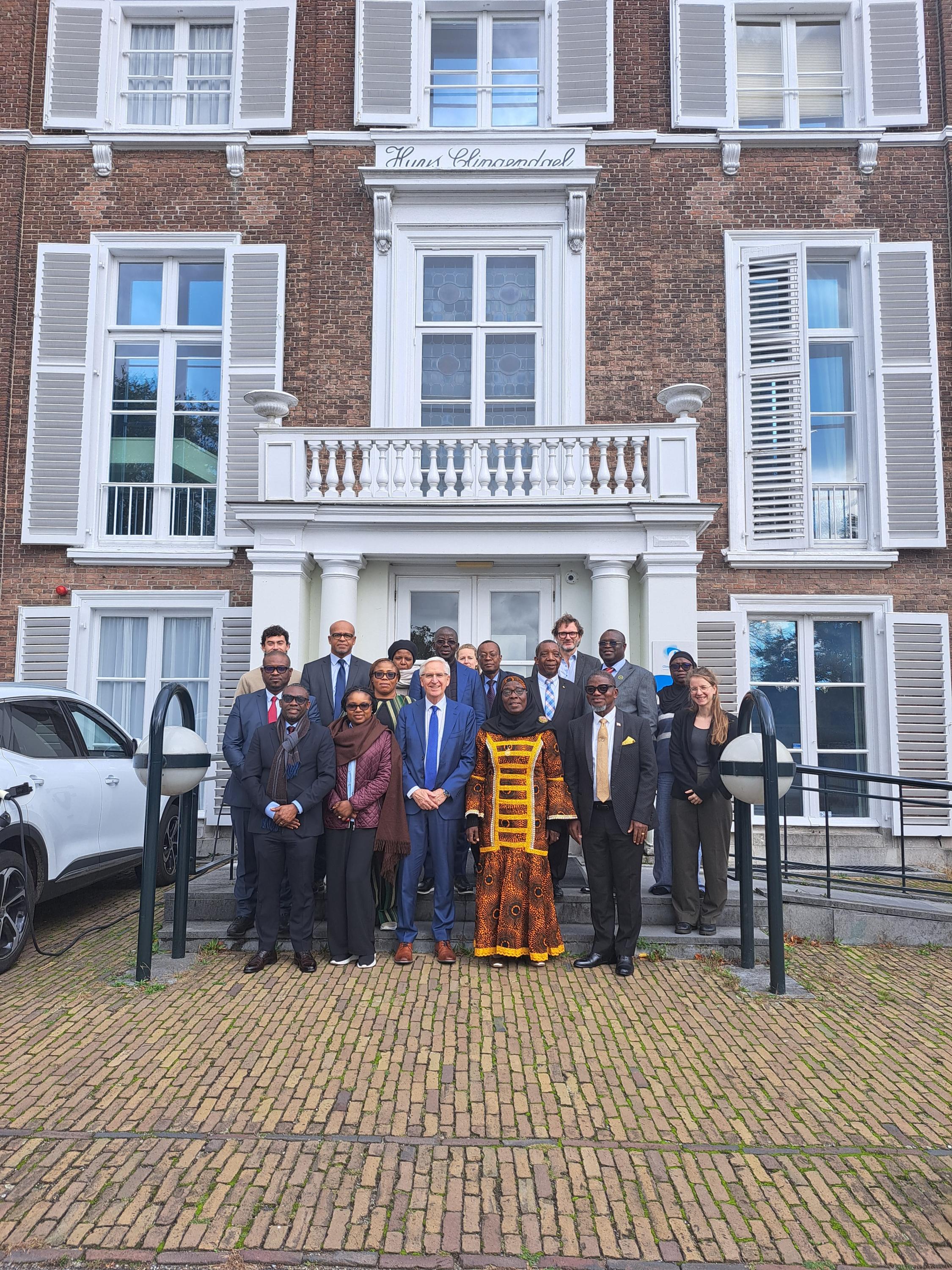
Clingendael and the Economic Community of West African States (ECOWAS) recently celebrated the achievement of ten years of partnership. The Clingendael Peace Negotiations Programme looks back on a decade of trusted and fruitful institutional collaboration with ECOWAS.
Clingendael is unique among our partners because of its ability to co-design the programme, drawing on lessons from previous trainings and experiences
ECOWAS participants in negotiation and mediation trainings
The collaboration between Clingendael and ECOWAS began in 2015, when Dr. Brown Odigie, Programme Officer for Mediation at the ECOWAS Commission, approached Clingendael to support ECOWAS’s newly established Mediation Facilitation Division. Since then, Clingendael has welcomed more than 220 ECOWAS representatives, including ECOWAS Special Representatives and Resident Representatives, members of the Mediation and Security Council at the ambassadorial level, and members of the ECOWAS Council of the Wise. Each participant is carefully selected by ECOWAS and Clingendael for their individual expertise and contributions to peace and stability in the region. The diverse mix creates an environment where experience meets fresh perspectives, enabling participants to learn from one another while further developing skills applicable to their professional roles and engagement in mandated ECOWAS mediation missions.
Impact across the region
The trainings organized over the past decade have had tangible and lasting impact on regional mediation capacity. Over the years, alumni have played key roles in mediation efforts across the region, including in Guinea-Bissau, Liberia, Guinea, and Mali. Mediation teams are often intentionally composed largely of Clingendael alumni, selected for their expertise, shared experience and common negotiation and mediation language.
The impact of these programmes extends beyond formal mediation initiatives. For many participants, the training serves as a space for self-reflection and growth. Skills acquired are often not only applied in mediation but also in participants’ broader professional and community roles. One notable example is a traditional leader, who described how Clingendael’s negotiation and stakeholder management tools helped him navigate complex local dynamics in his community leadership. Others have gone on to work in early warning and conflict prevention initiatives, sensitive community dialogue processes, or represent ECOWAS in other multilateral institutions such as the United Nations, the African Union, and the European Union.
The curriculum
Many participants enter the programme with a strong desire to mediate more effectively, facing common obstacles whilst operating in politically sensitive environments. Clingendael’s training responds directly to these challenges. Participants learn to structure negotiations, understand underlying interests, communicate across divides, and design processes that reduce tensions rather than inflame them.
A key strength of the programme lies in its co-design approach. According to Dr. Odigie, “Clingendael is unique among our partners because of its ability to co-design the programme, drawing on lessons from previous trainings and experiences.” Scenario-based learning places participants in realistic simulations that mirror political crises and deadlocks in the region. Peer-to-peer interactions further allow participants to create strong networks, reinforcing a community of practice that has proven durable over the long term. And specific sessions are co-facilitated by ECOWAS officials, ensuring the training remains firmly grounded in the institutional and operational context of ECOWAS.
Through this approach, Clingendael ensures its programmes remain relevant and responsive to the region’s evolving geopolitical context. According to Dr. Odigie, participants often refer to simulations first practiced at Clingendael years earlier when designing their real-world mediation strategies. This illustrates how closely the exercises mirror the realities of peace processes on the ground. Clingendael training materials, such as manuals and frameworks, have been brought along on missions to guide and support ongoing efforts.
Looking forward
Over the course of ten years, the programme has evolved from a single training course into a longstanding partnership. This sustained approach has, according to Dr. Odigie, helped create a vibrant community of practice in West Africa: Clingendael alumni remain connected across countries and years, exchanging experiences, discussing challenges, and supporting one another through shared knowledge and networks. Looking forward, the Clingendael Peace Negotiations Programme remains committed to this tailored approach and longstanding partnership between Clingendael and ECOWAS.
Clingendael Academy
Would you like to know how the Clingendael Academy could help your organisation? Reach out to [email protected] and have a look at our peace negotiations programme.