


Bitter taste in the protest bliss
The inchoate reality of global demonstrations
At some moment in recent weeks, you may have been forgiven for thinking that old-style politics, with its staid parties and morbid tendencies, might just as well be flushed away. Somewhere in the pan-millennial encounter of Greek agora, Parisian radicals and Facebook friendships lies the future, restless and free.
Every single one of the world’s various protests has at its heart a noble truth. The Arab world proved it is better to risk life and limb than suffer indefinitely under the glare of an aged dictator, above all when the ruler in question justifies his repressive whims with a line in vanity published philosophy. Does anyone care to recite now the wisdom of Muammar Gaddafi’s Great Green Charter of Human Rights in the Age of the Masses, except in jest?
And the same goes elsewhere. The indignant of Spain have every right to be upset at extremes of youth unemployment and political corruption. The Western European and North American adaptation of Spain’s protests, known as Occupy, was justifiably aimed against the excesses of the very rich: a report from Oxfam shows that the world’s richest one per cent have increased their incomes by 60 per cent over the past 20 years, generating booms in such ethereal asset markets as central London property, contemporary art or luxury yachting.
In Turkey, the protesters rose against an intrusive, puritanical government that is pushing hard on the Islamic gas pedal. In Brazil, they turned against an absurdly expensive World Cup — three times the cost of Germany’s 2006 tournament according to former football star and current congressman, Romário, and managed by the Swiss pluto — gerontocracy of FIFA. Every bit of each rally has justice and reason at its core. Yet the undoubted merits of every case, which the Brazilian President Dilma Rousseff has recognized in her own country, should not be taken to mean that the real political consequences of the new age of masses will be as praiseworthy.
For within the radical bliss of freed urban spaces, there invariably lurks the mundane drudge of socio-political reality. Regrettably, shows of popular will in complex,globalized societiesgenerally translate over time into new movements and regimes that show little or nothing of their brilliant dawns.
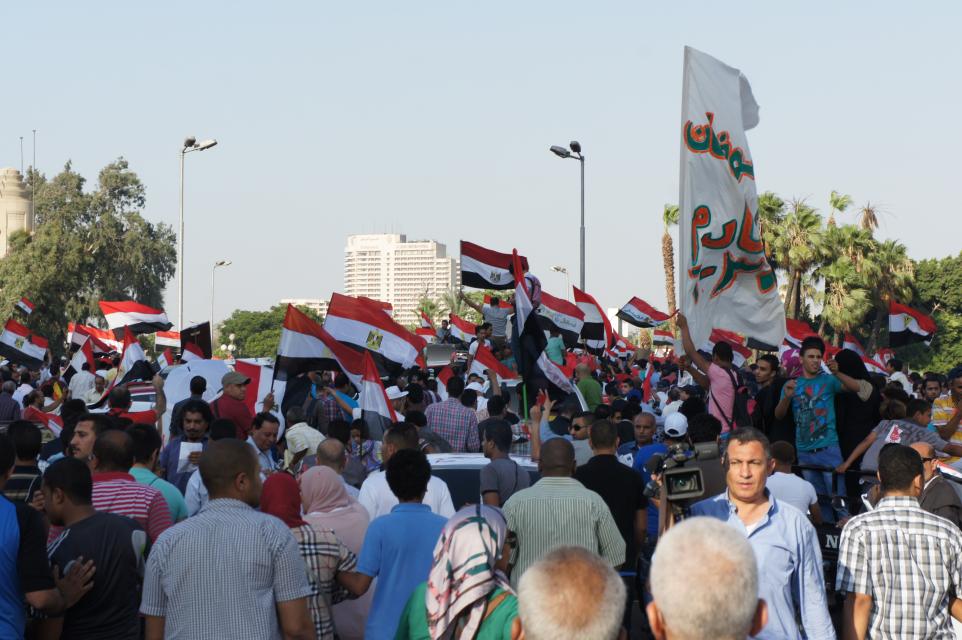
Egypt, which this weekend embarked on a fresh round of disturbances, offers one incontrovertible example. Here the path of degradation has followed an established course: bystanders watching and clapping as the young militants hurled Hosni Mubarak from his throne later proceeded to fill all spaces of power. Like a simulacrum of Iran in 1979, liberal youth is now pitted against an intransigent government led by the Muslim Brotherhood, the only national organization able to fill the shoes of the departing dictator.
There the future seems bleak. Street-level improvisation and twitter flash mobs now run the risk of pulling the country in a full circle, back to the moment of rebel inception. “If we have massive bloodshed, we could easily fall under dictatorship again, whether military or religious,” one opposition deputy, Ehab al-kharrat, told The Financial Times.
Outside the Arab world, potential debacle for the protesters owes less to the cunning of free-loaders, and more to the enigmas of the movements themselves. In almost all cases, the participants cannot be located on the traditional spectrum of organized politics: the Turkish uprising has nothing to do with a shop-worn cabal of secular parties, while according to one opinion poll, 84 percent of Brazil’s protesters said they had no party preference at all. “People in each city are demanding something,” explained Natalia Viana, head of the Brazilian independent press group Agéncia Pública. “It’s a network movement, not like any other. That’s why nobody can say what’s going to happen.”
If nobody can say what will happen, then it may be worth asking what larger political objectives could eventually be built on this web of local causes and liberationist impulses. Judging by past European experience, it pays to be cautious. Michel Houellebecq, the terror of French letters, has evacuated his spleen telling readers how the generation of 1968 became a bloc of self-loving narcissists. He may take the contempt too far, but one thing is sure: those who enjoyed the radical permissiveness ofthe 1960s went on to make their careers, above all in Britain and the US, under maximal economic liberalization and rising inequality.
Neither in Turkey nor Brazil
Neither in Turkey nor Brazil is it obvious that the protesters are representative of their societies; both drew primarily on the urban middle classes, and whereas in Brazil the causes are common to all citizens, the rebel Turks showed antagonism to the pious majority. Beneath the veneer of counter-culture there is a seed of something like class conflict, with future scraps looming over veiled ladies or handouts to the poor.
Yet even more notable is a profoundly agnostic view of the state. Unlike in Europe, Brazilian and Turkish electorates have yoked themselves to strong, interventionist governments. These have brought high growth and ever higher expectations, but a decade of the same has also spawned a certain lassitude towards the overflows of national will — its big laws, mega-stadia, giant airports and messianic spew. Edward Snowden’s revelations on the meddling techno-state are a perfect counterpoint in the English-speaking world.
If Britain is a guide to the future, then an intriguing article by John Harris in The Guardian shows what could lie in store. British youth is now more individualistic and market-oriented than all previous generations: only 20 percent of those under 33 believe the creation of the welfare state was one of Britain’s proudest achievements, against 70 percent for those born before 1945.
Streets of empowered young citizens clamouring for something better are the closest politics gets to euphoria; they are a wonder, a tribute to public intelligence and new media. But I, for one, harbour a doubt that the digital commons, whatever it will mean, can on its own protect a border, shelter the poor, mitigate the avarice of bankers, or do any of the jobs of the state.