China’s ‘World-Class Military’ in the Indo-Pacific
Scenarios for 2049 and their Consequences for European Security
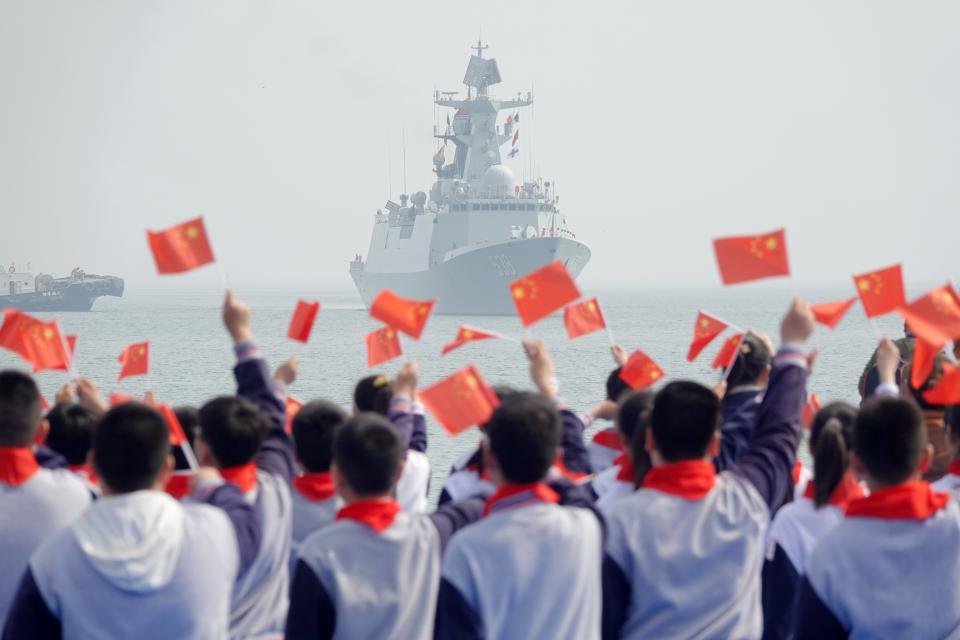
- China has been rapidly modernising and reforming its armed forces with the aim of building a “world-class military” by 2049
- The Chinese military’s primary aims are to facilitate China’s “reunification” with Taiwan and to project power in the Western Pacific
- The report outlines three possible paths for China achieving its geopolitical and military ambitions in the Indo-Pacific by 2049
- All three scenarios have major implications for European security, requiring Europe to raise the costs of conflict in the Indo-Pacific and reduce its vulnerabilities to growing Chinese influence
China’s resurgence has been one of the defining geopolitical developments of our time. By the centenary of the founding of the People’s Republic of China (PRC) in 2049, the Chinese Communist Party (CCP) wants to have completed its “great rejuvenation of the Chinese nation”. But what, exactly, does Beijing mean by this statement? And what will this entail for the Netherlands, the European Union, and NATO by 2049.
The report is divided into four chapters. The first chapter will analyse the meaning of the 2049 centenary for the geopolitical strategy of the Chinese leadership. The second chapter will zoom in on China’s ambitions to build a “world-class military” by 2049 as part of its national rejuvenation strategy, the extent to which it has succeeded so far, and the areas where it still aims to catch up with the United States in particular. Chapter three will present three scenarios as to how China could possibly attain its military goals in the Indo-Pacific by 2049. Finally, the fourth chapter will reflect on the implications of these scenarios for European security and will present policy recommendations for what Europe could do to prepare for and navigate those scenarios.
The scenarios are:
1. Forgone Formose: “Peaceful reunification” through a blockade of Taiwan.
2. Thucydides Trapped: A U.S.-China war of attrition along the First Island Chain.
3. Sino-centric Seas: China’s emerging primacy amid U.S. retrenchment.
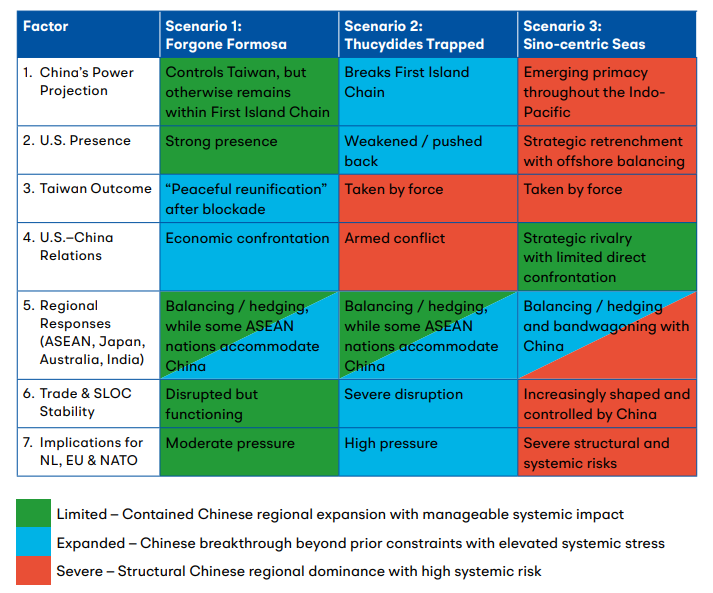
All three scenarios contain profound implications for European security, exposing it to political, geo-economic, and military pressure from both China and the U.S., maritime vulnerabilities, the potential weakening of the U.S. commitment to European security, as well as Chinese cyber and hybrid threats in retaliation for European support for the United States in case of a conflict with China.
Europe should contribute to stability in the Indo-Pacific by raising the costs of conflict and lowering the risks posed by expanding Chinese influence in the region by reducing its own vulnerabilities, through:
• Building a credible and usable European geo-economic deterrent.
• Strengthening existing and new partnerships in the Indo-Pacific region.
• Strengthening economic and supply chain resilience.
• Prioritising maritime security, chokepoint resilience, and access diversification.
• Rebuilding European security to reduce dependence on the United States, enabling Europe to take more responsibility for its own defence, thereby closing any perceived window of opportunity for Russian aggression during periods of U.S. strategic distraction while also making Europe less vulnerable to coercive leverage by the United States.