


Clingendael co-organises first Next Gen Security Conference in The Hague
Two-day conference brings together established experts and emerging voices
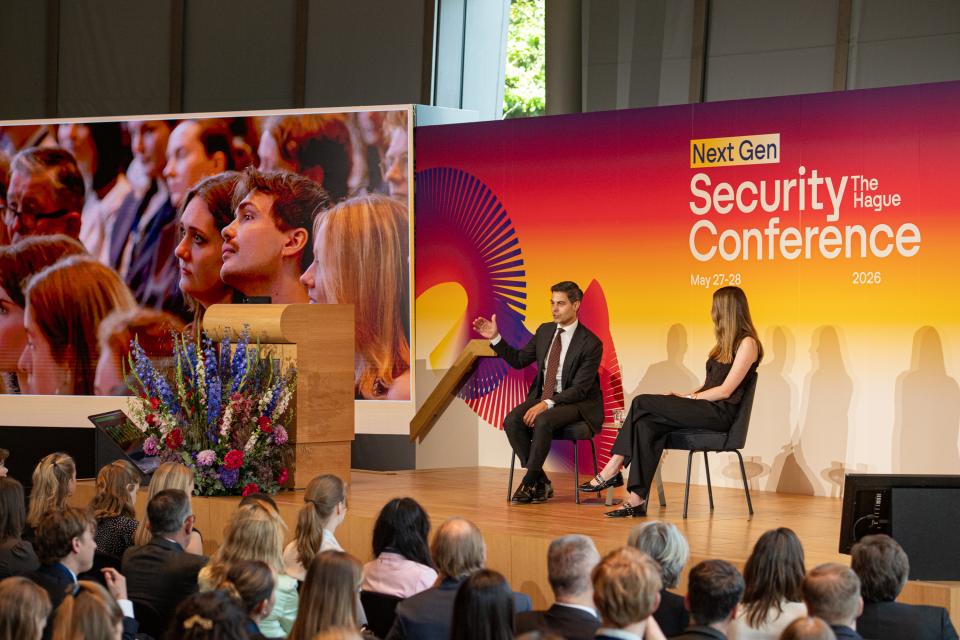
On 27 and 28 May 2026, the Clingendael Institute co-organised the inaugural edition of the Next Gen: Security Conference The Hague, together with the Netherlands Atlantic Association and Leiden University Campus The Hague. The conference brought together over 70 international speakers, both established security experts alongside emerging researchers, practitioners, and policymakers, for two days of substantive debate on the future of international security and defence.
The conference was built on a deliberate proposition: that the conversation about the future of international security should include those who will have to live with its consequences. That intergenerational balance was reflected throughout the programme, the composition of the audience, and the choice of venues. The first day of the conference took place at the Peace Palace, and the second day was hosted at Leiden University Campus The Hague; moving from the institutions that have shaped our security for decades to a place where new knowledge, technology, and leadership emerge. The conference is an extension of Clingendael's commitment to connecting policy analysis with public debate and the development of future talent in international relations and security.
In the media
Although the Next Gen: Security Conference was an invitation-only event, several podcasts recorded on-site offer the broader public an inside look at the discussions. Links to these recordings are shared below, some contain English spoken interviews; the rest is mostly in Dutch.
- Wereldupdate-podcast #20: 'Waarom zijn het altijd oude mannen die oorlogen beginnen?'
- Sven op 1 met Jaap de Hoop Scheffer
- Veldheren #149: In gesprek met staatssecretaris van Defensie Derk Boswijk
- Groene Amsterdammer Buitenlandse Zaken: Het (verloren) overlevingsinstinct van Europa en Poetins oorlog tegen de geschiedenis met Jack Watling
- Hahn in Europa: Voormalig Witte Huis-adviseur Nate Swanson: 'Europa en Amerika kijken op dezelfde manier naar Iran, het enige verschil is dat Trump oorlog wilde'
- De Toestand in de Wereld #12: ON TOUR over Europa
- Kan relatietherapie onze beschadigde band met Amerika redden? | MEGA XL - 29 mei 2026 | BNR Nieuwsradio
- Waarom Europa? met Jaap de Hoop Scheffer
- Hoe voorkomt Derk Boswijk verspilling van defensiemiljarden? – BNR In het defensief
Recap day one
Dutch Prime Minister Rob Jetten opened the conference at the Peace Palace with his first major international foreign policy speech. He called on Europe to take greater responsibility for its own security, arguing that strengthening European defence cooperation is not a move away from the United States but a step toward a more equal and sustainable alliance. He closed by addressing the younger generation in the room directly, urging them to take the lead.
The programme on day one covered a wide range of themes: European resilience and deterrence, multilateralism under pressure, and the economics of European defence. A dedicated session on Ukraine, "From Support to Commitment: Europe's Role after Peace in Ukraine", featured Bob Deen, Head of the Security Unit at Clingendael, alongside Ambassador Andriy Kostin of Ukraine, Yana Rudenko of DroneAid Collective, and former US Ambassador to NATO Ivo Daalder, moderated by journalist and historian Anna Reid. A focused conversation on Iran, the Strait of Hormuz, and Western strategic choices brought together Nate Swanson, former Director for Iran at the US National Security Council, and Jack Watling of RUSI, in a session moderated by Monika Sie Dhian Ho, General Director of Clingendael.
Recap day two
The second day moved to Leiden University Campus The Hague, where parallel sessions covered the relationship between universities and defence, public opinion and political leadership in a new security environment, defence innovation, digital sovereignty, climate policy, and press freedom as a security issue. The second day was opened by Niels Drost, Research Fellow at Clingendael's Security Unit and Russia and Eastern Europe Centre, and Distinguished Professor Beatrice de Graaf of Utrecht University. Together, they examined how, across more than 500 speeches, Vladimir Putin has gradually opened a front against the West and its values. Koen Aartsma of Clingendael's Strategic Foresight and Intelligence Programme later contributed to a fireside chat on hindsight and foresight, and whether we have the ability to predict the future in international relations. Clingendael researcher Gijs Verbossen facilitated a serious game on middle powers and security scenarios, offering participants a hands-on analytical experience alongside the panel discussions.
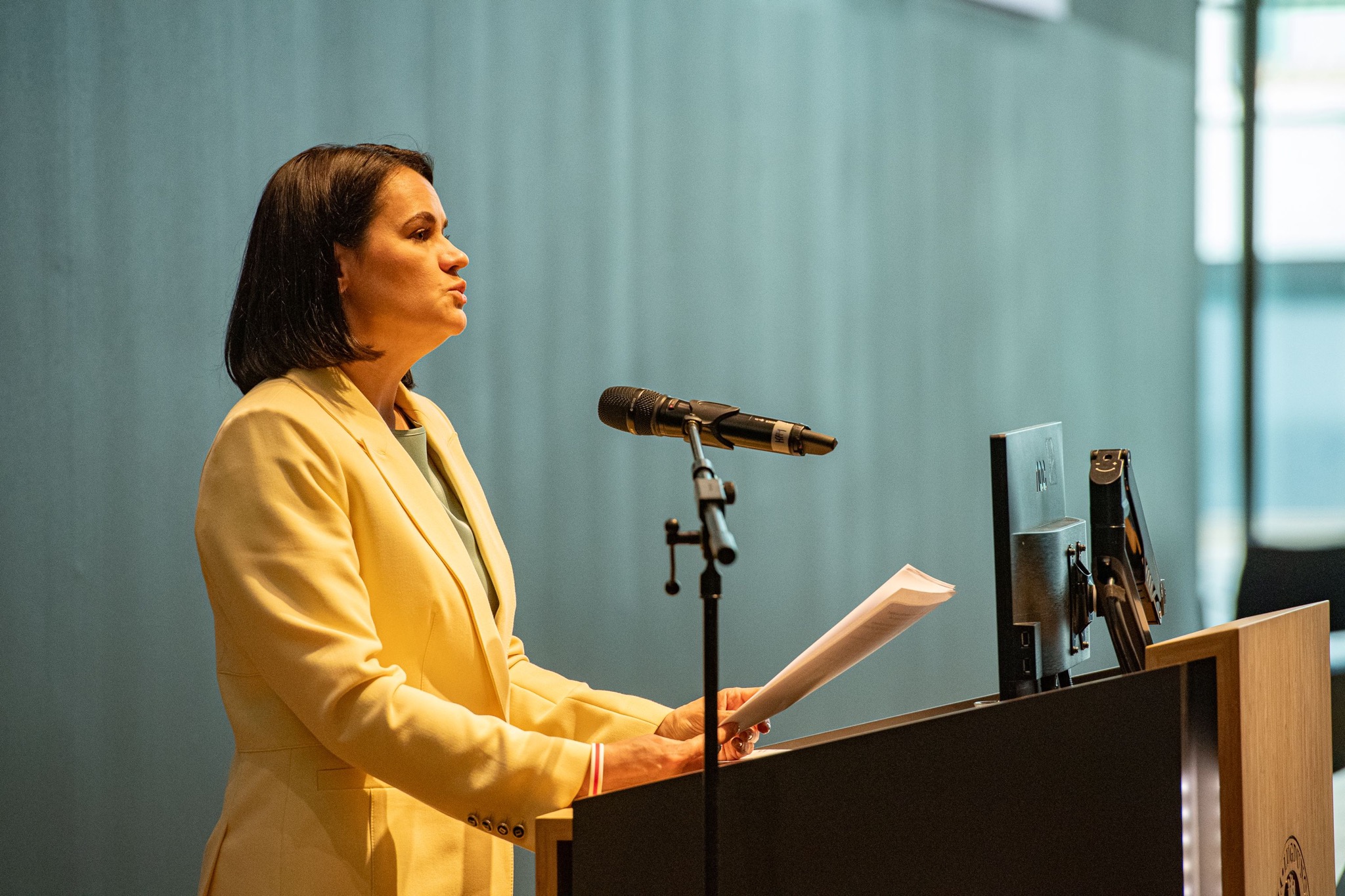
The conference closed with a keynote by Sviatlana Tsikhanouskaya, Head of the United Transitional Cabinet of Belarus, who underlined the connection between Europe's security and Belarus's future, and called on democracies to stand firm against authoritarian regimes.
Thought Leaders Dinner
The conference was preceded by a private Thought Leaders Dinner, hosted by the organising parties with the support of the Municipality of The Hague. Jaap de Hoop Scheffer, Chairman of the Supervisory Board of the Clingendael Institute and Chairman of the Advisory Board of the conference, opened the dinner with a scenesetter which can be read here. The keynote of the evening was delivered by Benedikt Franke, Vice-Chair and CEO of the Munich Security Conference. The dinner was hosted by Frederiek Bax, Strategic Outreach and Partnerships Fellow at Clingendael, and Lara Hendriks of the Netherlands Atlantic Association, who together served as masters of ceremony — embodying the next gen character of the conference in the role itself.
The Next Gen: Security Conference The Hague was designed as the Netherlands first own security conference, positioning the Netherlands as a gathering place for fresh thinking on international security. The conference is guided by an Advisory Board chaired by former NATO Secretary General Jaap de Hoop Scheffer, and including Kajsa Ollongren, Caroline de Gruyter, Ivo Daalder, Frank Heemskerk, and Lotte van den Boom. It was organised with support from the Ministry of Defence, the Ministry of Foreign Affairs, and the Municipality of The Hague.

