Clingendael Academy alumni Stefan on the Intercultural Communication course
Stefan Kruszel participated in the course on Intercultural Communication at Clingendael. We are curious to find out how he has been able to put his newly acquired knowledge into practice.

“I used to default to Dutch directness, but now I can adapt and see the value in other communication styles”
Can you tell something about your tasks at Nuffic?
I work as a policy advisor focusing on international student mobility and programmes that support international cooperation between universities. In this role, I work closely with international partner organisations.
What were the challenges for you regarding intercultural communication?
I noticed that even neighbouring countries have very different communication styles. Misunderstandings mainly occurred when partners from different national backgrounds were working together.
What triggered you to look for a course on this topic?
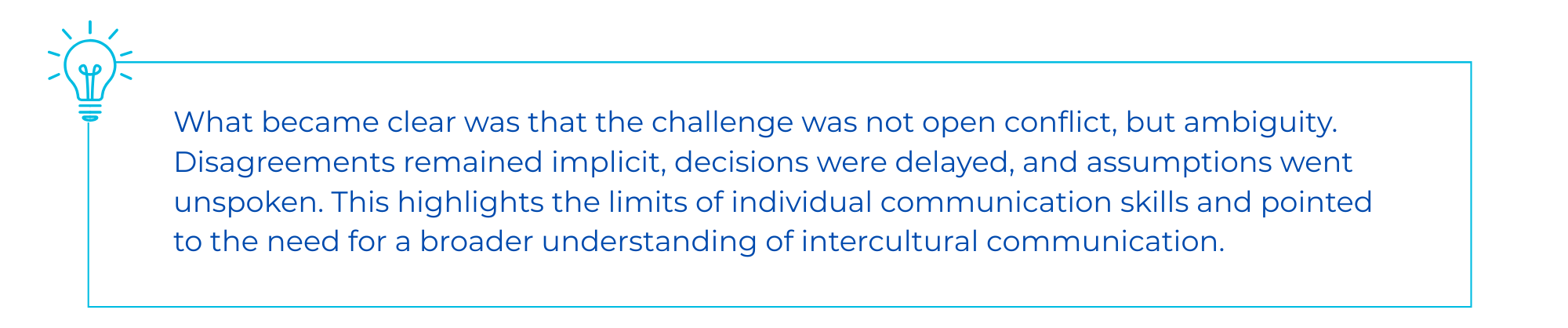
A concrete turning point was the organisation of an international event with French and German partners where we kept running into obstacles. For example, in the Netherlands, we are very direct while the French partners were not always fully explicit about their opinions. Progress repeatedly stalled, particularly around financial agreements. That situation made it clear: I needed a better understanding of intercultural communication.
What are the most important lessons learned from the course?
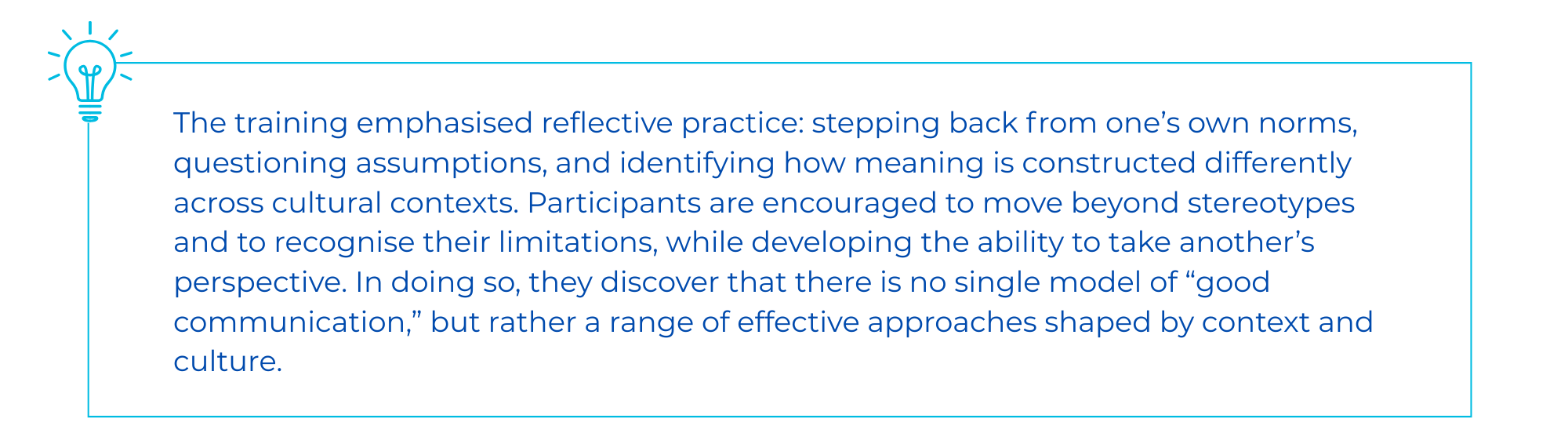
The course gave me an overview of different communication styles across the world. But most importantly, it helped me develop a stronger sensitivity to recognise when different communication styles are at play. I realised how often I defaulted to Dutch directness. The course helped me to learn how to adapt my communication style where needed and to see the benefits of different communication styles.
In hindsight, what would you have done differently in the situation at work?
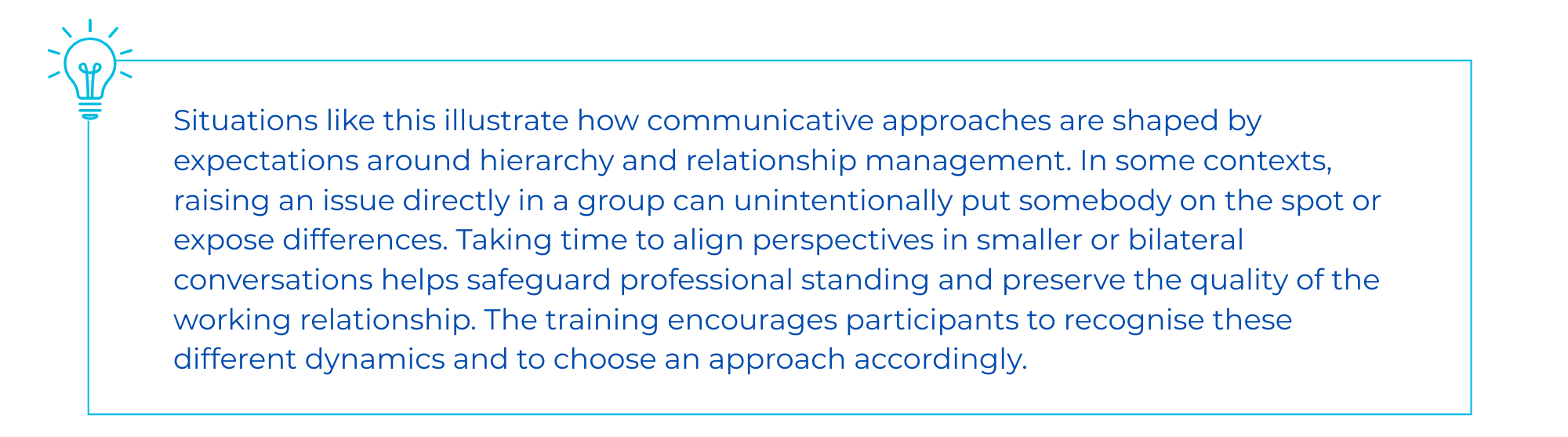
In retrospect, it would have been better to address our French partner in a one-on-one conversation rather than in a group setting. In the French context, hierarchy often plays a bigger role, and input often needs to be aligned internally before being shared. I would now approach this more step-by-step, first discussing matters separately and gradually working towards a joint agreement.
How do you apply these skills in your day-to-day work?
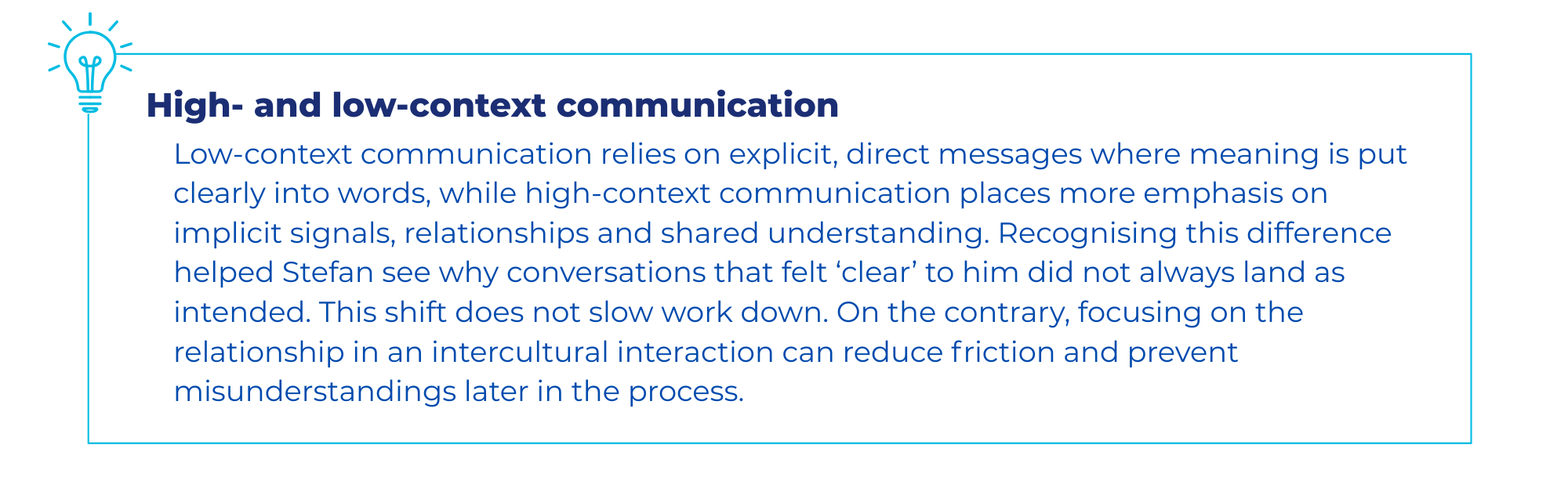
In Dutch low‑context communication, we focus on clarity and efficiency. British communication tends to be more indirect. In the past, I would try to move to the point quickly or try to reach agreements as soon as possible. Now, I invest more in building relationships first. I also switch more consciously between communication styles over time.
Who would you recommend this course to?
Our society is becoming increasingly international and intercultural, so it would benefit everyone. At the same time, the course is particularly useful for professionals who regularly navigate complex stakeholder environments.
Does this Course on Intercultural Communication sound interesting to you?
There are still spots available for the next Intercultural Communication course. Explore the programme on the training page. Interested in a tailor-made training for your team? Download the online brochure. Do you have questions, doubts or would you first like to meet the trainers? Get in touch with the coordinators. Find the contact details on the training page.