From Trainees to Trainers - Humanitarian Negotiators Step Into Their Trainer Roles
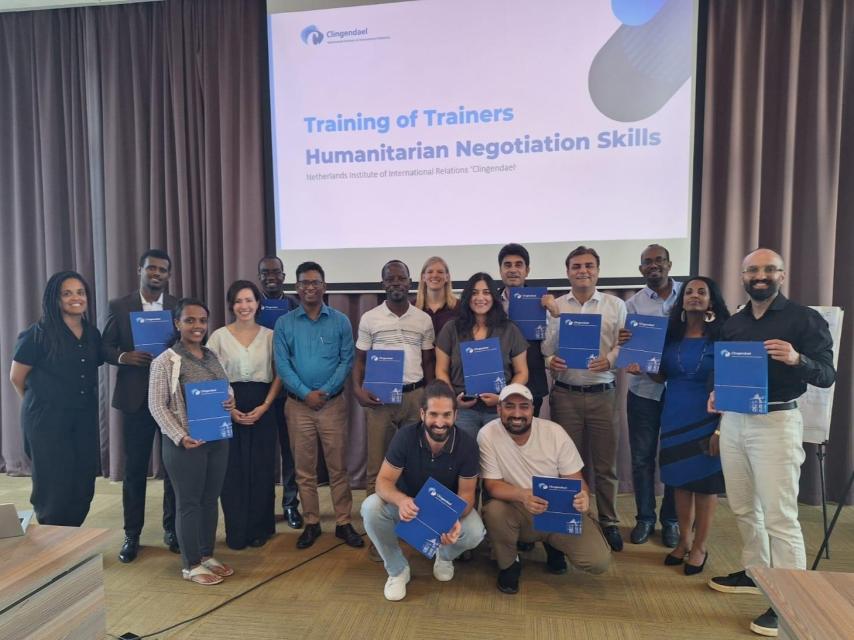
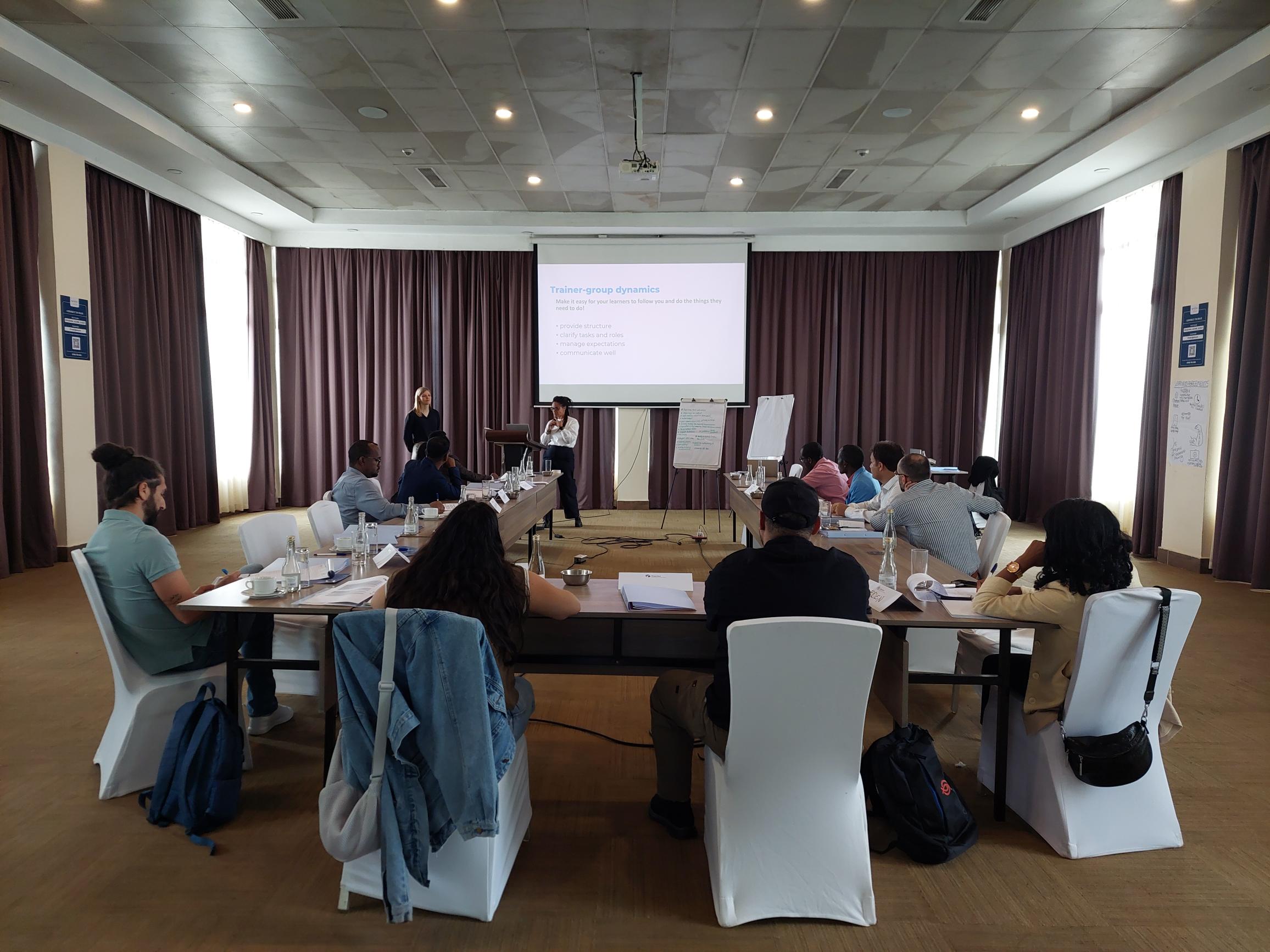
Earlier this month, Clingendael Academy staff travelled to Nairobi, Kenya, to deliver a Training-of-Trainers (ToT) course in Humanitarian Negotiation Skills. From 2 to 6 June, we had the pleasure of welcoming a dynamic group of experienced humanitarian professionals and seasoned negotiators from across the globe for an intensive, hands-on week of learning and exchanging.
The participants, working in diverse contexts, such as Afghanistan, Ethiopia, Iraq, and Pakistan, amongst others, are all alumni of Clingendael’s Foundation Course in Humanitarian Negotiation Skills. This shared foundation enabled the group to dive straight into the didactics of delivering a negotiation training – building on their expertise while learning how to pass it on effectively.
Over the course of five days, participants deepened their knowledge on negotiation skills tools and theories, and designed, developed, and delivered their own exercises, tailoring it to the needs of their local contexts and the realities of their fieldwork. With a strong emphasis on experiential learning, participants immediately applied didactic principles in practical settings—receiving peer-to-peer feedback, testing approaches, and refining their personal facilitation styles.
By supporting alumni to deliver high-quality negotiation trainings in their own languages and environments, the Training-of-Trainers programme is a cornerstone in Clingendael’s Humanitarian Negotiation Programme’s effort to expand the reach of negotiation skills across the humanitarian sector and support the broader goal of localisation.
We warmly thank all participants for their enthusiasm, commitment, and the wealth of experience they brought to the programme. As they return to their respective regions, we are confident they will play a vital role in strengthening negotiation capacities within their teams and communities. We look forward to seeing their impact unfold as they take on the role of trainers—amplifying skills, fostering local ownership, and contributing to more effective humanitarian action worldwide.