Between inclusion and exclusion: Iran's selective instrumentalization of Afghan migrants
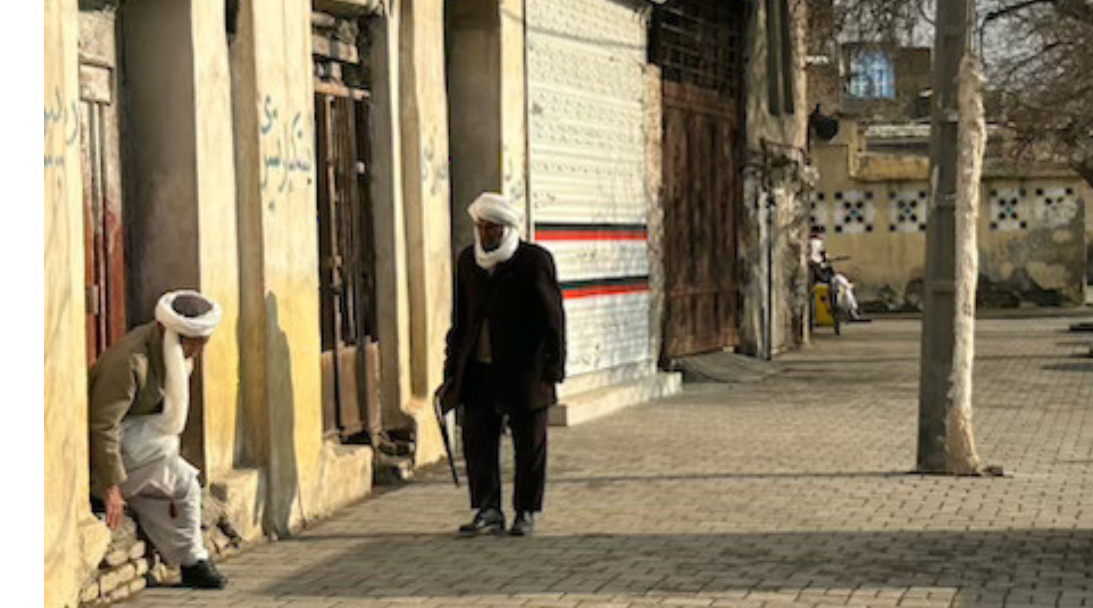
- The size of the Afghan migrant community in Iran – c. 5-8 million individuals – makes it simultaneously an economic and security resource, as well as a domestic problem
- Economically, Afghan migrants provide crucial cheap labor to the Iranian economy while Afghans are also recruited into militant formations that support Iran’s regional security policies
- At the same time, competition for jobs and popular envy of successful Afghan businessmen create the same anti-migration anxieties and narratives that can be found elsewhere. Moreover, there is some social concern that the government might turn Afghan migrants into a loyal constituency of the ruling elite
- On the whole, Iranian governments have tended to make selective use of Afghan migrants present in Iran as sources of labor and manpower, which has left the community precariously stuck between selective inclusion and systemic exclusion. The public policies and discourse of Iranian governments have alternated between calls for mass expulsion of migrants and efforts to regulate migrant access, as well as improving their documentation
By Hessam Habibi Doroh
Editors’ introduction
In September 2022, the death of Mahsa Jina Amini marked a major turning point for Iran. The event sparked lengthy nationwide protests across socio-economic classes and population groups whose demands rapidly evolved from discarding controversial hijab regulations to calls for the overthrow the Islamic Republic. The Iranian government responded with repression, killing over 400 protesters in late 2022 and early 2023, according to human rights groups.
The Clingendael blog series ‘Iran in transition‘ explores power dynamics in four critical dimensions that have shaped the country’s transformation since: state-society relations, intra-elite dynamics, the economy, and foreign relations. This blog post dissects to what ends and to what effects Iran’s ruling elites have selectively instrumentalized the country’s Afghan refugee population.
Between inclusion and exclusion
The Afghan migrant community in Iran is estimated at 5-8 million individuals, which amounts to roughly 5,5-8,7% of the total population of c. 92 million. About 2,7 million of these 5-8 million individuals are registered, a bit less than half. Factors such as shared cultural ties, language and the Shi’a identity of the Hazara community, coupled with a relatively open 900-km border, have historically facilitated Afghan migration while Iran has also tended to function as transit hub for Afghan migration to Turkey and Europe. After 1979, Iran has gradually used Afghan migrants as source of cheap labor, particularly in construction, and as pawns for its regional security agenda, particularly via militant recruitment. Such selective instrumentalization forms the core of Iran’s contemporary approach to the governance of migrant flows and populations. Since the return to power of the Taliban, geopolitical considerations have gained in prominence in Iran’s migration policies. This blog unpacks Iran’s instrumentalization of Afghan migrations and highlights the precarious nature of their lives that result from this policy, which keeps them in a no-man’s land between inclusion and exclusion.
Contextualizing Afghan migrants in Iran
Major contemporary Afghan migration to Iran began with the 1979 Soviet invasion. It followed earlier smaller movements, including Hazara migration in the 19th century after the formation of modern Afghanistan due to ethnic and religious persecution from the Pashtuns. The post-1979 migration was initially welcomed under an Islamic solidarity framework, with Iran and Pakistan framing Afghan refugees as mohajerin (migrants) and ansar (helpers), thus drawing parallels to early Islamic migration narratives. However, Iran gradually shifted toward a more restrictive migration policy by limiting refugee entry, promoting repatriation and increasing state control over Afghan migrants from the 1990s onward. According to the work of Abbas Abdi, Iran’s Afghan population is – unsurprisingly - concentrated in border provinces such as Khorasan and Sistan-Baluchistan. Educational data from 2001 showed 51.33% of the Afghan migration population is illiterate with only 4.4% pursuing higher or religious education. Afghan migrants were almost evenly split between Sunni (52.49%) and Shi’a (47.38%), Ethnically, Tajiks (20.22%) formed the largest group, followed by Hazaras (18.66%) and Pashtuns (6.63%). The Afghan community in Iran is predominantly young: 45.7% are under 20 years old and 67.3% under 30. Notably, 54.2% were born in Iran, highlighting the settled nature of the community. The 2.7 million registered Afghans in Iran fall into three legal categories, according to UNHCR (2014):
- Refugees: Those who entered before 2003 and registered under the Comprehensive Refugee Registration Plan (Amayesh, introduced in 2002). As of 2014, this group numbered 950,000 individuals.
- Migrants: Those holding legal documents, such as passports or temporary visas, including individuals regularized under the 2010 Foreign Nationals Regularization Program. This group consisted of 129,000 migrants with residence permits and 378,000 individuals holding family passports, totaling 507,000 documented migrants.
- Registered migrants without documents: Those without refugee registration cards (Amayesh) or passports. Estimates from 2015 suggest their numbers ranged between 1 to 1.5 million, making them the largest category.
Afghan migrant instrumentalization in the labor market and on the front lines
For decades, Afghans in Iran were primarily seen as a source of cheap labour, but after more than 40 years, some Afghan communities have become well-established and moved up the income and wealth ladder. Some Afghan workers moved beyond low-wage labour by acquiring skills and establishing themselves as business owners. In some cases, Afghan business owners now even surpass their Iranian counterparts in their economic success. Yet, this emerging sense of competition and the visibility of Afghan economic success have fuelled a growing anti-migration sentiment in Iran. It was in particular the growing influx of Afghan refugees after the Taliban’s return that sparked growing domestic and political tensions. By 2022, domestic pressure to expel Afghan migrants had grown substantially, instigated in part by a social media campaign under the slogan “Dismissal of Afghans: A National Demand.” Iranian authorities intensified their rhetoric against undocumented Afghan migrants with calls for tougher migration policies and facilitation of forced returns. This sentiment also resonated in political discourse with high-ranking officials such as Parliament Speaker Mohammad Baqer Qalibaf advocating for the construction of a border wall and the closure of Iran’s eastern border, a stance that became a central issue in the 2024 presidential campaign.
In addition to the labour market, the instrumentalization of Afghan migrants in Iran is particularly evident in the security sphere in which the state has habitually recruited Afghan migrants to fight in conflicts beyond Iran’s borders. Drawing from its experience in the Iran-Iraq War when Afghans were integrated into a number of military units, Iran has continued their recruitment and military deployment in its regional engagements since. By 2013, the Quds Force of the IRGC had organized thousands of Afghan fighters in the Fatemiyoun Division, a paramilitary force deployed in Syria to fight on behalf of Bashar al-Assad’s government against opposition forces and Islamic State. The core of Fatemiyoun consisted of Shiite Afghan fighters from Sepah-e Mohammad, who fought during the Soviet-Afghan War, and members of the Abuzar Brigade, which had supported Iran in the Iran-Iraq War. By 2017, the Quds Force had expanded Fatemiyoun from a brigade to an army (lashkar) and its ranks were estimated at 10,000 to 20,000 fighters. Recruitment was primarily conducted within Afghan migrant communities in Iran with fighters drawn by a mix of ideological motivations—such as defending Shiite shrines and supporting Iran as a Shiite power—and economic incentives. Some Afghan analysts view this as the exploitation of Afghan migrants' economic hardship, using them as low-cost and expandable soldiers in the service of Iran’s regional strategy.
Divide and rule
The instrumentalisation of the Afghan community in Iran by the state creates problems in addition to benefits, however, given the size of the Afghan migrant community. This is perhaps best Iranian political opponents trying to discredit each other by suggesting Afghan heritage, as could be seen in the recent case of Saeed Jalili, a hardline politician and presidential candidate, who was accused of having Afghan origins during his campaign against Pezeshkian. Such anecdotes aside, the most obvious problem from a domestic political point of view is that Afghans are seen as ‘taking Iranian jobs’ and displacing Iranian business. This is the context for the recent focus on forced expulsions of Afghan migrants as outlined above. In part, such calls represent political symbolism that is intended to pacify public discontent during hard economic times. They supposedly demonstrate strong government action on migration, but in practice their impact is limited.
However, there is a deeper socio-political problem in addition to such economic considerations, namely that governmental efforts to document and integrate Afghan communities - in a context of state instrumentalization of Afghan migrant labor and militant manpower - raise suspicion among the broader Iranian middle class that the government seeks to cultivate a loyal Afghan constituency to counterbalance to domestic dissent. Proposals to grant Afghan migrants citizenship and voting rights have fueled such anxieties. For example, Article 32 of Iran’s 2024 hijab law stipulates that foreigners legally residing in Iran are permitted to help enforce hijab regulations. This triggered fears that the authorities might use Afghan or other Shi’a communities as tools of social control.
Finally, the Afghan migrant community presents a double edged sword from the perspective of the maintenance of existing power structures. On the one hand, the government does not wish Afghan Sunni (about 50% of the Afghan migrant community) to form independent religious networks that could become a threat to the state. Hence, Afghan Sunni have been prohibited from joining Iranian Sunni religious institutions and forced to integrate into state-controlled institutions such as Jame al-Mustafa University. This ensures ideological oversight of Afghan Sunni clerics and aligns them with state policies. On the other hand, the Afghan migrant community also represents a source of foreign policy leverage. Some sources have argued in particular that Tehran’s threats of mass expulsion of Afghan migrants are designed to exploit Afghanistan’s economic vulnerability and so extract concessions from the Taliban regime in matters like border security and control of the Hirmand River’s water resources.
The new Taliban era and migration as a (geo)political tool
In fact, the Taliban’s return to power in 2021 triggered a massive new wave of Afghan migration into neighbouring countries, Iran included. President Raisi – in power at the time - his approach to Afghan migration was influenced by his geographical and social background, as he hailed from Mashhad, Razavi Khorasan Province, one of Iran’s largest migrant-hosting cities. His familiarity with the Afghan migrant community and their challenges led to a deep restructuring of migration policies with the linked aims of allowing greater access and establishing better control. It was supproted by a mobilization of Basij members and voluntary forces in a manner reminiscent of the 1980s wartime initiatives. Previously inactive, the National Migration Organization (NMO) was revitalized under the Raisi administration with the aim of establishing a centralized, coordinated, and technology-driven center to supervise of migration governance.
So Iran opened its doors to Afghan migrants during Raisi’s tenure, but in a manner that was as documented and controlled as possible while, at the same time, calls for the limitation of migration and expulsion were also increasing (see above). Among other things, the Raisi government launched one of the Islamic Republic’s most extensive registration initiatives that resulted in the issuance of temporary residence permits for approximately 2.5 million undocumented Afghan migrants. The supporting centralized identification system was intended to streamline state control over Afghan migrants, reinforcing state oversight and security considerations. Nevertheless, this controlled openness did not last long in the face of mounting socio-economic pressures against Afghan migrants.
Looking beyond today’s policies into the past
Looking back helps to contextualize the current state of migrant policy in Iran as it sheds light on the success and failure of previous initiatives, among other things. The presence of Afghan migrants in Iran has evolved through distinct phases, each shaped by political, economic, and security considerations. In brief, initial post-1979 openness to Afghan migrants was gradually replaced by a strategy of selective instrumentalization parallelled with an oscillating pursuit of both restrictions and mass returns, as well as controlled openness and registration.
Several key domestic and geopolitical factors influenced Iran’s initial open-border policy after 1979. Iran’s approach to Afghan migration was shaped by ideological, economic, and geopolitical factors. The Islamic Republic framed itself as the protector of the oppressed (mostazafin), with Khomeini’s statement that “Islam has no borders” reinforcing the welcoming stance toward Afghan migrants. Economically, Afghan labor became crucial, especially during the Iran-Iraq War (1980–1988), when Iran faced labor shortages. Some Afghans also volunteered to fight for Iran. Geopolitically, Iran sought to avoid direct confrontation with the Soviet Union while still criticizing its actions. The IRGC trained Afghan Mujahedin and some Iranian Sunnis independently joined the fight against the Soviets, but Khomeini also maintained diplomatic caution, stating in a 1979 meeting with the Soviet ambassador that he did not want relations between Islamic countries and the Soviets to deteriorate.
Soon, however, concerns over crime, epidemics, and economic strain shifted public perception. Iranian authorities began reconsidering their approach, which paved the way for a more restrictive migration framework. With the collapse of Afghanistan’s communist regime in 1992, Iran officially adopted a return policy on the assumption that conditions were stable enough for repatriation. By 1993, Iran implemented its formal repatriation strategy through the Supreme National Security Council’s Plan for the Return of Displaced Afghans (Tarh-e Bazgasht-e Avaregan-e Afghani). This plan led to the forced evacuation of a 30-kilometer border zone in eastern Iran, displacing at least 80,000 people. Additionally, 830,000 Afghan refugees with identification cards were relocated to designated refugee camps (Mehman-shahr) in Khorasan and Sistan & Baluchestan while 200,000 further Afghans were removed from 12 provinces as part of broader repatriation efforts. However, these harsh removal policies had unintended consequences. Instead of leaving the country, many Afghan families relocated to major cities such as Tehran and Isfahan where local communities had little prior experience with Afghan migrants. This shift led to new tensions and occasional violent clashes, a pattern that continues in some areas today. Despite its enforcement efforts, Iran's return policy ultimately proved unsustainable and the authorities began reassessing its effectiveness in 2006. Factors like growing instability in Afghanistan, Iran’s continued economic reliance on Afghan labor and the challenges of fully implementing large-scale deportations contributed to this shift.
The failure of the return policy led to a new phase in Iran’s migration strategy. Since 2007, Iranian policymakers shifted toward what became known as the "regulation policy," which focused on controlling and managing Afghan migrants rather than expelling them. This shift marked a pragmatic compromise—Iran ceased large-scale deportation efforts but also did not grant Afghan migrants full legal rights or long-term residency options. It was in this context that Iran’s embassy in Afghanistan issued a statement in December 2007, announcing a temporary halt to the deportation of undocumented Afghan migrants. In 2010, Iran’s Supreme National Security Council approved the "Comprehensive Plan for the Regularization of Foreign Nationals" (Tarh-e Jameh-ye Saman Dehi-ye Atba’ Khareji). Under this initiative, all undocumented migrants were given the opportunity to register and obtain legal documents.
Despite the shift toward regulation and temporary legalization, Iranian authorities simultaneously introduced stricter security policies. Afghan migrants faced expanded movement restrictions, and residency bans were enforced in multiple provinces. Currently, Afghan nationals are entirely prohibited from residing in 19 Iranian provinces, while other provinces enforce varying levels of restrictions under Iran’s security regulations. Additionally, Afghan migrants were banned from living in key border cities, particularly in sensitive areas near Afghanistan, due to security concerns.
Concluding reflections
Over the past decades, the Iranian state has instrumentalized Afghan migrants, balancing selective integration as cheap laborers and militant pawns with systemic marginalization under tight regulation and documentation. Periodically, Afghan migrants have been scapegoated for Iran’s socio-economic struggles with state rhetoric often blaming them for domestic hardships. Regular calls for deportation and border closures serve as symbolic measures to appease public discontent, reinforcing the perception that the government is prioritizing Iranian citizens' concerns.
In recent years, however, anti-Afghan sentiment has hardened due to economic hardship, rising unemployment, and social instability. This tension has led to growing clashes between Afghan communities and Iranian citizens, particularly in urban centers where economic competition is most visible. Additionally, the uncertain nature of Iran-Taliban relations, coupled with negative perceptions of the Taliban among the Iranian population, has deepened mistrust toward Afghan migrants, making social interactions more difficult and increasing the potential for future tensions.
Whether these concerns are valid or exaggerated remains an open question. However, it is clear that Iran’s treatment of Afghan migrants exemplifies a model of migration governance rooted in pragmatic necessity and geopolitical calculation. It reflects an approach where economic reliance, security concerns, and national identity intersect to shape a migration policy that oscillates between conditional inclusion and systematic exclusion. Ultimately, Afghan migration in Iran is not just a border issue, but a reflection of the state's broader struggles over power, identity, and legitimacy in a rapidly shifting domestic and geopolitical landscape.