Blog series - Iran in Transition: The Islamic republic is no more while it lives on
Welcome to this Clingendael blog series ‘Iran in transition’. It targets a global audience of readers interested in Iran and aims to contribute to open and substantiated debate about possible socio-political directions the country might take. The blog series departs from the assumption that change in the Islamic Republic has become inevitable given the acceleration of protest frequency and the impact of the 2022-2023 protests on the legitimacy of Iran’s ruling elites. Iran has effectively entered a state of transition.
The blog series understands ‘transition’ as a trajectory of change of which the direction, velocity and linearity can shift abruptly (or not) as the destination is yet unknown. Change may recreate a version of the past, innovate a different future or reshape society in another fashion. It does not have to be progressive, but is simply unknown. This creates risks of uncertainty (what will happen and to whom) and unpredictability (when and how things will happen). The blog tracks the evolution of Iran’s transition via four indicators: intra-elite dynamics, state-society relations, foreign policy and the economic situation.
Blog 1: Lost in transition: Where might Iran be heading?
The first blog introduces the reader to the situation in Iran and develops the four indicators that help mapping out dynamics that can occur in a situation characterized by repressive governance and widespread social discontent: intra-elite dynamics, state-society relations, foreign policy and the economic situation.
Blog 2: East of Eden: Will Tehran find salvation in ‘looking eastwards’?
In this blog, Iran's foreign relations are examined with regard to the transitional state the country has entered into since the eruption of the 2022/2023 protests.
Blog 3: Dark comedy or tragedy? The dire straits of Iran's economy
In this blog, Madhi Ghodsi takes a hard look at the economic performance of Iran’s ruling elites and analyses some of its effects on livelihoods, social justice and protests.
Blog 4: Unveiling resistance: The struggle for women's rights in Iran
In this blog, Tara Sepehri Far takes a hard look at the evolution of women’s right in Iran and analyses some of its effects on social justice and protests.

Blog 5: Fifty shades of hardliners: Intra-elite dynamics in Iran
This blog examines how relations among Iran’s political elites have evolved in the social, economic and foreign policy areas. The blog also discusses implications of shifts in elite relations for the broader process of transition in Iran.
Blog 6: Iran’s transition six months on: Repression meets resilience
This particular blog post analyzes key dynamics in these fields between March to September 2023, and seeks to decipher what they tell us about the direction of change in Iran.

Blog 7: Opposition politics of the Iranian diaspora: Out of many, one - but not just yet
This particular blog post analyzes key dynamics among the Iranian diaspora and opposition in the wake of the 2022/2023 protests, and discusses their relevance for the situation in Iran.
Blog 8: Iranian reactions to 7/10 and the invasion of Gaza
This blog post analyzes what the respective reactions of Iran’s political elites and its population to 7/10 and the invasion of Gaza tell us about intra-elite dynamics and state-society relations in the country.’
Blog 9: The Sepah: Guardian of its self-interests since 1979
This blog post analyzes the evolution of the ‘Army of the Guardians of the Islamic Revolution’ – better known in the West as the Islamic Revolutionary Guard Corps (IRGC) – in the context of Iran’s political settlement.
Blog 10: Iran and Gaza in regional perspective: winning the battle, but losing the war?
This blog post analyzes the evolution of Iran’s security policy in the Middle East after 7 October. It argues that Tehran has successfully advanced potentially conflicting security objectives in the short-term, but also created new long-term risks – mostly economic - to the country’s political settlement.
Blog 11: The limit of Iran's industrial resilience
This blog post analyzes Iran’s manufacturing sector as key element of its ‘resistance economy’. It argues that the sector successfully adjusted itself to the sanction shocks of 2012 and 2018, maintaining economic stability, but is about to enter a period of long-term decline due to a lack of investment and modernization.

Blog 12: Tehran’s perpetual motion: The threat of war abroad and contested legitimacy at home
This blog post analyzes how the threat of conventional war with Israel and the US puts the shaky legitimacy of Iran’s ruling elites under even greater pressure, leading them to clamp down domestically in a show of force to re-assert themselves that is not dissimilar in intent to their rocket and drone strike on Israel.
Blog 13: How to complete the revolution? Khamenei´s vision and its disruption after Raisi´s death
This blog post analyzes how the recent death of President Raisi influences Supreme Leader Khamenei’s intention to advance Iran’s revolutionary project by ensuring a smooth succession, placing power in the hands of the country’s hardline conservatives and establishing a new Islamic civilization.
Blog 14: The Kurdish struggle in Iran: Power dynamics and the quest for autonomy
This blog post analyzes the Kurdish struggle for greater autonomy and local self-governance in the context of the 2022/2023 protests.
Blog 15: From permissive to tense: Sunni Baluchs and their relation with Tehran
This blog post analyzes the relation between Iran’s Sunni Baluch and the state, focusing on its socio-political elements.
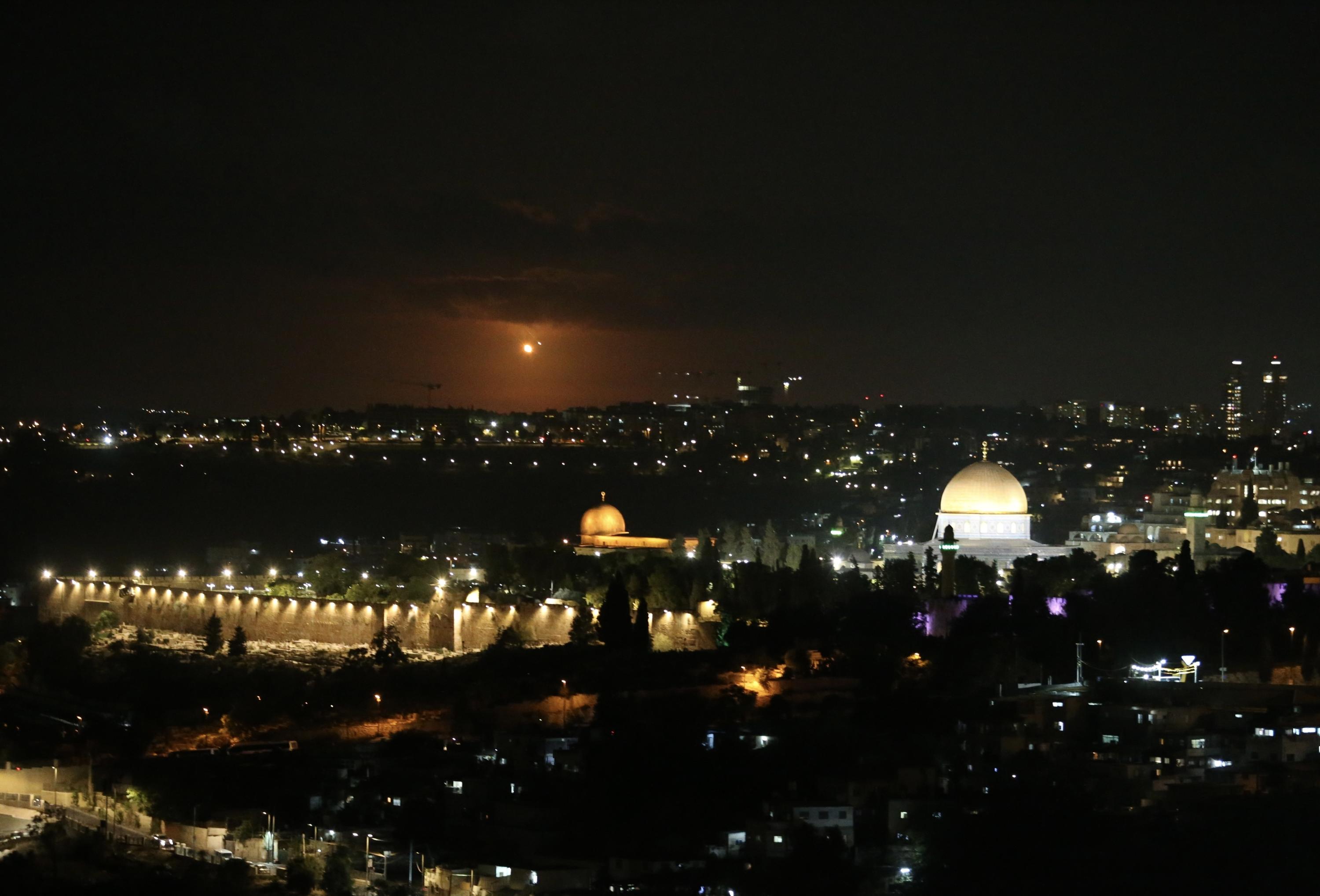
Blog 16: With Lebanese Hezbollah in tatters, Iran may dash for the bomb
Lebanese Hezbollah, a pillar in Iran’s defense doctrine and the primary deterrent against Israel and, indirectly, the United States, is in tatters.
Blog 17: Pezeshkian's gambit: change though national unity in times of regional turmoil
President Pezeshkian's mandate is likely to be driven by a securitised agenda reflecting conservative forces' priorities with limited options to fulfill his electoral promises, says Aniseh Bassiri Tabrizi.
Blog 18: Hurtling towards irrelevance: Iran-EU relations in 2024
How does the evolution of Iran - European Union (EU) relations influence Tehran’s foreign policy and, indirectly, both its economy and intra-elite dynamics.
Blog 19: Nepotism in the Islamic Republic
This blog post examines the three main sources of nepotism in governance in Iran: family ties, revolutionary credentials and clerical lineage.
Blog 20: Approaching the precipe: short-term prospects of Iran’s economy
The 20th edition focuses on the key drivers of economic development in Iran and discusses the short to medium-term outlook.
Blog 21: Iran's selective instrumentalization of Afghan migrants
This post dissects to what ends and to what effects Iran’s ruling elites have selectively instrumentalized the country’s Afghan refugee population.
Blog 22: Running out of road: Iran’s strategic predicament
This post takes stock of Iran’s strategic situation in March 2025 as the country’s foreign and economic policies are running out of road without an off-ramp in sight. Greater regional instability threatens if diplomacy does not shift gears.
Blog 23: Misery loves company: Iraq and Iran's electricity and gas dependencies
This blog post critically assesses the assumptions underpinning US sanction waivers to Iraq regarding the import of Iranian gas and electricity.

Blog 24: Iran's strategic loneliness: From regional overextension to regional embrace?
Blog 24 explores how the notions ‘strategic loneliness’, ‘forward defense’ and ‘gray zone tactics’ have informed Iran’s security posture and regional policies after 1979, and why they are now under review given the setbacks the Axis of Resistance suffered after 7 October 2023.
Blog 25: The EU's response to Israel's assualt on Iran
Blog 25 explores the position and role of the European Commission, France, Germany and the United Kingdom (as it was part of the ‘E3’ that negotiated the 2015 nuclear deal and still operates together with France and Germany) towards the Israeli assault on Iran from 13 to 24 June 2025.
Blog 26: The invisible side of manipulation: How the Iranian regime suppressed #mahsaamini on Persian Twitter
Guest writer Hossein Kermani analyzes online practices and innovations of the Iranian regime to suppress activism and dissent during the 2022-2023 protests.
Blog 27: The Silent Frontlines: Why the “Axis of Resistance” Stayed Quiet in the Iran-Israel War
This blog post by Renad Mansour and Hamidreza Azizi analyzes why Iran’s regional allies refrained from large-scale involvement during the June 2025 Iran–Israel war, and how Tehran’s own strategic calculations shaped the conflict’s limited scope.
Blog 28: Beyond the IRGC: The rise of Iran's military-bonyad complex
Guest writer Kayhan Valadbaygi examines the origins, evolution and contemporary role of Iran’s military-bonyad complex as the country’s primary set of economic agents that tie political ideology and economic power together in a dense informal web of control.
Blog 29: Strengthening regime resilience: Tehran prepares for conflict and succession
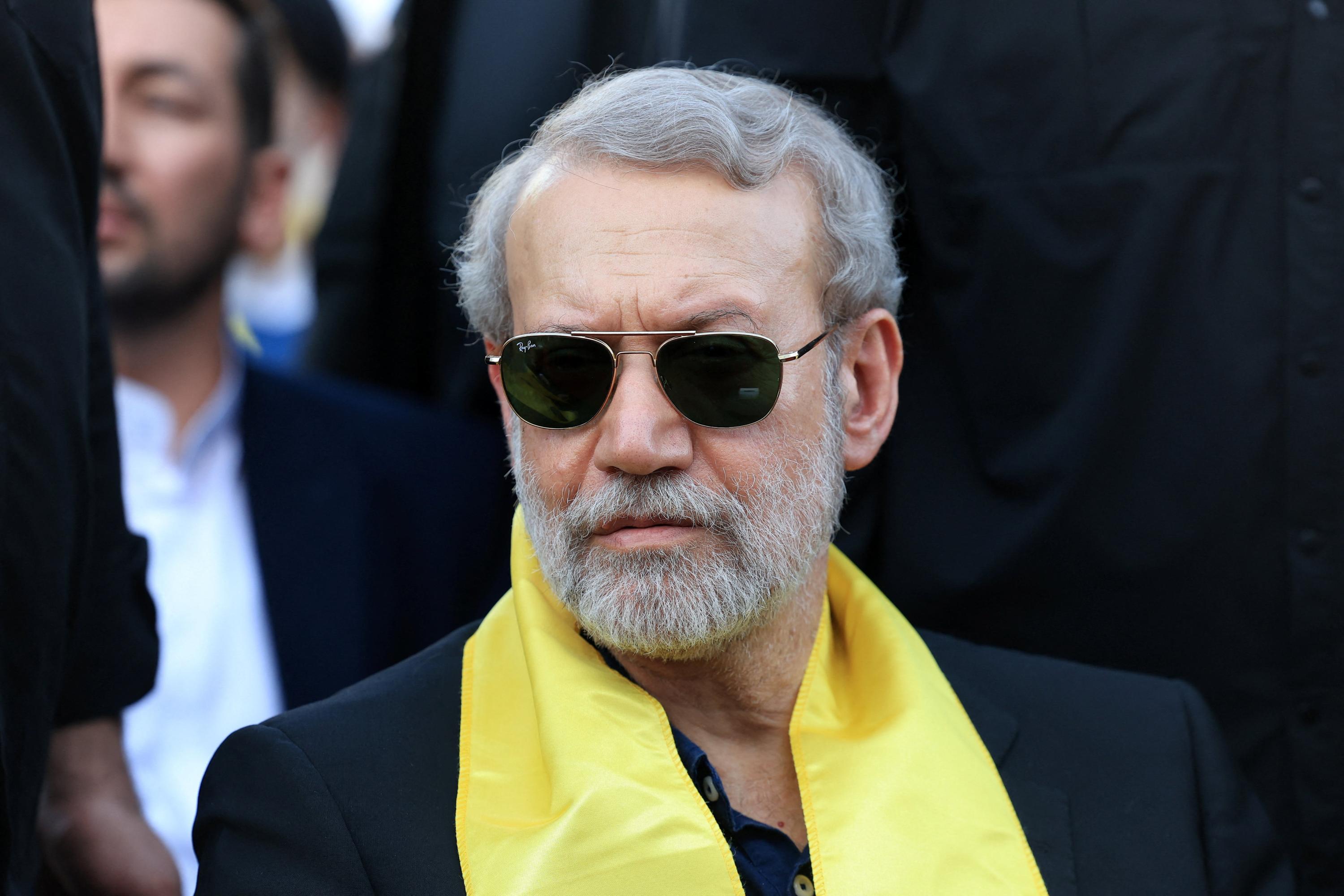
Hamidreza Aziz and Erwin van Veen examine the significance of the creation of Iran’s new Defense Council and the appointment of Ali Larijani as secretary of the Supreme National Security Council for the politics of regime survival.
Blog 30: A view from Tehran: GCC-Iran relations after the bombing of Qatar and the Gaza cease-fire
Javad Heiran-Nia examines the nature and quality of relations between Iran and the Gulf Cooperation Council countries after the Iranian and Israeli attacks on Doha, as well as the US, Turkish, Qatari and Egyptian mediated cease fire in Gaza.
Blog 31: Sanctions without shock? United Nations snapback and Iran's oil exports
Despite US and EU sanctions on Iran’s oil sector after 2018, Tehran managed to stabilize exports at roughly 1,5 million barrels a day. Most of this export takes place via sophisticated covert black-market channels, Nikolay Kozhanov writes.
Blog 32: About the unravelling of Iran's social contract
The fundamental challenge now facing Iran’s ruling elites is that both their support base and strategic options are narrowing As they seem incapable of reform and regime change is not on the immediate horizon, more protests and repression are only a matter of time, Hamidreza Azizi and Erwin van Veen write.
Blog 33: Iran's geoeconomic positioning since 1979: Across all Azimuts
To truly understand Iran, attention must be given to its geoeconomic dynamics, which shape both the region and the wider world, Mohammadbagher Forough writes in blog #33.
Blog 34: Rivalry without enmity: The evolution of Turkish views on Iran
Based on an analysis of evidence for the contemporary period, Turkish foreign policy has typically sought to keep unavoidable rivalry with Iran within manageable bounds, writes Salim Çevik in blog #34.
Blog 35: America and Israel against Iran: Strategic results during the ceasefire
This blog assesses the strategic position of the US, Israel and Iran during the initial cease fire from 8 to 22 April 2026, as well as the strategic effects of the US and Israeli assault on Iran for the combatants themselves, the region and the world at large.
Blog 36: The wartime economic takeover of the Iranian state
The US-Israeli attack on Iran has given the Islamic Revolutionary Guard Corps an opportunity to tighten its grip on the Iranian economy. Blog #36 also discusses whether such a shift sets Iran on a trajectory towards greater international isolation, brain drain and potentially renewed protest – barring major economic reforms that benefit the average Iranian citizen.
Blog 37: War, political psychology and the future of US-Iran relations
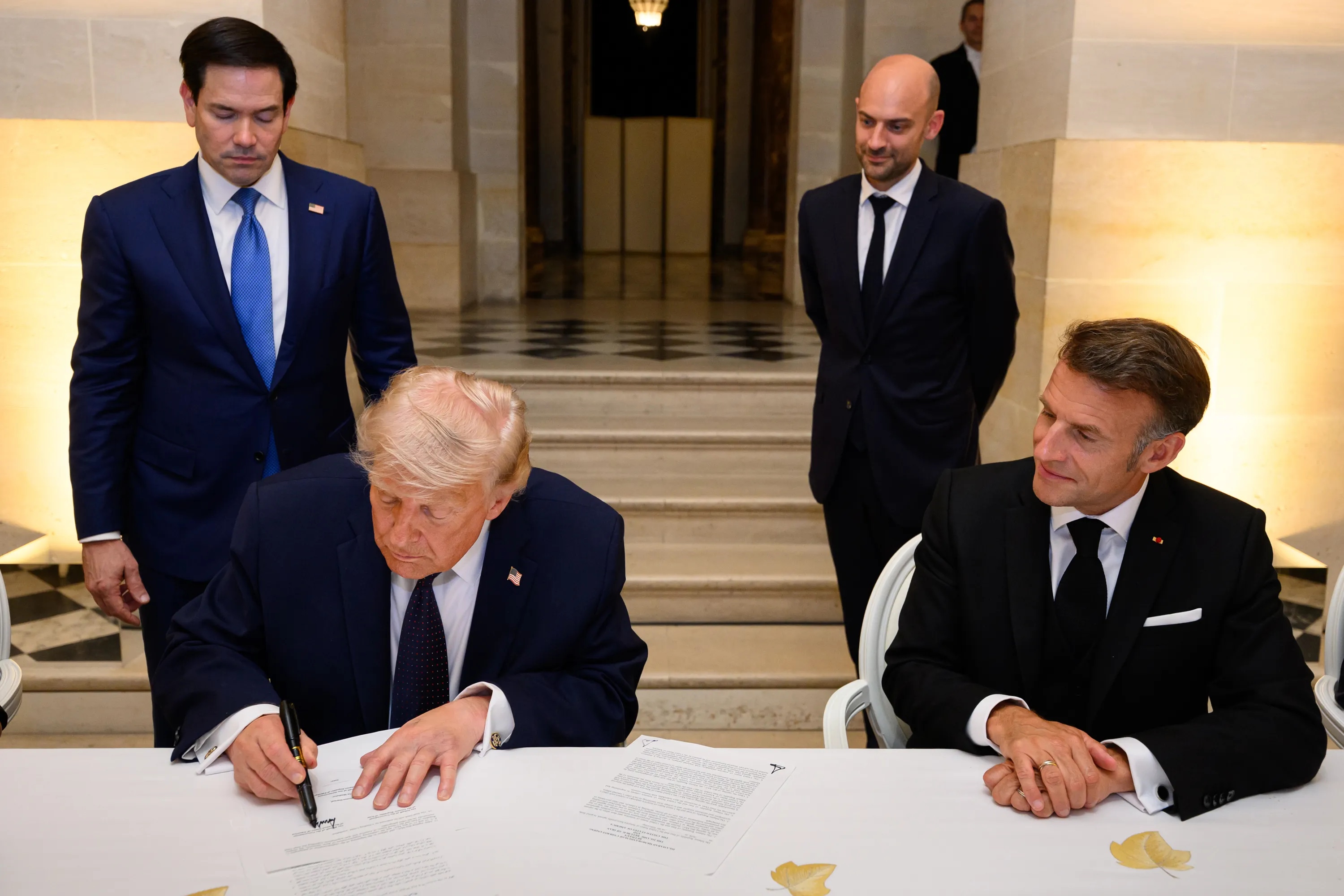
This blog examines the prospects of a more lasting deal between Iran and the United States including the feasibility of alternative strategies and insights recently gained by war.