The Silent Frontlines: Why the “Axis of Resistance” Stayed Quiet in the Iran-Israel War
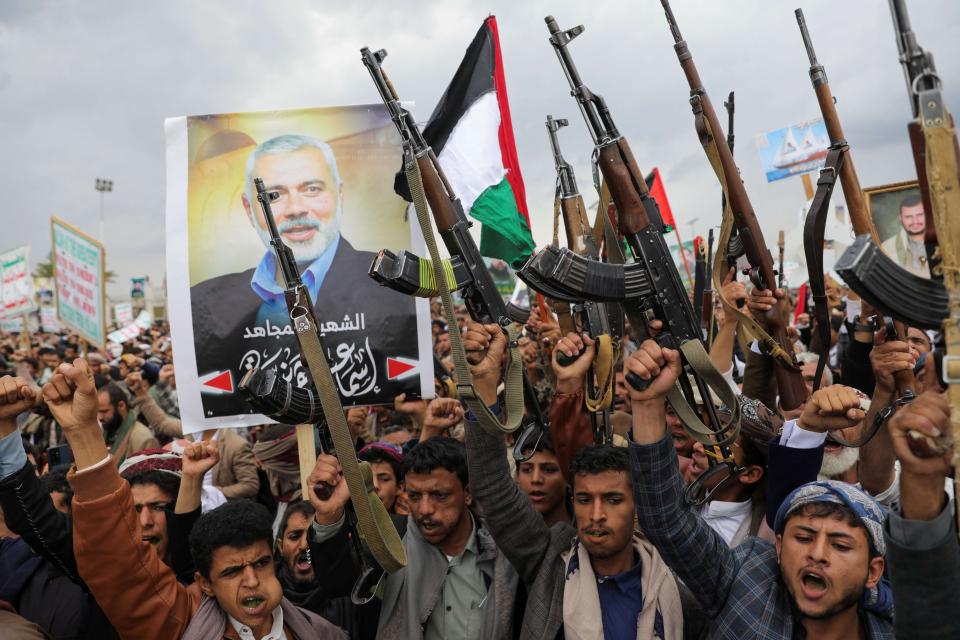
- The muted response of Hezbollah, Iraqi armed groups, and the Houthis to Israel’s June 2025 assault on Iran reflected their own domestic preoccupations. Each was constrained by political, economic, and security considerations at home, limiting appetite for escalation.
- It was also a conscious decision by Tehran to manage the conflict largely on its own. Iranian leaders believed they could retaliate directly against Israel while avoiding steps that might trigger extensive U.S. involvement in the war.
- By demonstrating the ability to absorb Israeli strikes and respond independently, Iran aimed to turn restraint into a form of strategic signaling. The episode highlighted an emerging modus operandi in the Axis of Resistance that involves deterrence through calibrated action and controlled inaction, rather than automatic multi-front escalation.
By Renad Mansour and Hamidreza Azizi
Editor’s introduction
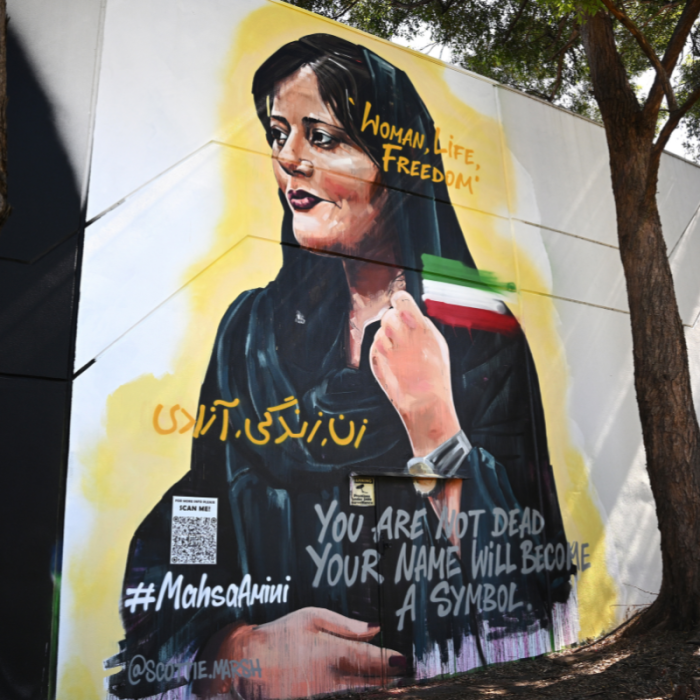
In September 2022, the death of Mahsa Jina Amini marked a major turning point for Iran. The event sparked lengthy nationwide protests across socio-economic classes and population groups whose demands rapidly evolved from discarding controversial hijab regulations to calls for the overthrow of the Islamic Republic. The Iranian government responded with repression, killing over 400 protesters in late 2022 and early 2023, according to human rights groups.
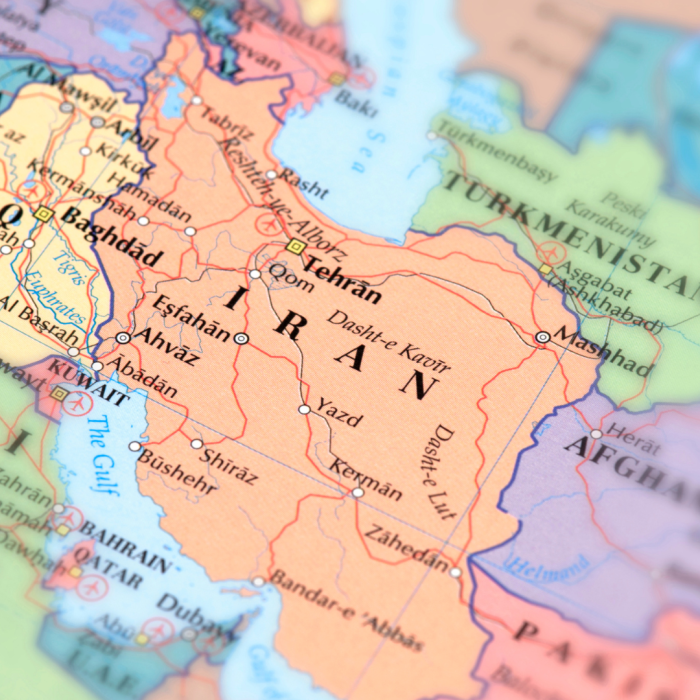
The Clingendael blog series ‘Iran in transition’ explores power dynamics in four critical dimensions that have shaped the country’s transformation since: state-society relations, intra-elite dynamics, the economy, and foreign relations. This blog post analyzes why Iran’s regional allies refrained from large-scale involvement during the June 2025 Iran–Israel war, and how Tehran’s own strategic calculations shaped the conflict’s limited scope.
The war that didn’t spread
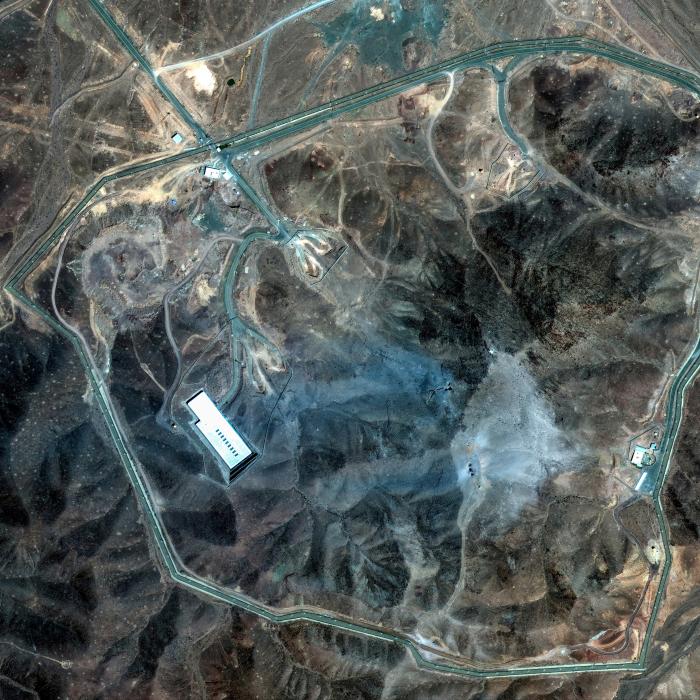
By the morning of June 13, 2025, the world awoke to headlines that signaled a dangerous new chapter in the Middle East. Overnight, Israel had carried out its largest and most far-reaching attacks against Iran to date. Waves of Israeli fighter jets struck deep into Iranian airspace, targeting critical military and nuclear sites. Simultaneously, covert teams assassinated senior Iranian nuclear scientists and top military commanders. Explosions rocked Isfahan, Natanz, and Parchin. Videos of burning infrastructure and crippled air defenses flooded global media. For the first time in decades, Iran’s vulnerability was exposed, not just in its skies, but within its most guarded security circles, revealing the depth of Israel’s intelligence reach inside them.
The region braced for the inevitable response. For over two decades, Iran had assembled a web of militant allies, the so-called Axis of Resistance, designed to deter exactly this kind of aggression. Hezbollah’s vast rocket arsenal in Lebanon, the Houthis’ missiles and drones in Yemen, Iraqi armed groups with strike capabilities stretching from Baghdad to the Persian Gulf and across the Levant, all formed part of Tehran’s asymmetric shield. The assumption across the region and beyond was that any direct Israeli assault on Iranian soil would trigger an immediate, multi-front response from these groups, rapidly expanding the conflict beyond Iran’s borders.
But then… silence.
From Beirut to Baghdad, Tehran’s partners stayed conspicuously on the sidelines. There were no Hezbollah barrages across the Lebanese frontier, no waves of drones from Iraq, no Houthi missile salvos into the Red Sea. Instead of the familiar choreography of escalation, there was calculation, ambiguity, and restraint.
For many observers, the quiet that followed was proof that the Axis of Resistance had been effectively neutralized. After years of Israeli attrition, U.S. strikes, and domestic crises across Lebanon, Iraq, and Yemen, the assumption was that these groups were simply unable to fight back. There is truth to this narrative. Capability is not what it was even a year ago. But to stop there is to miss part of the story. The June 2025 war revealed not only the Axis’ temporary exhaustion but also its changing priorities and Iran’s strategic calculus. The silence was not only a matter of what they could not do, but also of what they chose not to do.
In fact, two interlocking factors shaped the behavior of Iran’s allies. First, the Axis of Resistance is not defined solely by ideology or shared confrontation with Israel. Instead, it is shaped by local realities. Hezbollah, the Popular Mobilization Forces (PMF) in Iraq, and the Houthis are each navigating domestic pressures, political survival, and the limits of their influence.
Second, Iran itself chose to keep its network on standby. Despite fiery rhetoric, sources confirmed that Tehran made a decision to manage escalation on its own terms, resisting the temptation to mobilize its regional partners. This was not a failure of alliance, but a signal of strategic calculation.
The result marks an inflection point: Iran’s transnational deterrent architecture is more or less intact, but adapting. The main shift lies not solely in the Axis’ incapacitation, but in how competing interests and Tehran’s own calculus now shape when and how these groups respond. In an era of shifting regional dynamics, the cohesion and credibility of the Axis of Resistance increasingly depends on shared interests, not automatic alignment.
Thinking locally: Regional actors prioritized domestic concerns
Hezbollah long held undisputed status as Iran’s deterrent crown jewel. But the post–October 7 and the Israeli wars on Gaza and Lebanon forced deep strategic reorientation. Estimates suggest Hezbollah lost some 3,800–4,000 fighters – an order of magnitude more than in the 2006 war – and most of its senior leadership echelon has been killed by Israel. This human cost coincided with Lebanon’s prolonged economic collapse and political paralysis, squeezing Hezbollah’s financial base and undermining its provision of social services that has constituted a key pillar of its domestic legitimacy and support. The fall of the Assad regime in Syria also strained Hezbollah’s logistical backup, reducing its opportunities to rearm and reorganize.
Meanwhile, internal debate is reshaping Hezbollah’s identity. Reports suggest that a faction within the group is advocating for a “stronger Lebanese identity,” signaling a possible strategic pivot away from pure alignment with Tehran. This internal discourse reflects an emerging awareness within the group that its close adherence to Iran’s Wilayat al-Faqih doctrine – and its continued reliance on armed power – may be eroding its legitimacy within Lebanon.
Layered atop these challenges are internal and external pressures to disarm. Lebanon’s president has floated a US-backed roadmap for Hezbollah’s disarmament in exchange for Israeli troop withdrawal and reconstruction aid. These combined internal and external pressures help explain why, for Hezbollah, another wide-scale conflict, especially one fought for Tehran, was untenable. Instead, the group has focused on rebuilding political influence from within, underscored by recent local election successes and maneuvers ahead of next year’s parliamentary vote.
Iraqi PMF groups have also evolved pragmatically. No longer solely militias, many are now embedded within the Iraqi state, employing around 20,000 members in formal security roles, as well as holding senior civilian government positions, including cabinet ministers, and running state-owned enterprises. Escalating against Israel or the U.S. would jeopardize their political authority and revenue streams, which in the last few years have increased exponentially. Simply put, war is bad for business. These actors are now integrated into Iraq’s patronage networks and would see more value in preserving that status quo than risking confrontation without direct national gain. Even the less integrated groups – the so-called fasayil – have been actively restrained. The consequences of defying this restraint are clear: after Kata’ib Hezbollah’s attack on Tower 22 (a remote U.S. military outpost along the Jordan-Syria border) in 2024, the U.S. responded with forceful strikes deep into Baghdad and other parts of Iraq, demonstrating the high costs of unchecked escalation. These groups are also acutely aware of the dangers of military inferiority, particularly the absence of air power. The U.S. assassination of Iranian General Qasem Soleimani and PMF leader Abu Mahdi al-Muhandis in January 2020 serves as a lasting reminder of the costs of escalation. This lesson has since shaped the behavior of other groups within the Axis.
Houthis in Yemen were the one actor to directly mirror Iran’s missile offensive. On June 15, they fired several ballistic missiles at central Israel, describing the attacks as support for Palestinians, not merely Tehran. Notably, their May 6 ceasefire with the U.S. had allowed the attacks on Red Sea shipping to pause, but explicitly excluded Israel. When the U.S. joined Israel to hit Iranian underground nuclear sites on June 22, the Houthis announced they would no longer be bound by the truce. But within hours, they stated they would coordinate any action with Tehran. The Houthis thus played a supporting role, signaling alignment without crossing into broader escalation. Their brief missile salvos were deft political messaging, indicating solidarity with Gaza and Iran, without risking total confrontation. This mirrored Tehran’s own calibrated strike on a U.S. base in Qatar, framed as reprisal but designed not to escalate further.
In short, Hezbollah, the PMF, and the Houthis each expressed rhetorical solidarity during the June strikes, denouncing Israel and, in the case of the Houthis, signaling readiness. Yet their actual conduct reflected a sober alignment of strategy with overlapping and competing interests that includes domestic consolidation, political preservation, and controlled escalation. They balanced ideological commitments with strategic caution, highlighting the Axis’ fragmentation and the shift from automatic alignment to conditional engagement.
Why Iran did not pull the trigger
The inaction of Iran’s regional allies during the recent 12-day war was not solely a matter of caution on their part. According to Iranian sources with knowledge of internal deliberations, it also reflected a deliberate strategic choice by Tehran. Despite public rhetoric, Iran opted not to activate the full spectrum of allied groups during the crisis. That decision was anchored in three interlocking considerations shaping Iran’s wartime calculus.
First of all, for Iranian decision-makers, the primary objective in the first few days of the war was to confront Israel, but avoid triggering U.S. military intervention. While Tehran believed it could withstand and respond to Israeli strikes, senior officials were acutely aware that a direct confrontation with the US would escalate beyond Iran’s capacity to contain.
Traditionally, the role of Iran’s allied groups was shaped by the longstanding parameters of Tehran’s “forward defense” strategy. Hezbollah, positioned along Israel’s northern frontier, was tasked with deterrence and retaliation against Israel. Iraqi militias, by contrast, were embedded within the architecture designed to challenge U.S. forces in the region, particularly in Iraq and Syria. Activating them in the context of a conflict limited to Israel would serve little operational purpose and risked providing Washington with a pretext to escalate – a scenario Tehran was determined to avoid. Similarly, the Houthis’ most effective role has been in disrupting Red Sea shipping lanes, while their occasional missile or drone attacks on Israeli territory have had limited strategic impact due to geography and range constraints.
Meanwhile, Tehran’s determination to avoid an uncontrollable regional escalation was shaped by recent precedent. The Tower 22 attack nearly ignited a full-scale confrontation between Iran and the United States. The incident exposed the danger of uncontrolled violence when loosely coordinated militias act without centralized oversight.
Therefore, Tehran’s leadership calculated that activating allied groups, especially Iraqi factions, risked reproducing that scenario on a far larger scale. Even after the U.S. decision to strike Iranian nuclear facilities, which Washington framed as a one-off operation, Tehran remained restrained. Iranian officials had anticipated such a strike, presumably relocating sensitive materials from key sites. In response, Iran’s symbolic missile attack on a U.S. base in Qatar was meant to signal resolve without crossing escalation thresholds that could have provoked a massive U.S. military involvement.
Second, beyond battlefield logic, Tehran’s decision-making was shaped by the imperative to manage perceptions. Iranian officials believed that demonstrating the capacity to retaliate directly, despite severe losses, would signal resilience to both domestic and regional audiences.
When senior Iranian military commanders were killed in the opening phase of Israel’s campaign, Tehran quickly replaced them and launched missile strikes on Israel within 24 hours. The message was clear, that Iran remained operational, capable, and in control.
In contrast, Israel’s prior targeted killings of key figures coordinating the Axis of Resistance, such as Mohammad Reza Zahedi, Abbas Nilforoushan, and Hassan Nasrallah, crippled the so-called “joint operations room” of the Axis. Without effective battlefield oversight, unleashing allied militias risked fragmented, undisciplined escalation – precisely what Tehran aimed to avoid.
Finally, despite the severity of the Israeli assault, Iranian officials assessed that the regime was not on the brink of collapse. The IRGC command structure, though damaged, remained functional; critical military infrastructure, while degraded, retained operational capacity; and the economy, though strained, was not in free fall.
In other words, Iran still had much to lose. Expanding the war, especially by drawing in the United States, would risk catastrophic damage to critical infrastructure and internal cohesion. By containing the conflict and avoiding undisciplined escalation that could spiral into an unwinnable regional war, Tehran was able to present its restraint as strategic deftness to its allies and to its domestic audience. Tehran’s leadership viewed survival on favorable terms as the most realistic outcome, reinforcing the preference for containment over escalation.
Despite these considerations, according to Iranian sources, Axis groups across the region had raised their alert levels and stood prepared for escalation if Tehran gave the signal. Communications between Iran and these actors remained active throughout the conflict. But for the reasons outlined, that signal never came. This calculus also helps explain the Houthis’ mixed posture after the U.S. strikes on Iran, i.e., initially declaring they were no longer bound by their truce with Washington, only to clarify hours later that any further action would be coordinated with Tehran. In effect, the network was on standby, but restraint, not automatic activation, remained Iran's guiding principle.
A calculated restraint, for now
The restrained posture of Iran’s regional allies during the June conflict was neither a failure of alliance nor a signal of disintegration. It was a product of calculated decisions on multiple levels. Tehran’s leadership weighed the risks, assessed the constraints of its allied groups, and chose to manage escalation on its own terms. This reflects not only the domestic pressures facing actors like Hezbollah, Iraqi armed groups, and the Houthis, but also an evolution in how the Axis of Resistance operates in practice.
The events of June 2025 exposed a structural reality, in which Iran retains influence, but no longer absolute synchronization, across its network of partners. Coordination is still possible, but contingent, shaped by divergent local priorities, operational limitations, and the costs of uncontrolled escalation. The model emerging is less a rigid, command-driven axis and more a decentralized system of parallel actors whose alignment depends on timing, threat perception, and strategic calculations, both their own and Tehran’s.
For Iranian leaders, this evolving landscape is not a source of friction. Instead, it reflects adaptation in the Axis’ modus operandi. Restraint is not the just absence of capability; it is an instrument of deterrence in its own right. By demonstrating the capacity to retaliate independently, Tehran balanced its own calculus of costs and gains with an understanding of how its allies were making similar assessments. The task was not simply to unleash or restrain them, but to manage the optics of a collective decision that escalation was against everyone’s interest. Yet this approach carries inherent risks. As Iran’s network becomes more decentralized and its partners more autonomous, Tehran’s ability to impose coherence in the next confrontation will be neither automatic nor assured. In a Middle East where ceasefires are increasingly fragile and further violence is widely anticipated before the region reaches any form of lasting transformation, this evolving architecture will remain under considerable strain.
Renad Mansour is a Senior Research Fellow with the Middle East and North Africa Programme and Director of the Iraq Initiative at Chatham House
Hamidreza Azizi is an Associate at Clingendael.
Related
See all