Pezeshkian's gambit: change through national unity in times of regional turmoil
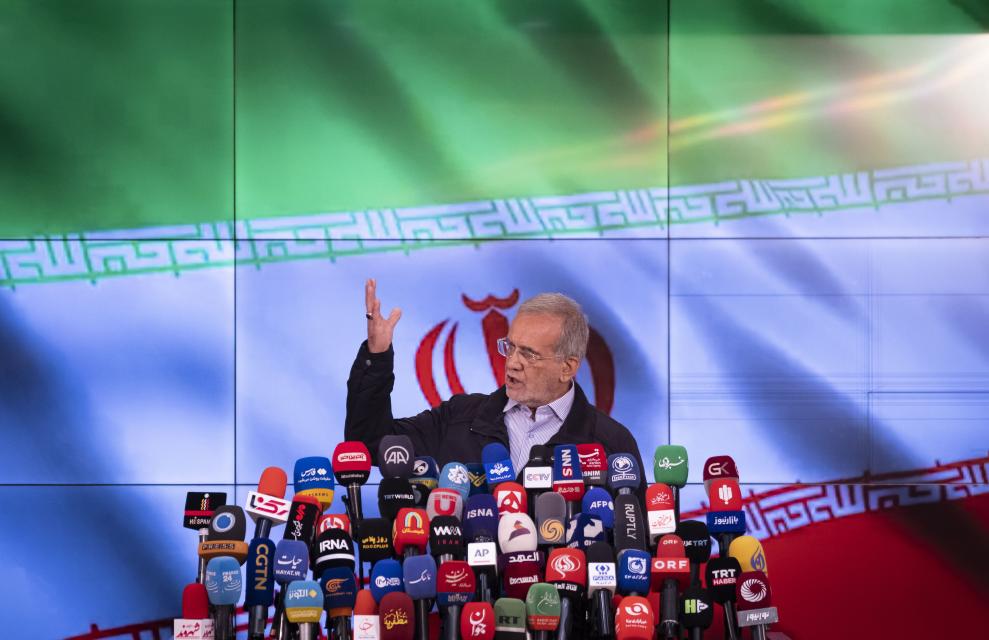
- President Pezeshkian has tried to prevent Iran’s dominant conservative political forces from blocking his agenda by including members of different factions in his cabinet. He otherwise deemed his leverage over conservatives factions to be limited to the extent that their need for self-preservation would enable socio-economic improvements.
- However, Pezeshkian’s hands are currently tied by the threat of an escalatory cycle of violence with Israel and the US that offers limited to no chances to renew international diplomacy, and thus alleviate Iran's economic conditions.
- If this cycle persists, Pezeshkian's mandate is likely to be driven by a securitised agenda reflecting conservative forces' priorities with limited options to fulfill his electoral promises.
By Aniseh Bassiri Tabrizi
Editor’s introduction
In September 2022, the death of Mahsa Jina Amini marked a major turning point for Iran. The event sparked nationwide protests that rapidly evolved from calls to discard controversial hijab regulations to calls to overthrow the Islamic Republic. The Iranian government responded with repression, killing over 400 protesters in late 2022 and early 2023, according to human rights groups.
The Clingendael blog series ‘Iran in transition‘ explores power dynamics in four critical dimensions that have shaped the country’s transformation since: state-society relations, intra-elite dynamics, the economy, and foreign relations. This blog post analyses the prospects under president Pezeshkian for domestic reform in Iran and the prospects for Iran engaging in international diplomacy to address the regional security equation.
A surprise called Pezeshkian
On 30 July, Masoud Pezeshkian became the first reformist president in power since Mohammad Khatami left office in 2005. He succeeded hardliner president Ebrahim Raisi, who was elected in June 2021 and who died in a helicopter crash in May 2024. Pezeshkian’s electoral victory, which was largely unexpected, raised major questions about his ability to deliver on promises made during his electoral campaign and about the intentions of the Supreme Leader and Islamic Revolutionary Guard Corps (IRGC) hardliners. Since his election, the shift of Israeli military operations from Hamas and Gaza to Hezbollah and Lebanon, including the assassination of Ismail Haniyeh and Hassan Nasrallah, have further reduced Pezeshkian's room for manoeuvre, especially with regards to his intended rapprochement with the United States and, to a lesser extent, Europe.
Pezeshkian ran his campaign under the slogan “For Iran”, portraying himself as the only proponent of change among all other candidates that belonged to different factions within the broader conservative camp. Domestically, Pezeshkian promised to stand against the repression of protesters by Iran’s security forces and to support women’s rights, stating that there is no difference between women and men, and that coercion should not be used against anyone, let alone women. He similarly voiced support to grant freedom of choice to women about wearing the veil (hijab) on the campaign trail, and spoke in favour of internet freedom. For example, he questioned current restrictions: “What's the need to filter the internet? We should set it free. Twitter is a place for education, and we can teach many things through it”.
On foreign policy, similar to previous reformist and moderate administrations, Pezeshkian stressed the need for “constructive relations” with Western countries and for reviving the nuclear deal that was reached in 2015 between Iran and the US, China, Russia and the E3 (France, Germany, and the UK). He articulated a strong belief that the economic situation of the country can only be fundamentally improved if sanctions are lifted, which requires engagement with the West.
In August, Pezeshkian claimed that Iran needs around $100 billion in foreign investment to achieve an annual target of 8% economic growth, up from the current rate of 4%. This figure, he stated, is what Iran needs to reduce its double-digit inflation and unemployment rates. While stressing the need for sanctions relief, Pezeshkian also made the case for Iran establishing deeper ties with Russia to counter Western sanctions, likely preparing for a scenario in which relations with the US will not improve and sanctions stay in place. On Russia, as on most other foreign policy issues, Pezeshkian praised the policies advanced by his predecessor, Raisi, including strengthening ties with China and continuing the rapprochement with Arab countries like Saudi Arabia, with which Iran normalised relations in 2023.
While promising change, Pezehskian also made it clear during his electoral campaign that he will be loyal to the system and the Supreme Leader, Ayatollah Ali Khamenei. His promise not to rock the boat predictably raised questions about what degree of change he might be able to realize within a relatively constrained framework. Below, I take a look at the composition of his cabinet as well as internal and external challenges to his term in a bid to assess his room for manoeuvre.
Cabinet composition
The first test Pezehskian had to pass was the selection and approval of his desired cabinet members, the goal being to appoint people able to implement his programme while also securing the backing of the conservative-dominated parliament. When he presented his selected cabinet members on 11 August, the president faced a fierce backlash by reformist supporters. The average age of the candidates was around 60, only one woman was nominated (Farzaneh Sadegh as roads and urban development minister), while not a single candidate belonged to one of Iran’s many minorities. This directly contravened some of his electoral promises. Pezeshkian subsequently sought to address some of these shortcomings by nominating two additional women in senior roles. Shina Ansari as Vice President and head of the Department of Environment, and Zahra Behrouz-Azar as Vice President for Women’s Affairs. He also tried to appoint a Sunni politician, Abdolkarim Hosseinzadeh, as his vice president for rural development, but his candidacy was rejected by Parliament.
The nominees of his cabinet, however, also included several prominent conservative figures, such as the minister of interior, former commander of the Revolutionary Guards Eskandar Momeni, and the minister of intelligence, Esmail Khatib. The latter held the same role during the Raisi administration and oversaw the crackdowns during the women-led uprising in 2022, which were triggered by the killing of Mahsa Amini at the hands of the morality police. Pezeshkian and First Vice-President, reformist politician Mohammad Reza Aref, dismissed such criticisms, arguing that they had prioritized experience and competence to deliver over political affiliation.
Instead, Pezeshkian was trying to strike a compromise with the conservative forces that dominate Iran’s political elites today, by conceding key posts in government in exchange for approval of others that might have otherwise been rejected. The health, labour, economy and tourism ministers, for instance, lacked support from several conservative members of parliament until the day before the vote.
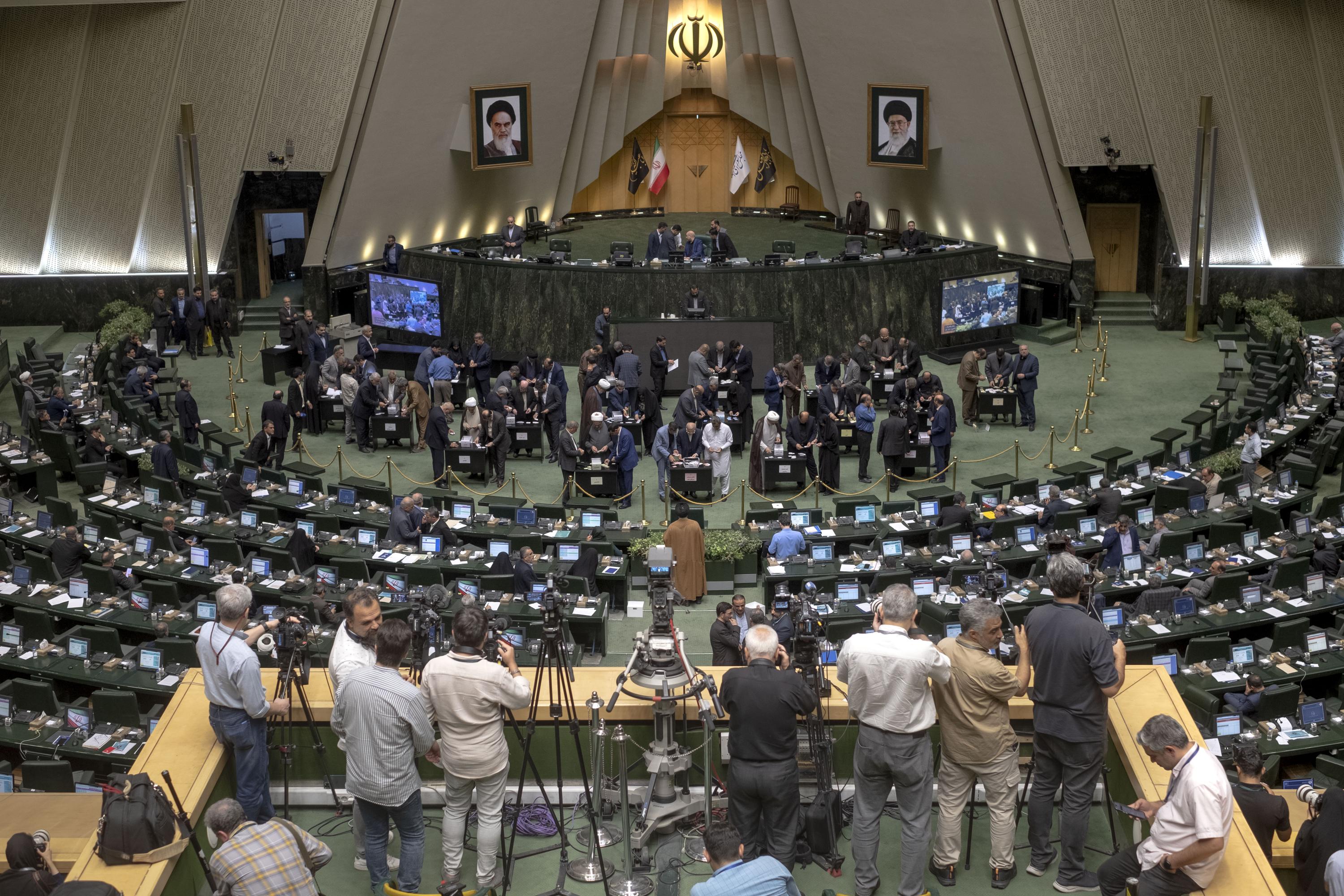
Pezeshkian, on the day of the vote on 21 August, revealed that he presented his list of cabinet members to the Supreme Leader, Khamenei, for approval, claiming that “the road to our salvation is unity and solidarity”. Khamenei later confirmed he had approved some of the candidates, but stated that he did not know most of them, thus refraining from taking a stance. Whether Pezehskian’s claimed support from Khamenei affected the vote or not is unclear, but he managed to secure parliamentary approval of all his nominees – which was the first time this happened since 2001. What is likely is that conservative forces decided to vote in favour of the whole list because, through Pezeshkian’s nominees, they would keep control over the interior and intelligence ministries that they see as essential to control foreign infiltration and potential unrest that could threaten the Islamic Republic’s survival.
This is likely Pezeshkian’s gambit: coopt conservative forces to prevent them from blocking his agenda already at the start of his tenure. Previous reformist (Khatami in 1997-2005) and moderate (Rouhani in 2013-2021) governments did not adopt such an approach and largely failed to bring tangible change about. Pezeshkian is therefore gambling that cooperation with Iran’s conservative political forces will enable him to at least proceed with parts of his agenda and win over a largely disenchanted population that has seen reformists and moderates govern (and fail) before. However, his leverage over Iran’s conservative political forces is limited and he will therefore have to focus on areas where their self-interest suggests progress offers a win-win proposition, which are likely to include better management of the economy (sidestepping entrenched corruption) rather than social accommodation.
Challenges from within
While the result of the cabinet vote is promising, it is too soon to know whether Pezeshkian will indeed be able to secure the buy in of conservative forces for the implementation of his agenda on a more permanent basis. Over the past year, conservative forces have been divided and fighting amongst themselves. During the parliamentary elections in March, ultraconservative figures gained strength compared to old-guard traditional conservatives and their rivalry deepened. During the presidential elections such divisions persisted with votes being split between hardliner Saeed Jalili and traditional conservative Bagher Ghalibaf, which contributed to Pezeshkian’s victory.
However, the conservative camp might coalesce once again, using all unelected and elected institutions under its control, especially given the recent escalation with Israel. This could thwart Pezeshkian’s actions and agenda, especially regarding issues like improving ties with the US or increasing women’s rights. Conservative forces are likely to be opposed to these for ideological and interest-driven reasons. Hardliners will argue that both matters constitute the foundation of the Islamic Republic and should not be undermined. Furthermore, entities linked to the Islamic Revolutionary Guards Corps (IRGC) will prioritize maintaining control over their stakes in the Iranian economy, thus making any re-opening of the Iranian economy to the West more difficult. This is also what happened in 2016, when, following implementation of the Joint Comprehensive Plan of Action (JCPOA), president Hassan Rouhani faced opposition in his attempts to open the Iranian economy to the West by measures such as membership of the Financial Action Task Force (FATF). If rather than backing Pezeshkian’s agenda, conservative forces seek to undermine it, the president would quickly find himself in a similar spot as previous reformist and moderate governments did, unable to deliver.
Challenges from abroad
Besides the challenges from conservative forces at home, Pezeshkian will also have to navigate an uncertain and volatile international context. Pezeshkian appears ready to engage with the West, including on nuclear matters. On 24 September, the spokesman for Iran's Atomic Energy Organization urged Western signatories to the JCPOA to end the stalemate surrounding the nuclear deal. Pezehskian himself, speaking at the United Nations General Assembly, said “We are ready to engage with participants of the 2015 nuclear deal. If the deal’s commitments are implemented fully and in good faith, dialogue on other issues can follow”. However, he will not be able to engage the West, and bring sanction relief about, as long as the escalation with Israel continues.
As Iran braces for one or several rounds of confrontation with Israel, Tehran (Pezeshkian included) has been busy warning against war but also clarified its readiness should it happen. A series of mutual reprisals, a spike in global oil prices due to attacks on oil shipping in the Persian Gulf, and, if sufficiently threatened, a dash for the bomb are realistic escalation scenarios. So for now, engagement with the West has dropped from the agenda and Pezeshkian is more likely to move closer to the conservative camp to avoid a major loss of power and influence during direct military confrontation with Israel.
If and when tensions with Israel return to the level of indirect tit-for-tat strikes, which is not perceived as a strategic threat by Tehran, engagement with the West might make a comeback on Pezeshkian’s agenda. But that does not mean that Washington and European capitals will be ready to engage. Recent reports about Iran’s alleged supply of ballistic missiles to Russia, as well as the uncertainty surrounding the upcoming US elections make this an unlikely outcome over the coming months. Yet, even when the US and the E3 will be open to re-engage with Iran, they will mostly likely not want to only negotiate on Iran’s nuclear activities – particularly since the JCPOA is now seen by both sides as water under the bridge. Instead, talks are likely to include Tehran’s support for Russia in Ukraine as well, its axis of resistance and potentially its missile program. This would link all files in a way that was not done during negotiations over the nuclear deal, thus making negotiations much more challenging than in the past in a context of heightened insecurity.
While Pezeshkian can influence the posture Iran adopts towards the West and even on the nuclear file, similar to previous moderate and reformist administrations he is unlikely to be able to affect Iran’s regional or military posture, including relations with armed groups linked to Iran, or military support for Russia, since these issues are largely controlled by the IRGC. This will make negotiations more complicated and increase the need for Pezeshkian to have the backing of conservative forces for his agenda.
What’s at stake
Pezeshkian ultimately won the elections by promising some change to the current status quo. Next, he has gambled on a more collaborative approach at home to achieve his goals. In turn, this has raised hopes that he will be able to deliver where others were not. He recently stated: “The government's foremost aim today is to close the gap between the people and the authorities and to ensure public contentment”, signalling his awareness of the urgency and importance of this matter.
Should Pezeshkian fail to bring tangible change about due to the domestic and international challenges he faces, apathy and discontent towards the ruling elite among the population would likely grow, disillusioned as it is by years of repressed demonstrations and limited to no change. Over the past two years, the Supreme Leader and the ruling elite appeared less and less concerned about the erosion of the Islamic Republic’s legitimacy, opting instead for ensuring control of conservative forces over all major state institutions. This has contributed to a popular apathy that is currently at the highest levels since the establishment of the Islamic Republic, as showcased by the low turnout in the latest rounds of parliamentary (41%) and presential elections (39.9% during the first round and 49.8% in the second).
If not reversed, this trend will further widen the disconnect between state and society, which in turn will make repression more costly and less effective. In a sense, Pezeshkian represents an opportunity for Iran to improve the country’s economy, restore some of its ties with key international actors and regain some of its lost legitimacy that comes at a critical time. But his tenure risks being undercut by regional escalation with Israel and a lack of negotiating windows with the US. In this context, Pezeshkian’s government may turn out to become a government of national unity that is driven by a conservative-led security-first agenda that will not be able to bring meaningful socio-economic change about.