Stability and livelihood challenges in the borderlands of Coastal West Africa
This series of reports was originally published by XCEPT.
The lives of people in the communities of the borderlands of Coastal West Africa are not bound by formal lines on a map. Rather, they create and depend on complex cross-border socio-economic activities and networks, which are increasingly threatened by violent extremist organisations (VEOs), as well as efforts to counter those groups. These efforts, if not managed properly, could engender further expansion of violent extremists.
Key findings
Four key findings emerge from this research:
1. Maintaining cross-border trade and markets is critical to the livelihoods of border communities.
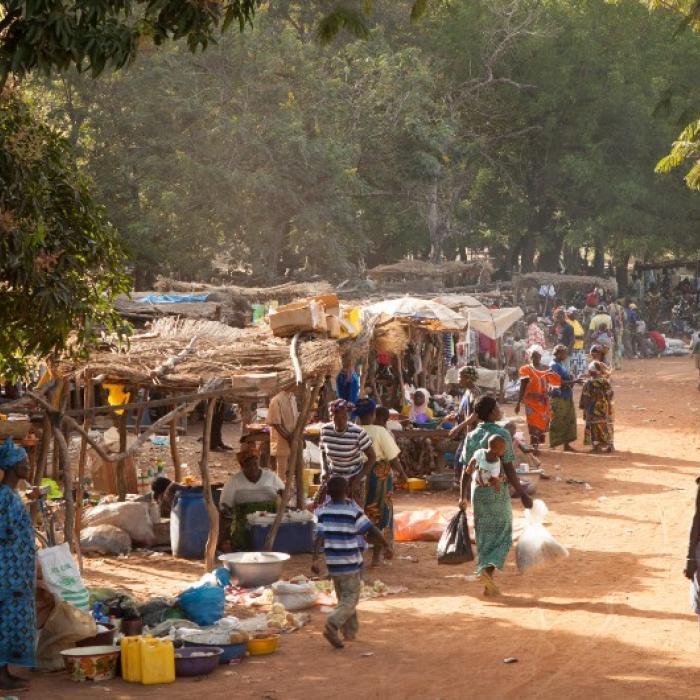
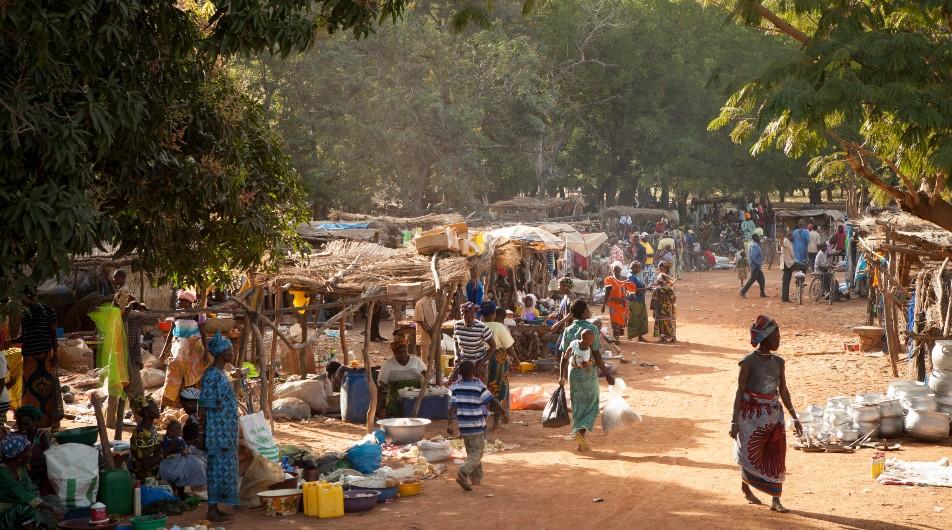
Market days are moments when populations cross the border for economic (trade), socio-cultural (events, sports, weddings, funerals, gatherings), and political (speeches, announcements) activities. Border communities in Ghana, Togo, Mali, and Burkina Faso – linked by tribal, ethnic, and social ties, as well as economic ones – procure daily household necessities and foodstuffs within a system of mutually dependent markets. Hundreds of thousands of people are involved in cross-border value chains such as producing, trading, buying, selling, and transportation.
2. The livelihoods of people in these borderlands are under stress.
Three key factors put livelihoods under stress throughout Coastal West African borderlands: economic pressures, insecurity, and the effects of border programming. First, economic pressures, including cost of living ripple effects from the COVID-19 pandemic and the war in Ukraine, an export and import ban of cereals in Ghana, Togo, and Burkina Faso, and the depreciation of the Ghanaian currency (the cedi) are central challenges for these communities. Second, these communities must contend with increasing insecurity, often fuelled by VEOs. Finally, border programming, specifically the increased presence of security forces in border regions, is having unintended adverse consequences.
3. Violent extremist insecurity has a clear impact on livelihoods, but is not the biggest stressor.
Insecurity disrupts cross-border trade systems, market activity, and transit along key trade routes, affecting the livelihoods of most people in the region. A significant VEO presence (and communal conflict) around the Bawku border regions (Ghana–Burkina Faso–Togo) has disrupted trade patterns and affected livelihoods, while an emerging VEO presence in the Chereponi (Ghana–Togo) and Sikasso border regions (Mali-Burkina Faso) similarly disrupts trade. Even in areas with little VEO presence (e.g. the Wa border region in Ghana and Burkina Faso), people report that they have limited their movements as a precaution. The study’s methodology was designed to measure the effects of violent extremism and security deployments on livelihoods and the risk of violent extremism expansion. However, data collection uncovered a third stressor that emerged as more important than the others: economic challenges to livelihoods in border communities. These economic stressors amplify the violent extremism and policy response stressors to livelihoods.
4. Security forces are an important new stressor on livelihoods.
The presence and activity of military, national security, and local police forces have increased in response to violent extremism, damaging local trade and livelihoods by hardening previously open borders and levying unofficial crossing fees on commuters. In some areas, over 50 per cent of interviewees said that daily trade and cross-border movement have become less profitable due to the presence of security forces and more opportunities for these forces to command 'fees': in some regions, up to 75 per cent of people who cross borders must make informal side payments to officials, according to a household survey. Nonetheless, almost all communities still consider security actors to be legitimate and look to them to provide community security and protection. This is an important baseline from which to improve border security programming.