Stability and livelihood challenges in the Bawku and Chereponi border regions
This series of reports was originally published by XCEPT.
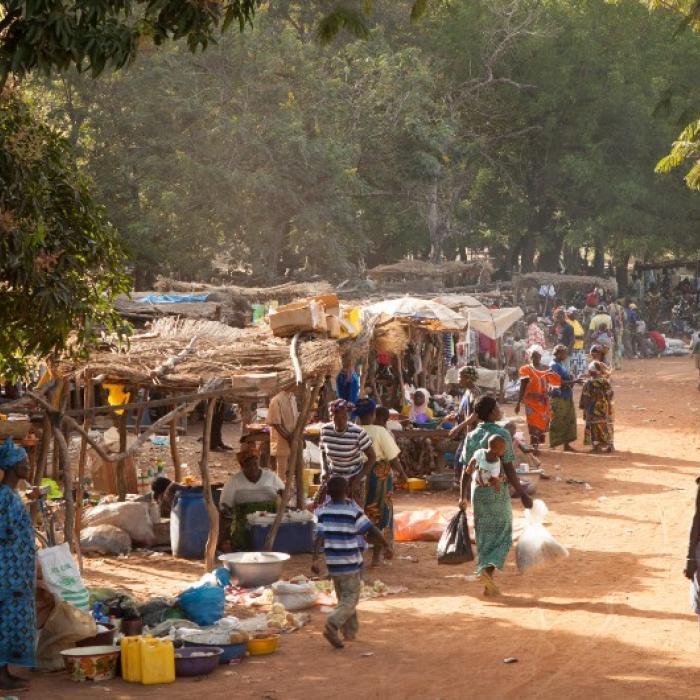
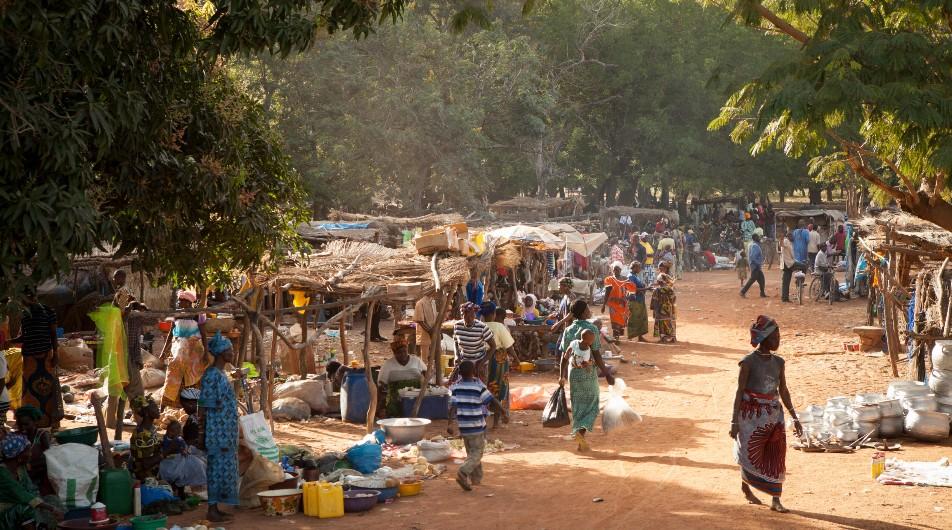
The tri-border area between Burkina Faso, Ghana, and Togo forms a vibrant nexus of commerce, culture, and connectivity. This is particularly evident in the three key markets lining the borders of these countries: Bawku (Ghana), Bittou (Burkina Faso), and Cinkassé (Togo), as well as smaller peripheral markets. This chapter focuses on the cross-border movement of goods and people between southern Burkina Faso, northeastern Ghana, and northwestern Togo, and the disruption to these activities caused by extremist violence and state responses to it. More specifically, the research studies Ghana’s border communities in the Bawku Municipal and Garu districts (Upper East Region) along the Burkina Faso and Togo borders, and the Chereponi and Bunkpurugu districts (North East Region) bordering Togo (see Figure 1). Two cross-border trading ecosystems are particularly important in these communities: the wellestablished and informal trading network between Bawku, Bittou, and Cinkassé; and informal trading networks further south, between Chereponi (Ghana) and Mango (Togo).

The two areas of focus in this report are referred to as the ‘Bawku border region’ and the ‘Chereponi border region’. Cross-border activities in these border regions are vital to the livelihoods of local agrarian communities, which sell their produce at markets and trade in everyday consumables. Goods and people regularly flow along both formal and informal routes, depending on what is most convenient at any given time.
The findings of this report show that local trade in these border areas is low in volume and profit. Armed groups such as Jama’at Nusrat al-Islam wa al-Muslimin (JNIM), the Al-Qaeda-affiliated group in West Africa, do not appear to be involved in this trade.1 JNIM’s disruptive activities, including violence, along main trading routes in Burkina Faso and Togo directly impact the mobility, livelihoods, and trade of people using these routes. Some individuals have stopped moving across the borders altogether; others report a significant decrease in earnings