Bridging the gap: Sustainable connectivity in EU-India relations
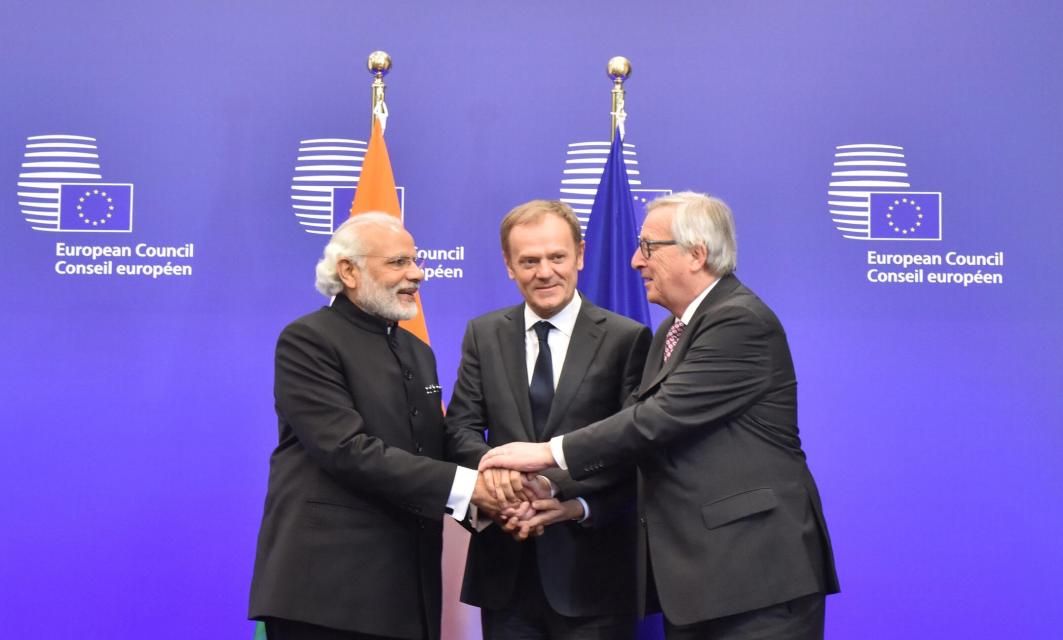
There has been an impetus to take EU-India cooperation to a next level amidst concerns stemming from Brexit, the trade war initiated by President Trump and China’s Belt and Road Initiative. As geo-economics is increasingly becoming the norm, EU-Indian relations should go beyond traditional government-to-government and business-to-business relationships to that of strategic economic cooperation. A focus on sustainable connectivity can provide a framework for such cooperation between Europe and India. It is considered a priority by both and is a field where the two sides share interests and approaches.
In this Policy Brief, Maaike Okano-Heijmans and Vishwesh Sundar detail opportunities for sustainable connectivity on the ground, taking relations between the Netherlands as an example. Three cases are highlighted: the bottom-up approach of the INDUS Forum, the potential for Indo-Dutch collaborations under the International Solar Alliance Framework, and the long-term vision of realizing the Bangladesh, Bhutan, India, and Nepal (BBIN) waterways’ connectivity.
Separately, a change in approach of European engagement with India can assist in bringing relations to the next stage. Enhanced sub-national diplomacy is in place, and the Japanese approach of engaging with India can provide a roadmap for European countries. Moreover, greater efforts should be made to develop a coordinated EU approach with certain member states taking the lead based on comparative advantage, while engaging with India to cater to the needs and scale of operations in India.