Between War and Return: Scenarios for the Future of Ukraine and Its Refugees
- Russia’s full-scale invasion of Ukraine in February 2022 triggered Europe’s largest displacement crisis since World War II
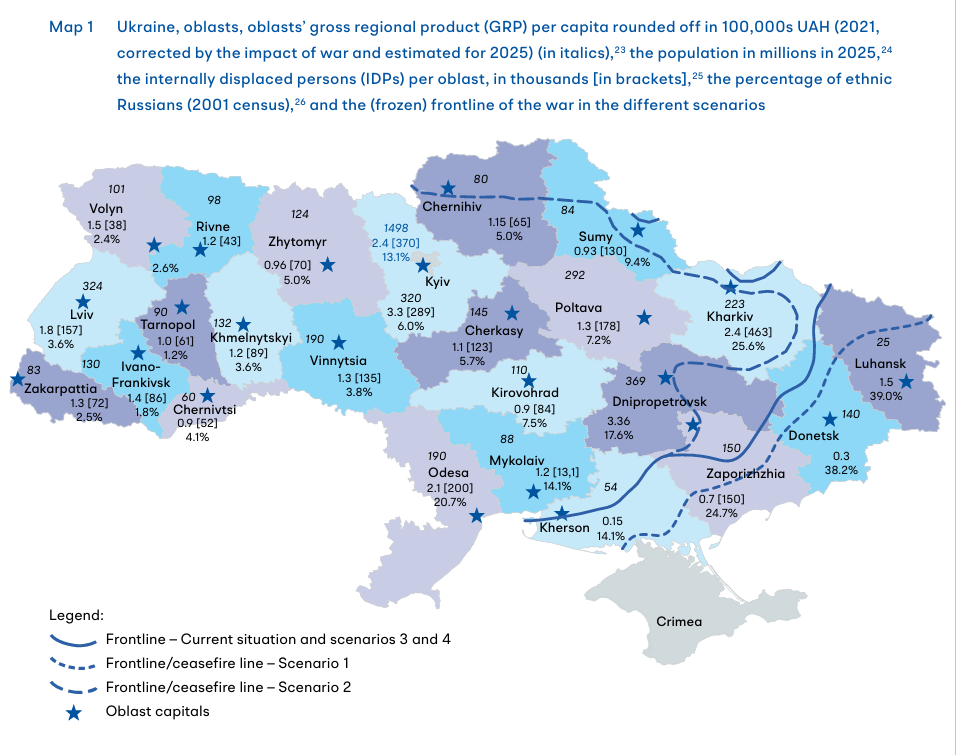
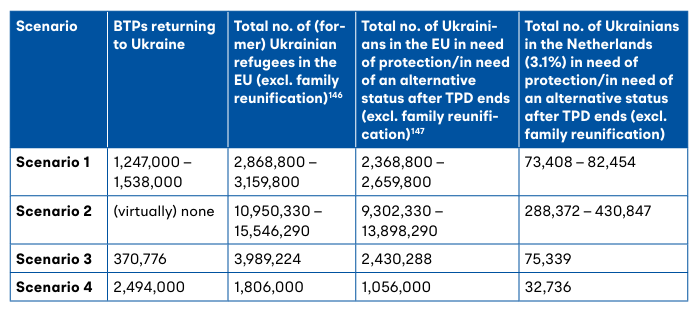
- The report outlines four future scenarios for Ukraine and analyses their impact on migration patterns
- Across all scenarios, many Ukrainian refugees are expected to remain in the EU for years, possibly permanently
- After the end of the war, refugee return prospects will depend on ceasefire terms, Ukraine’s security stability, and the strength of Ukraine’s economic recovery and institutional reforms
- EU member states, including the Netherlands, must plan for long-term refugee stays and develop effective integration strategies
Russia’s full-scale invasion of Ukraine in February 2022 not only led to the largest and most destructive war in Europe since World War II, but also led to the continent’s biggest displacement crisis since that time.
With the war entering its fifth year (the thirteenth year when counting since Russia’s 2014 invasion) and Donald Trump’s fervent diplomatic offensive producing few tangible results, the end of the fighting is still not in sight. At least an equal uncertainty exists about the future of displaced Ukrainians abroad. In order to help policymakers to deal with this fundamental uncertainty and to help them prepare for various possible futures, this report offers scenarios for the future of Ukraine with a particular focus on migration dynamics.
As such, this report is an exercise in strategic foresight, which is a systematic analysis of plausible futures. Because the future is fundamentally unpredictable, analysts and policymakers need to think in terms of multiple possible futures. Narrative accounts of these imagined futures are called scenarios. By providing insight into a range of possible futures, scenarios can help policymakers to prepare for the future, ideally creating a “futures-proof” policy – a policy that anticipates multiple future scenarios.
This report is part of a multi-year research project on the Ukrainian refugee crisis that the Clingendael Institute has been conducting for the Dutch Ministry of Justice and Security for the past three and a half years. Since November 2022, Clingendael has published regular reports analysing the refugee situation within Ukraine, across the member states of the European Union, and in the Netherlands. The aim of these reports has been to assess the likelihood of further (onward) refugee flows and to evaluate the prospects for refugees returning to Ukraine.
Authors


External authors

Related
See all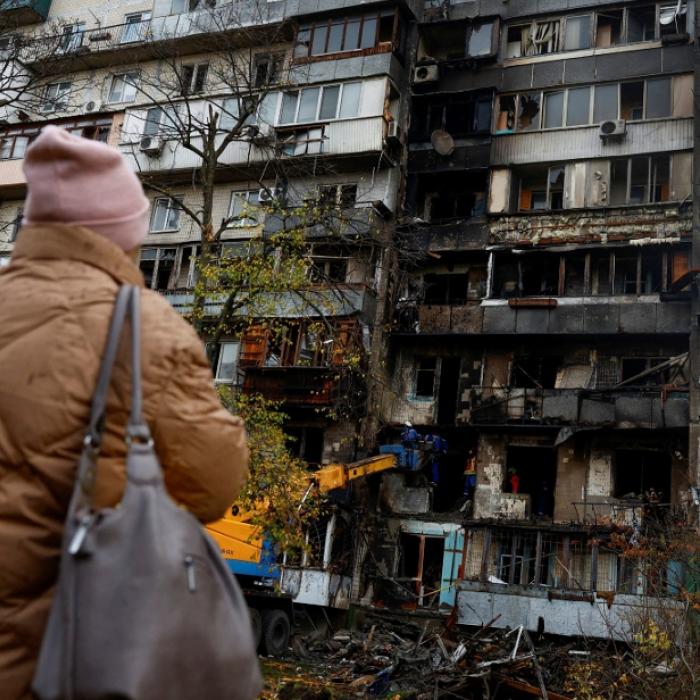
Geen weg terug? Oekraïense ontheemden tussen hoop en realiteit