Bleak with some silver linings: scenarios for EU-Iran relations
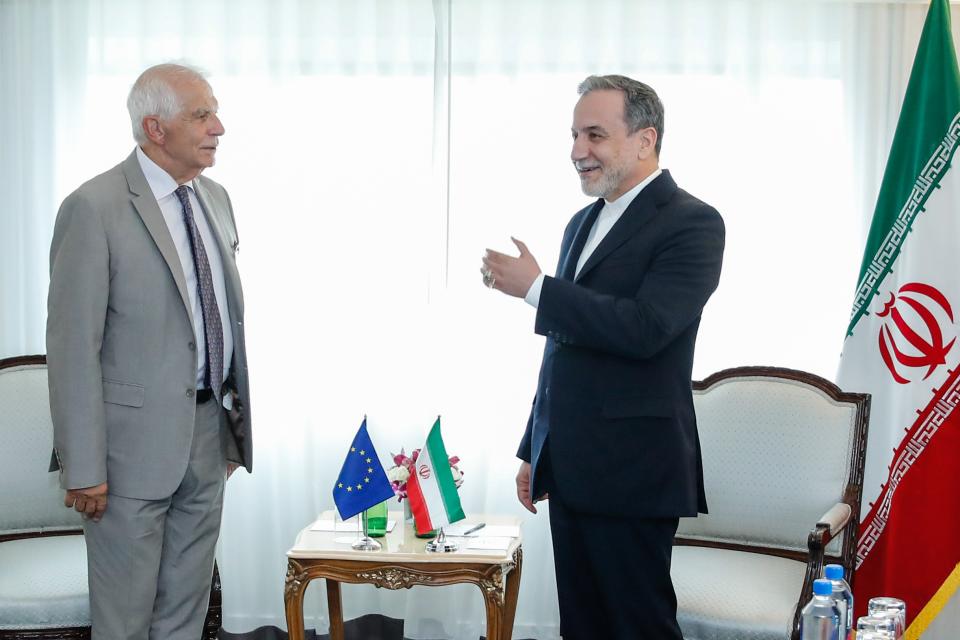
- Tehran views the EU as near to irrelevant. It was after 2018 that an until then pragmatic Iran-EU relationship turned into an incipient geopolitical confrontation.
- Until the EU can implement a more accomodating foreign policy towards Iran, it remains a follower of or hostage to US policy.
- Hence, it is largely unable to prevent or mitigate the consequences of most conflict scenarios between the US/Israel and Iran, due to its lack of leverage and/or quid pro quos valued by Tehran.
- Meanwhile, the EU should avoid further sanctions that damage relations without a clear positive benefit as long as there is a prospect for meaningful nuclear negotiations
- An independent EU policy on Iran will also have to include offerings that matters to Iran and can be credibly delivered if it is to be effective
In 2015, relations between the European Union (EU) and Iran reached a peak with the conclusion of the nuclear deal (JCPOA) between Russia, China, the US, the E3 (France, Germany and the United Kingdom) and Iran. The deal was capably facilitated by the EU External Action Service without losing sight of the interests of its larger Member States. At the surface, Iran accepted temporarily binding constraints on the development of its nuclear programme in exchange for reintegration into the global economy. At a deeper level, the deal was meant to prevent nuclear proliferation across the region and to start building back trust – especially between the US and Iran – as a basis for follow-up discussions about regional threat perceptions and security postures, including elements like Iran’s missile programme and regional security activities.
However, by late 2024, three major turning points had brought EU-Iran relations to an all-time low: first, the E3 and EU’s failure to deliver on their part of the nuclear deal after US withdrawal in 2018; second, Iranian arms deliveries to Russia since 2022; and third, near-unconditional support for Israel from European countries like Germany, the UK and France since 7 October 2023, including against Iran and its ‘axis of resistance’ (a network of armed groups linked to Iran with various degrees of autonomy and support).
It is in this context that the present brief outlines scenarios for EU-Iran relations for the next two to three years. The purpose of scenario development is to imagine different futures under conditions of uncertainty in order to foster a better understanding of the pathways that can lead to any of these futures.
- Scenario 1: Potential for reasonable relations
- Scenario 2: Proliferation dominates relations
- Scenario 3: Full-blown hostility dominates relations
- Scenario 4: Frozen relations with intermittent crises