Cutting through the green hype: the political economy of renewable energy in the United Arab Emirates and Oman
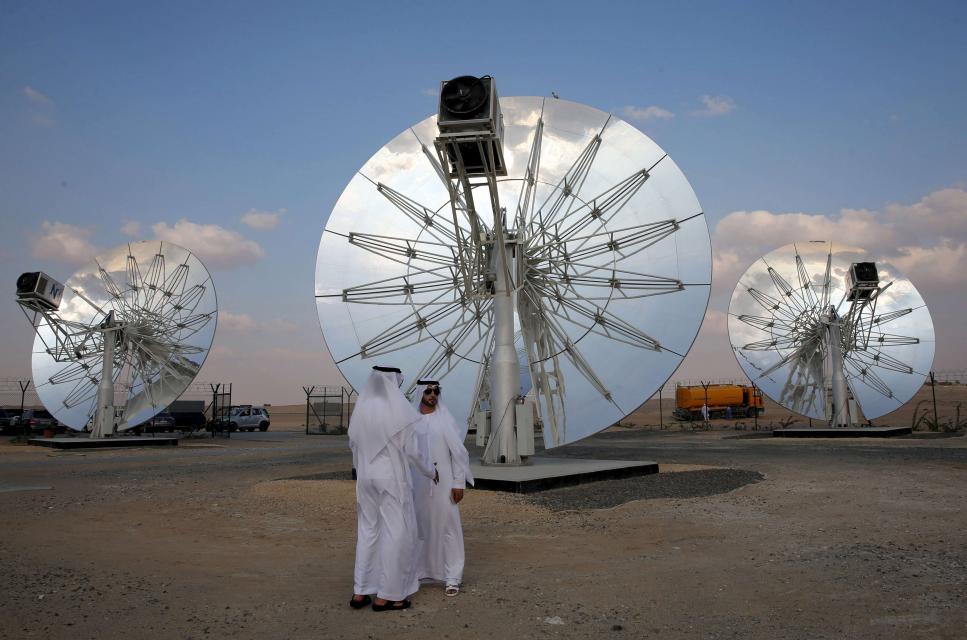
- Gulf states are interested in renewables, but economic and political priorities outweigh environmental ones.
- Increasing the share of renewables in the domestic energy mix supports energy security, attracts FDI, and frees up fossil fuels for export.
- Renewables don't threaten the rentier system or the Gulf's role as energy provider.
- The EU should see Gulf states as green transition partners, not just energy suppliers.
Despite grand projects, ambitious strategies and optimistic rhetoric, the Gulf Cooperation Council (GCC) member states are still far from reaching their proclaimed renewable energy transition goals. This policy brief cuts through the green hype by providing a substantive evaluation of the growth of the renewable energy industry in two GCC states: the United Arab Emirates and Oman. Applying a political economy perspective, the authors demonstrate that the development of the renewable sector by the Emirati and Omani governments aims to increase fossil fuel exports, attract foreign investment into the non-oil economy, and create a greener image all at the same time. As a result, the renewable energy transition in the Gulf is conducted in a way that reinforces existing political-economic hierarchies, reframes the GCC’s role as a global energy supplier and stays away from radical transformation.
From the perspective of global efforts to slow down and mitigate negative effects resulting from climate change, the renewables strategy of both Gulf states signifies progress compared with their previous position of non-interest or even denial as it reduces their carbon pollution footprint, but it does not reflect a genuine commitment.
Authors


External authors
Related
See all