From dissent to action: Understanding Lebanon’s political mobilization in a sectarian context
- Lebanon faces political and economic crises, with entrenched sectarian governance undermining reform and unity.
- Sectarian elites exploit grievances and divisions, co-opting dissent to maintain control and resist systemic change.
- The new President and Prime Minister are presented with an opportunity to foster cross-sectarian unity and pursue gradual, sustainable reforms.
- International support should prioritise civic education, decentralisation and dialogue to empower communities and reduce elite control.
Lebanon is in the midst of an unprecedented economic and political crisis that has exposed the deep flaws of its consociational governance system, in particular the institutional-identarian silos on which its governance is based. These silos create distinct political contexts that go beyond sectarian identities, as individuals are shaped by different governance structures that influence their access to resources, opportunities and forms of (dis)unity. The ongoing conflict with Israel provides one example of how fragmented political realities polarize the country’s socio-political dynamics, reinforce divides and highlight the divergent positions of various communities regarding state development and consolidation. As a result, protests and opposition movements remain fragmented and unable to form cohesive cross-sectarian alliances.
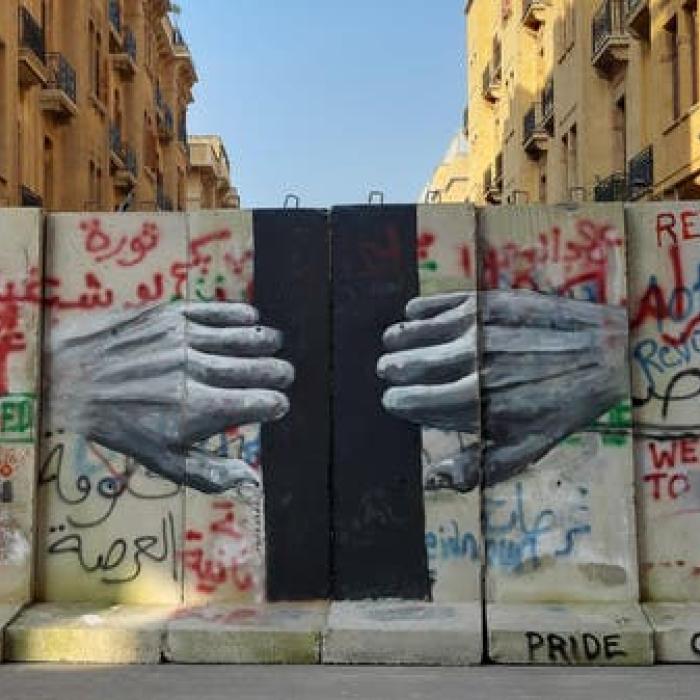
This report examines the drivers of protests in Lebanon, focusing on how individuals and groups organize and mobilize within the country’s fragmented political contexts. It analyzes how governance structures that are shaped by sectarian networks and political realities affect citizen engagement with the state and how opposition movements gestate. In particular, it explores how different communities, each subject to distinct political and economic conditions, experience and respond to governance failures and how these dynamics affect the potential for cross-sectarian collaboration. The contrasting experiences of the October 2019 protests in Tripoli, marked by fragmented governance that exacerbates economic marginalization, and those in Southern Lebanon, defined by centralized governance that consolidates dependency on sectarian elites, demonstrate how existing power structures limit the formation of a unified opposition, shapes the nature of protest and its demands and frames political responses by sectarian elites.
Authors

Related
See all