Exploring Economic Security Toolkits
- Due to increasing geopolitical tensions and the use of economic pressure tools on the global stage, governments are increasingly focusing on ensuring economic security (ES).
- The turbulent political economy also presents a challenge for the Netherlands in managing economic risks, maintaining competitiveness, and protecting critical infrastructure and supply chains.
- Internationally, countries design their ES approaches differently, combining protect, promote, and partner measures while seeking to enhance public-private cooperation.
- An effective ES approach requires coherent policies, inspired by international best practices.
- Key pillars include collaboration between governments, a vigilant and knowledge-driven approach, and alignment with (international) sector partners with shared interests.
Key insights from eleven countries
As geopolitical tensions rise and countries increasingly use economic tools to exert political pressure, many governments are investing in safeguarding their economic security (ES). There is a growing need to manage economic risks, maintain industrial competitiveness, and protect crucial assets such as critical infrastructure and strategic supply chains. Aiming to inform enhanced Dutch action, this Clingendael Policy Brief offers a concise comparison of ES instruments across eleven frontrunner countries: China; the United States; Australia; Canada; Germany; France; Finland; Japan; Taiwan; the United Kingdom; and South Korea. Each of these countries aligns protective, promotional and partnership measures in distinctive ways. Most have coordination mechanisms with the private sector in place or seek to improve these to further the effective implementation of their ES toolkits.
Going forward, the Netherlands can benefit from developing a cohesive ES approach at both the national and EU levels. Best practices such as Finland’s close collaboration with businesses, Japan’s Economic Security Council, Taiwan’s Asia Silicon Valley Development plan, or France’s ES-intelligence can serve as an inspiration. More broadly, the challenge is to enhance governance structures, ensure vigilant and knowledge-driven economic security, and strengthen (international) partnerships and cooperation.
This policy brief contains selected findings of the original report in Dutch.
Authors


Related
See all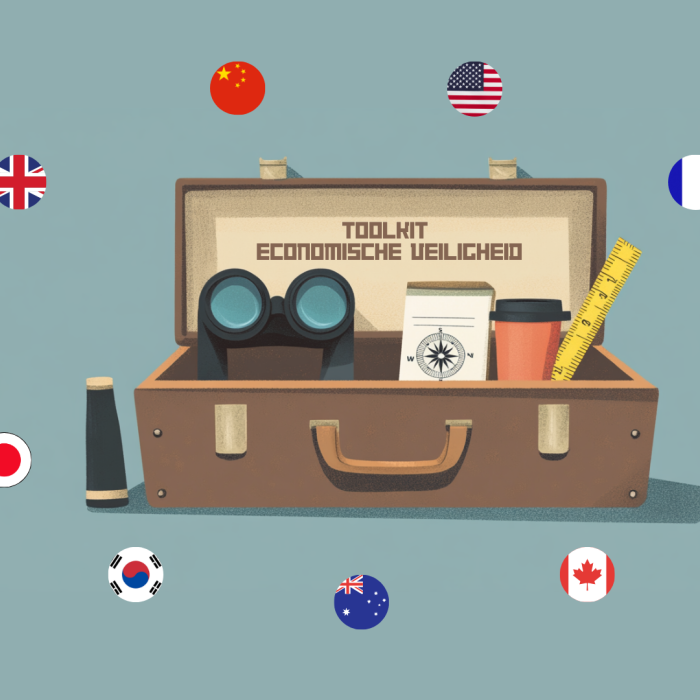
Verkenning Toolkit Economische Veiligheid

Balancing openness, economic security and national security