Beyond the IRGC: The rise of Iran's military-bonyad complex
- After 1979, Iran’s revolutionary-religious foundations (bonyads) and the Islamic Revolutionary Guard Corps have come to control the ‘commanding heights’ of the country’s economy through a vast parastatal network of enterprises, business networks and economic assets
- This ‘military-bonyad complex’ is the fundamental glue of Iran’s political economy and underpins the state’s economic power. Its authority has only been strengthened by cycles of sanctions, crisis and political continuity
- Despite the beatings that Iran and its partners in the region have suffered of late, this complex remains unbroken, allows for little domestic political change, seeks to restore the axis of resistance and will shift even further towards Russia and China
By Kayhan Valadbaygi
Editor’s introduction
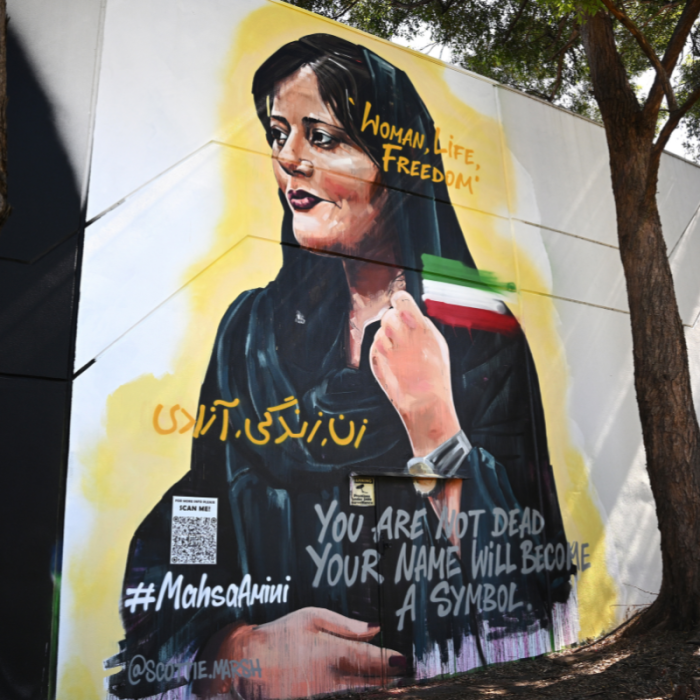
In September 2022, the death of Mahsa Jina Amini marked a major turning point for Iran. The event sparked lengthy nationwide protests across socio-economic classes and population groups whose demands rapidly evolved from discarding controversial hijab regulations to calls for the overthrow of the Islamic Republic. The Iranian government responded with repression, killing over 400 protesters in late 2022 and early 2023, according to human rights groups.
The Clingendael blog series ‘Iran in transition‘ explores power dynamics in four critical dimensions that have shaped the country’s transformation since: state-society relations, intra-elite dynamics, the economy, and foreign relations. This blog post examines the origins, evolution and contemporary role of Iran’s military-bonyad complex as the country’s primary set of economic agents that tie political ideology and economic power together in a dense informal web of control.
Iran’s military-bonyad complex[i]
Many in the policy and research community have highlighted the large and growing role of the Islamic Revolutionary Guard Corps (IRGC) in Iran’s economy. Yet, the economic power of the IRGC is only a part of a broader and layered network that links revolutionary-religious foundations (bonyads)[ii] and military institutions into what can be described as the military-bonyad complex. The rise of this economic juggernaut, accounting for more than 50 per cent of the country’s GDP in 2013 by my own calculations, was a gradual process shaped by global dynamics, historical contingencies and institutional design. It began in the aftermath of the establishment of the Islamic Republic and the Iran–Iraq war; it deepened during Rafsanjani’s so-called ‘reconstruction era’; and it expanded significantly during the Ahmadinejad administration.
The institutional structure of the Islamic Republic has facilitated the evolution of the military-bonyad complex at every turn. Foundations like the Mostazafan Foundation and the Imam Reza Shrine Foundation, as well as Iran’s military apparatuses like the IRGC, Artesh and police forces, were all created with revolutionary objectives in mind, are unaccountable and have their leadership appointed directly by the Supreme Leader. In other words, these institutions are ideologically aligned, autonomous, cohesive and loyal. The Guardian Council, which is tasked with ensuring Iran’s political institutions and decisions reflect revolutionary ideology, protects and expands these institutions and their economic networks by tailoring the content of legislation to their interests and, via its powers to establish eligibility, ensures loyal candidates are appointed to elected offices with supervisory authority. As a result, the military-bonyad complex has become a central ‘shadow’ pillar of the state with interests and influence across many economic sectors and exerting a significant impact on both domestic politics and foreign policy. Its role is not limited to wealth accumulation as it also consolidates power and preserves privilege. In this essay, I trace the rise of the military–bonyad complex, highlighting how institutional arrangements and economic reforms intersect to produce its enduring dominance. I also discuss the influence of this complex on Iran’s foreign and security policy in the context of recent geopolitical events, such as the Israeli attack on Iran.
From redistribution to conglomerates: the birth of the bonyads
To understand the rise of the military-bonyad complex, it is necessary to return to the early years of the Islamic Republic. In the aftermath of the 1979 revolution, a wave of nationalisation reshaped the economic order. The assets of the old ruling elites were confiscated and redistributed by two methods. First, they were classified as either governmental (dolati) or as public (omumi), basically transforming them into state-owned enterprises (SOEs). Next, dolati assets were operated under the authority of the Prime Minister, while omumi assets fell under the jurisdiction of the Supreme Leader. The first class of assets included private banks, insurance companies, and heavy industries that were now under the control of newly established revolutionary ministries, such as Petroleum, Mines and Metals, Heavy Industry, and Industry. These ministries were part of the state’s executive branch, and their heads were appointed by the Prime Minister.[iii]
The second class of assets was more politically significant. In the name of redistributing wealth to the ‘downtrodden’ (mostazafan), the new revolutionary state created ‘non-profit, para-governmental foundations’ (bonyads). Revolutionary Courts’ expropriated royal and elite assets, which were then allocated to the Supreme Leader as ‘public’ properties, channelled into bonyads and to be used in the interest of achieving revolutionary objectives. The Mostazafan Foundation, the Martyrs’ Foundation, and the Imam Khomeini Relief Committee quickly became central pillars of this system. Alongside these, pre-existing religious endowment foundations were empowered, such as the Imam Reza Shrine Foundation, while entities like the Fifteen Khordad Foundation were created under the personal authority of the Supreme Leader and fell entirely outside of any form of government oversight.
The Iran-Iraq War amplified the role of these institutions substantially. Initially positioned as relief and reconstruction agencies, the bonyads leveraged their privileged access to resources to become sprawling semi-private monopolies. By the mid-1980s, the Mostazafan Foundation alone had assembled a vast empire: 203 mining and manufacturing enterprises, 472 commercial farms, 101 construction firms, 238 trading and service companies, and nearly 2,800 real estate holdings.
The financial and economic resources of these institutions (bonyads) were originally intended to advance religious and revolutionary goals. However, over time, wealth accumulation in the service of a wider range of ruling elite objectives, such as self-enrichment, political control, regime survival and social engineering, became an end in itself. What began as vehicles for social justice evolved into corporate-style conglomerates that were shielded from oversight and yet central to the power base of the revolutionary state.
Rafsanjani’s compromise and Khatami’s pushback: The battle over the economy
The post-war presidencies of Akbar Hashemi-Rafsanjani (1989-1997) and Mohammad Khatami (1997–2005) marked the first attempt to liberalise the Iranian economy and to re-engage with global markets after a decade of revolutionary upheaval and war-induced crisis. Yet, these reforms neither curtailed the economic influence of the bonyads nor prevented the military from expanding its role in the economy.
This was in large part because Rafsanjani’s reconstruction strategy rested on a compromise. Essentially, he forged a pact with the bonyads and the IRGC to curb the influence of Islamist leftists in government, who were the most vocal critics of economic liberalisation. In return, the vast holdings of the bonyads were exempted from privatisation. More significantly, the Rafsanjani administration interpreted Article 147 of the Constitution in a way that justified the entry of the IRGC into economic activities even though the article encourages the Army (Artesh, i.e. not the IRGC) to participate in postwar reconstruction. Under this provision, the IRGC was formally invited to participate in rebuilding war-torn regions, giving rise to its engineering arm, Khatam al-Anbiya Construction Headquarters (Ghorb). Bonyads such as the Mostazafan Foundation and the Imam Reza Shrine Foundation were also granted privileged access to reconstruction projects, which strengthened their position as parastatal conglomerates.
A central element of Khatami’s reformist agenda, which followed Rafsanjani’s reconstruction strategy, was to reduce the extensive economic role of the bonyads. His government introduced measures such as exchange-rate unification, the creation of a unified social safety net, and a renewed push for privatisation. For the first time since the start of the liberalisation process, over 1,000 bonyad-owned enterprises were listed for privatisation. Yet these efforts ran into systemic resistance. The Guardian Council blocked provisions enabling this push during the approval process of the Third Development Plan. Similarly, governmental attempts to subject Setad (another powerful foundation established by Khomeini to manage abandoned post-revolutionary assets) to parliamentary or governmental oversight were ruled unconstitutional by the Guardian Council.
The result was a further entrenchment of the bonyads. Although political pressure forced the resignation of the head of the Mostazafan Foundation in 1999, only a handful of over 400 firms under its control were actually privatised. By the late 1990s, the holdings of the foundation ranked second only to the National Iranian Oil Company in scale. The Imam Reza Shrine Foundation also expanded aggressively, establishing the Razavi Economic Organisation and diversifying into agriculture, industry, and consumer markets. Setad, meanwhile, consolidated its resource base by confiscating assets throughout the 1990s and launched Tadbir Investment Co. in 2000 to extend its portfolio beyond real estate.
By the end of the reform era around the mid-2000s, the bonyads and IRGC-affiliated firms had not been disciplined by market reforms but instead leveraged them to entrench their autonomy. Rather than being rolled back, their economic empires expanded, positioning them as indispensable yet unaccountable forces in Iran’s political economy. This concentration of power produced significant structural distortions that manifested themselves, for example, in systemic corruption, preferential allocation of state resources and contracts to affiliated enterprises, suppression of competitive markets, and a decline in productivity and innovation.
The consolidation of the military-bonyad complex after 2005
The Ahmadinejad presidency marked a decisive leap in the power of Iran’s parastatal economy. While all revolutionary foundations expanded their role, it was the IRGC that underwent the most dramatic transformation, from a modest economic player to a dominant force across multiple sectors. This largely happened through a constitutional sleight of hand. Article 44 of the 1979 Constitution had originally defined the economy as primarily state-controlled, granting the government ownership over most economic activities and limiting cooperative and private sectors to marginal roles. A new interpretation of this article, which was ratified by the Supreme Leader in 2004, reduced the government’s role from direct ownership and management of enterprises to one of policy-making, supervision, and oversight. In 2006, the Supreme Leader issued a complementary decree that expanded this reinterpretation, authorising ‘public, non-governmental entities and organs, the cooperative and private sectors’ to invest in, own, and manage up to 80 per cent of shares in major state sectors, including banking, insurance, energy, telecommunications, transport, and even defence industries. This complementary decree provided the legal cover for Ahmadinejad’s government to transfer major state assets from government ministries to firms affiliated and owned by the IRGC and bonyads, which were interpreted as ‘public, non-governmental entities’. As a former commander, Ahmadinejad maintained close ties with the IRGC and other revolutionary foundations. In reflection of such ties, two-thirds of his first cabinet were drawn from the military and security forces, primarily former IRGC and Basij officers.
The IRGC capitalised quickly on the opportunity. Through its financial arms, namely the Sepah Cooperative Foundation, the Armed Forces Social Welfare Organisation and the Ansar Financial and Credit Institution, the IRGC acquired major stakes in Iranian companies listed on the Tehran Stock Exchange. The Sepah Cooperative Foundation controlled investment groups such as Tose’eh E’temād Mobin. The Armed Forces Social Welfare Organisation, one of Iran’s largest, gained ownership of numerous enterprises. And Ansar grew into a nationwide bank with over 600 branches and around six million customers. Even the Basij, the IRGC’s paramilitary arm, has emerged as a major economic player through the Basij Cooperative Foundation. It has made extensive investments in the stock market, industry, services, oil, petrochemicals, and banking. Its affiliated companies are difficult to track, as the foundation periodically incorporates new business entities, likely to evade sanctions.
Khatam al-Anbiya (Ghorb), the engineering conglomerate of the IRGC, emerged as the most visible symbol of this rise. By 2017, it had completed more than 2,500 projects, ranging from dams, highways, and metro lines to hospitals and agricultural schemes. Crucially, international sanctions further entrenched its position. For instance, when multinational firms such as Shell and Total withdrew from Iran’s energy sector, Ghorb subsidiaries were handed no-bid contracts to develop phases of the South Pars gas field. With a labyrinth of subsidiaries, front companies, and charitable cover organisations, the true scope of the holdings of Ghorb remains opaque, though reports estimated it controlled more than 800 registered companies as early as 2010. Its revenues were shielded from taxation and state oversight under the pretext of being channeled into anti-poverty projects through subsidiaries such as Kosar Construction Headquarters.
Towards the end of his tenure, mounting tensions between Ahmadinejad and the military-bonyad complex effectively ended his political career. They were largely due to his personal style becoming too contentious and, more importantly, his views diverging from those of the military-bonyad complex. He attempted a comeback after 2013, but his efforts were blocked by the Guardian Council. Nevertheless, by the end of his tenure, the military-bonyad complex had already consolidated into a network of parastatal conglomerates straddling strategic industries, controlling vast financial resources and operating beyond meaningful oversight.
Since the second half of the 2000s, sanctions greatly facilitated the consolidation of the economic power of the military-bonyad complex. The Ahmadinejad government had pursued a security-driven foreign policy and a hardline nuclear stance, which deliberately undermined rapprochement with the West. This halted further integration into global markets, as Iran’s two previous administrations had aimed for, and more and more international sanctions were imposed between 2006 and 2010. President Ahmadinejad dismissed these as ‘worthless pieces of paper’. They were, moreover, embraced by the Supreme Leader as an ‘opportunity’ to cultivate an independent national economy. Rhetoric aside, sanctions provided a convenient pretext in practice for an unprecedented expansion of the IRGC and bonyads into the economy, legitimised under the slogans of ‘economic resistance’ and ‘self-reliance’.
When US and EU sanctions escalated after 2012, targeting all Iranian banks and excluding them from SWIFT, financial flows were choked and oil exports sharply reduced. In response, the military-bonyad complex adopted multiple strategies to circumvent these restrictions. It intensified efforts to expand the ‘axis of resistance’ in the region to put pressure on the US and its allies. More importantly, it developed covert mechanisms to ship oil to China and established smuggling routes through Turkey and the UAE. Despite these innovative measures, which have also been used by Russia after invading Ukraine, they did not fully mitigate the economic shock that followed.
This environment paved the way for Hassan Rouhani’s victory in the 2013 presidential election. His approach aligned with the Rafsanjani and Khatami administrations in prioritising reconciliation with the West. One of his stated priorities was to confront the economic dominance of the military-bonyad complex. He publicly criticized these unaccountable power centres, describing privatisation under Ahmadinejad as the transfer of assets from ‘an unarmed government’ to ‘a government with arms’. Yet rhetoric did not translate into structural change. Even during the brief window of sanctions relief after the 2015 nuclear deal, the Rouhani administration failed to curb the economic reach of parastatal conglomerates. While sanctions had reduced government revenue streams, they had also deepened ICRG and bonyad economic control.
The 2021 election of Ebrahim Raisi, himself a former head of the Imam Reza Shrine Foundation (a bonyad), completely fused state power with the revolutionary foundations. The reformist rhetoric of his successor, Masoud Pezeshkian, has thus far shown no sign of altering this structural reality.
The geopolitical economy of the military–bonyad complex
The economic interests of the military-bonyad complex extend well beyond Iran’s domestic economy. They also influence the contours of its foreign policy. By presenting itself as the guardian of the 1979 revolution, the complex frames deeper economic engagement with Western capital as a direct threat to the principle of self-sufficiency. Instead, the military-bonyad complex has championed the ‘Look East’ strategy to strengthen Iran’s political and economic ties with China and Russia. These partnerships are portrayed not only as a hedge against Western pressure, but as part of an alternative - more multipolar - world order.
This dynamic was starkly visible in Syria, too. For the military-bonyad complex, intervention served two purposes: maintaining the ‘axis of resistance’ as a defensive shield against pressure from the US and its regional allies; and positioning itself as a supplier of post-war reconstruction. As Reuters recently revealed, the military-bonyad complex modelled its Syria economic strategy on the US Marshall Plan, framing postwar reconstruction as ‘a $400 billion opportunity’. By 2015, Iran was spending an estimated $6 billion annually in Syria and, in return, secured agreements with the Assad government to recover debts through lucrative contracts in land, telecom, housing, mining, and oil rights. In other words, Syria was not only a geopolitical battleground, but also a marketplace for wealth accumulation, and hence an arena where revolutionary rhetoric and profit motives converged. Moreover, while the military-bonyad complex has diversified into finance, oil, gas, and petrochemicals, its core focus remains the built environment (i.e., construction, contracting, development, and telecommunications). Hence, the reconstruction of Syria was viewed as a good fit and a growth opportunity.
Contested futures
The economic and political dominance of the military–bonyad complex has come at a steep cost, however, by reducing the legitimacy of the Islamic Republic among its own population. It has sparked unprecedented waves of popular uprisings in recent years, most notably the 2022 ‘Women, Life, Freedom’ movement, which marks the most serious nationwide grassroots challenge to the authority of the Islamic Republic since its consolidation in the early 1980s. The primary response of the state has been the brutal use of force.
Nonetheless, these uprisings have compelled the Supreme Leader and the military–bonyad complex to permit limited political openings, resulting in the election of reform-oriented Masoud Pezeshkian in 2024. Yet, there has been little substantive change in the trajectory of the country. Although Pezeshkian has adopted semi-reformist rhetoric, his ability to influence the Supreme Leader or exert meaningful pressure on the military–bonyad complex is far weaker than that of previous presidents such as Rafsanjani, Rouhani or Khatami.
On the foreign policy front, Iran has engaged in talks with the United States, but prospects remain dim. US demands are largely unacceptable to the military–bonyad complex, whose overriding priority is to deepen ties with China and Russia in order to mitigate sanctions and safeguard its interests, as part of Iran’s ‘Look East’ development strategy that complements its ambitions of self-sufficiency. This strategic pivot has been underscored by Iran’s accession to the Shanghai Cooperation Organisation in 2023 and to BRICS in 2024. In addition, Iran has developed a dense web of bilateral agreements with Beijing and Moscow, culminating in the 25-year Cooperation Agreement with China in 2021 and the 20-year Strategic Partnership Treaty with Russia in 2025.
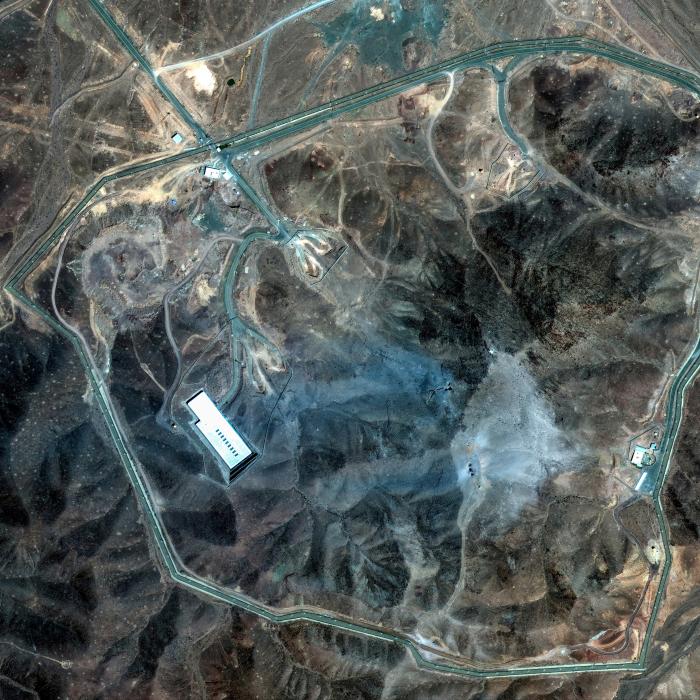
The US decision to bomb Iran’s nuclear facilities in August 2025, followed by France, Germany and the UK triggering the 2015 nuclear deal’s snapback mechanism to reinstate all pre-2015 UN sanctions, only strengthens hardline views in Tehran. Although the ‘axis of resistance’ has been weakened by recent Israeli military actions, the military–bonyad complex remains intent on reviving it as part of a long-term defence strategy.
It is uncertain whether the military–bonyad complex can suppress grassroots resistance, curb the influence of rival elite factions and whether the China–Russia bloc will be sufficient as partnership to keep Iran’s embattled economy afloat. Yet, it is precisely such struggles from below, elite contestation within the state and/or major shifts in the global order that can meaningfully reduce, or even dislodge, the dominance of the military–bonyad complex. Until then, it will probably remain alive and well.
Read earlier blogs in this series
[i] The empirical foundations of this essay are drawn from my book Capitalism in Contemporary Iran (Manchester University Press, 2024; paperback edition forthcoming January 2026).
[ii] The revolutionary-religious foundations were originally established as charitable organisations. However, over time their stated objectives shifted toward the broader goal of national development. Consequently, while most of these foundations maintain a charitable branch (for instance, the Barakat Foundation functions as the charitable arm of Setad), these branches only play a marginal role in the broader business portfolio of the foundations.
[iii] After the revolution, Iran’s political system was structured around three top offices: the Supreme Leader, the President, and the Prime Minister. Although the President was directly elected by the public, executive authority primarily rested with the Prime Minister, who led the government. The 1989 constitutional reform abolished the prime ministership and consolidated executive power in the presidency.
Related
See all