Strengthening regime resilience: Tehran prepares for conflict and succession
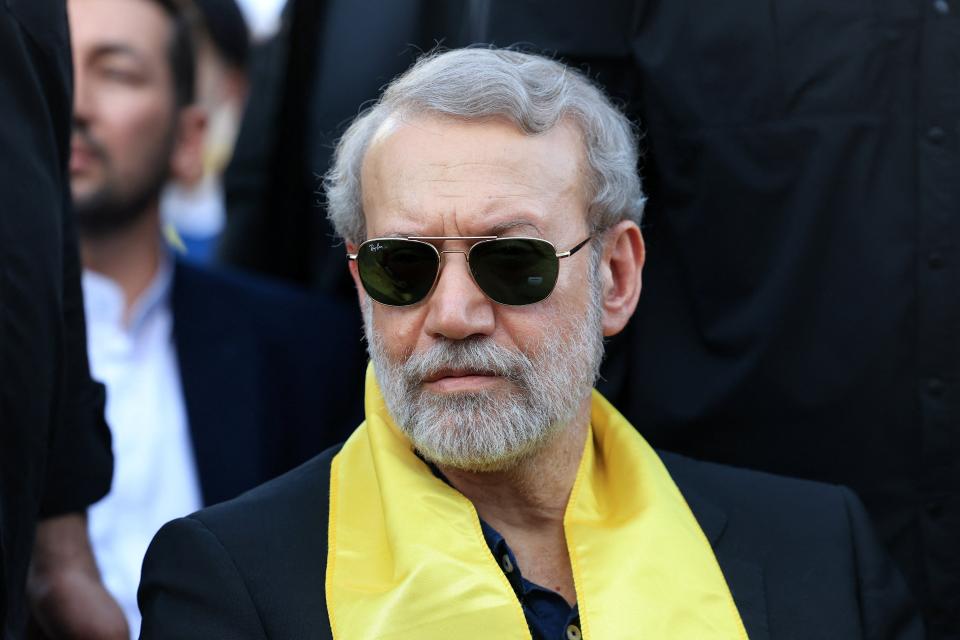
- The creation of a Defense Council in early August 2025 and Ali Larijani’s appointment as secretary of the Supreme National Security Council (SNSC) are not just bureaucratic moves, but part of a deliberate effort to embed leadership and command more strongly in institutions that can function without Supreme Leader Khamenei
- These moves also reflect a broader trend of using councils to develop policy consensus and coordinate action across Iran’s fractious political elites and government
- The upshot for Israel, the US and Europe is that the Islamic Republic is improving its resilience in a bid to endure. This makes it less likely to fracture under pressure of protests, sanctions or war. While Tehran insulates its top-level security decision-makers from direct diplomacy, it is also excluding ultra-hardliners from its inner circles of power
By Hamidreza Azizi and Erwin van Veen
Editor’s introduction
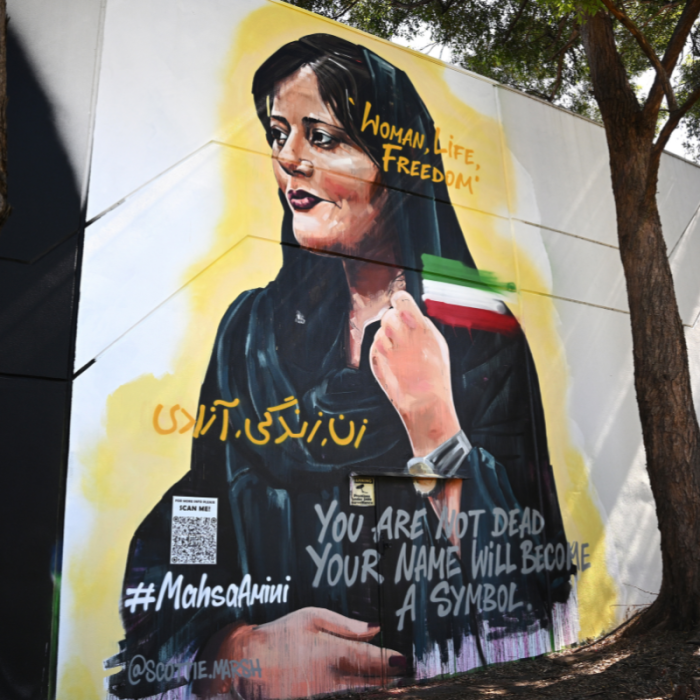
In September 2022, the death of Mahsa Jina Amini marked a major turning point for Iran. The event sparked lengthy nationwide protests across socio-economic classes and population groups whose demands rapidly evolved from discarding controversial hijab regulations to calls for the overthrow of the Islamic Republic. The Iranian government responded with repression, killing over 400 protesters in late 2022 and early 2023, according to human rights groups.
The Clingendael blog series ‘Iran in transition‘ explores power dynamics in four critical dimensions that have shaped the country’s transformation since: state-society relations, intra-elite dynamics, the economy, and foreign relations. This blog post examines the significance of the creation of Iran’s new Defense Council and the appointment of Larijani as secretary of the Supreme National Security Council for the politics of regime survival.
All is not what it seems: The politics of bureaucracy
Iranian state media announced the creation of a Defense Council in early August 2025, situated within the Supreme National Security Council (SNSC). Just days later, President Masoud Pezeshkian appointed Ali Larijani, the former parliament speaker and a veteran political insider, as secretary of the SNSC.[i] Both moves are an answer to the problem of the Islamic Republic’s political elites as to how they can preserve unified command and control after Supreme Leader Ayatollah Seyyed Ali Khamenei’s departure, or in case of another Israeli strike.
The new Defense Council concentrates operational military authority – such as force positioning and crisis response - in a body akin to a small war cabinet. Importantly, its composition at creation excludes representatives of the most hardline factions of Iran’s political elites, particularly the Stability Front. This means that in times of war, these factions will not participate in wartime military decision-making and, hence, that Iran will have a broader set of options than just striking back. Admittedly, hardline factions remain powerful in other arenas. They dominate parliament, shape the state broadcaster through figures such as former SNSC Secretary Saeed Jalili’s brother, Vahid, and continue to see themselves as the rightful heirs to Khamenei’s 2019 call for “young, faithful revolutionaries” to lead the “second step of the revolution.”
The SNSC, in turn, remains the regime’s central forum for strategic coordination of security policies. But it now operates under Larijani’s direction, which similarly diminishes the influence of hardliners as he is neither a reformist nor firebrand, but a pragmatic loyalist with long experience. In other words, Iran’s Supreme Leader appointed a figure that is capable of bridging factions and creating consensus, even in times of crisis.
Finally, both the Defense Council and the SNSC report directly to Khamenei, who also appoints his representatives to them. Nevertheless, they are also the bodies that, upon his death or in case of conflict with Israel, will be in charge and guide either the transition process or the military response. As a result, these recent changes also indicate that the Islamic Republic is upgrading institutions that reduce regime dependence on Khamenei’s person. The aim is to ensure Iran’s strategic command system can withstand the uncertainties of leadership transition as well as external shocks. For Israel, the US and the EU, this development means that Iran’s government is less likely to fracture under pressure and more likely to endure, as well as to respond.
From personal rule to leadership councils
Since its creation in 1989, the SNSC has been the formal body for coordinating Iran’s security and foreign policy. Its membership includes senior ministers, military commanders, and heads of the judiciary and parliament. Its mandate is to forge policy consensus across the political system. Yet in practice, the SNSC has always operated under the shadow of Ayatollah Ali Khamenei. The Supreme Leader is commander-in-chief of the armed forces, and no decision of the SNSC can take effect without his approval. For decades, that arrangement preserved the primacy of his personal authority while allowing policy disputes to be aired and contained within an institutional setting.
The creation of a Defense Council within the SNSC begins to divide responsibilities in a way that institutionalizes leadership and command. The Defense Council’s task is operational, coordinating military planning, integrating the armed services, and centralizing decision-making in wartime. It is chaired by the president, currently Masoud Pezeshkian, but closely monitored by Khamenei through his appointed representatives. The SNSC, meanwhile, retains its traditional role in strategy and policy coordination, but the appointment of Ali Larijani as its secretary reflects a choice for the management of rivalries and brokerage of consensus at a time of acute external and internal stress.
However, Larijani’s return should not be read as moderation. It is a choice for loyalty and competence, not for making concessions or surrendering to US, European or Israeli demands. As a former parliamentary speaker and one-time SNSC secretary, he has the stature to convene ministers, parliamentarians and military leaders. His credibility rests not on ideological fervor but on a proven capacity to bridge factions without threatening anyone’s core interests. In the current arrangement, Larijani is tasked with ensuring the political leadership track functions smoothly while the Defense Council operates a streamlined chain of command in times of war.
This division reflects the system’s recognition after the 12-day war with Israel that consensus-building alone is insufficient in moments of crisis. Iran cannot afford decision-making bottlenecks when external threats are acute and Khamenei’s own longevity is uncertain. By subtly re-orienting the SNSC and creating the new Defense Council, there are now overlapping mechanisms that preserve the Supreme Leader’s supervisory role but delegate initiative more explicitly to trusted lieutenants and that can operate autonomously should such a need arrive.
These moves are not without precedent. Over the past decade, Tehran has increasingly relied on ad hoc councils – such as the Supreme Economic Coordination Council – to manage crises and balance competing power centers. Expanding this logic to matters of security echoes the need to at least create the capabilities that enable rule by collective mechanisms.
Containing but not purging the hardliners
As noted, the recent moves are recalibrating the place of Iran’s most hardline factions within the country’s political system. During the presidency of Ebrahim Raisi, the ultra-hardline Stability Front enjoyed unprecedented influence. The faction dominated parliament – where it still holds majority today - extended its reach into the state broadcaster and positioned itself as the political vanguard to Khamenei’s 2019 call for a new generation of revolutionary elites. That appeal energized a range of activists and bureaucrats who saw themselves as the guardians of ideological purity.
Yet the experience of the past two years revealed the costs of such empowerment. The Stability Front proved adept at obstruction but poor at building consensus. Their dominance in the parliament allowed them to frustrate initiatives of the executive branch while their control over the Islamic Republic of Iran Broadcaster enabled them to influence public narratives in ways that often heightened factionalism. The war with Israel magnified the associated risks as the ideological rigidity of hardliners made both rapid and good decision-making harder. For example, hardliners ascribed the cease fire to Israeli weakness and argued for continuation of the conflict even when it was clear that Iran had suffered major blows in June 2025 and had much more to lose. Moreover, the tendency of hardliners to elevate confrontation over compromise threatened to fracture national unity among Iran’s political elites at a moment of maximum external pressure.
The new configuration is designed to blunt these risks without provoking open rupture. The Stability Front has not been purged; its figures remain inside the political tent. For example, Saeed Jalili continues to sit on the SNSC. But tellingly, he and his allies have been excluded from the newly created Defense Council, the arena where operational decisions about war and military preparedness will be made. The message is unmistakable. Hardliners will retain influence in the legislature, in state media, and in the broader ideological apparatus, but the levers of wartime command will rest elsewhere.
This strategy of containment serves two purposes. First, it reduces the likelihood that ideological voices can paralyze decision-making in a crisis. Second, it avoids creating politically influential dissidents by keeping the hardliners formally included in core institutions. The system has learned that outright exclusion of elite factions is destabilizing – for example, the exclusion of moderates and pragmatists during former President’s Raisi rise to power negatively impacted the legitimacy of rule of his government - but so is unchecked dominance. The irony hereof is stark. The very generation that Khamenei once urged to assume leadership has become a constituency the system now feels compelled to constrain. The second step of the revolution, once celebrated as the future of the Islamic Republic, has been redirected into more tightly bounded spaces.
Succession in wartime
The deeper significance of Iran’s modified security architecture lies in Tehran’s improved ability to maintain continuity of command under extreme pressure. The Defense Council’s tight composition ensures that wartime decisions can be taken swiftly, even in the absence of Khamenei. The SNSC, with Larijani as secretary, complements it by sustaining the broader consensus needed to keep ministries, the judiciary, and parliament aligned. In tandem, the two councils create a dual track: one to manage the politics of leadership, the other to safeguard the mechanics of command. This architecture no longer assumes the Supreme Leader’s constant and personal involvement in every decision. Pragmatic loyalists such as Larijani will operate as custodians of a process designed to carry the system through turbulence without unraveling. In brief, institutionalizing leadership and command ensures Iran’s ruling elites are better prepared for wartime governance and/or the (sudden) absence of its central helmsman.
What to expect of the future?
The upshot of the seemingly bureaucratic changes discussed in this essay is that the Islamic Republic is trying to improve the ability of its regime to endure under extreme future internal or external pressure. This matters for the policies of key European states towards Iran on at least two counts:
To begin with, expectations of regime paralysis or collapse are likely misplaced in the near- to medium-term. The Islamic Republic has mechanisms to ensure cohesion and response even under extraordinary pressure, and it is strengthening these. As such, external actors pursuing strategies that are built on the possibility of (imminent) regime collapse likely misread Iran’s resilience and capacity to resist, as well as to respond.
In addition, the dominance of hard security actors in both councils and the limited relevance of the Foreign Ministry in top-level decision-making means that traditional diplomatic reflexes and channels are becoming (even) less central to decision-making. After all, the Foreign Ministry has been excluded from the Defense Council and its mandate on nuclear negotiations has been transferred to the SNSC. Hence, during crisis, Iran’s military/security officials will lead and diplomats implement. Any diplomatic efforts to manage war and crisis will be slower as intermediaries will be needed to reach the rooms where Iran’s councils of wartime strategy and tactics decide.
Read earlier blogs in this series
[i] The SNSC secretary is formally appointed by the president in his capacity as the council’s chairman. However, the selection must be approved by the Supreme Leader Khamenei.