NATO's Polar Pressure Point
The Svalbard Archipelago and the Russian Challenge
This article was originally published by The Arctic Institute on 27 November, 2025.
A swarm of drones intruding into Poland and fighter jets violating Estonian airspace; recent incidents demonstrate how Russia is escalating its aggression against NATO and its European allies in particular. Understandably, much attention is now given to strengthening NATO’s eastern flank. However, allies should be equally wary of another challenge up north.
Silent geopolitical hotspot
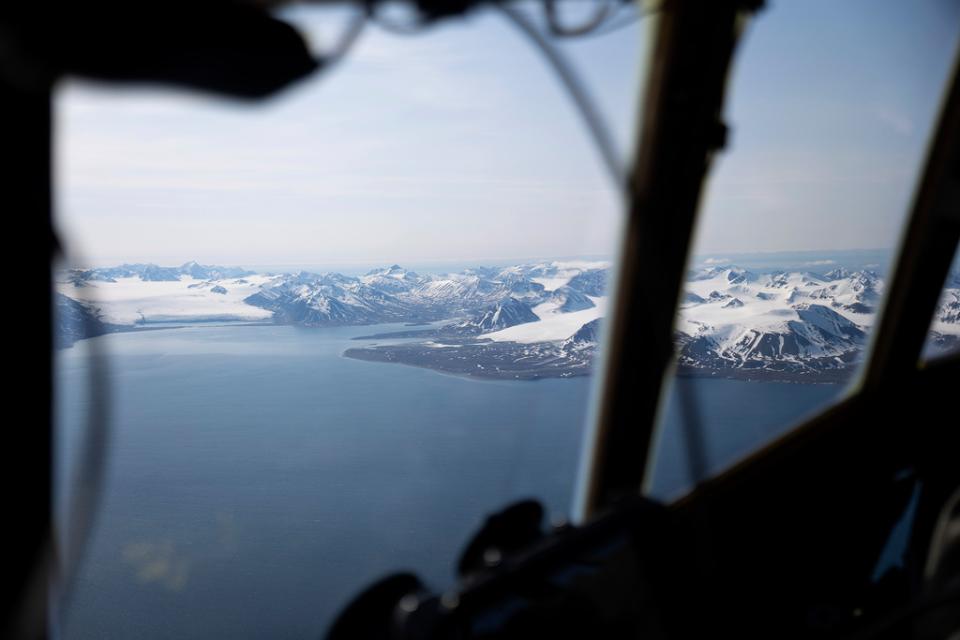
Svalbard, the archipelago on top of the world in the Arctic Ocean, is increasingly becoming a hotspot of geopolitical tensions. The international status of the archipelago was settled in the Svalbard Treaty of 1920. Norway’s conflict mitigation approach since then has been based on the assumption that Russia, despite its increasingly threatening diplomatic language and military posture, still seeks to maintain the status quo in the Arctic. In recent years, however, Russia has increasingly and openly challenged this status quo. Through a surge in patriotic activities, escalating media narratives framing Norway as aggressor and with disinformation campaigns, Russia is fueling a dangerous narrative. The Kremlin also increases diplomatic pressure on Norway by questioning the legal status of the islands. Furthermore, a build-up of forces in the region, military exercises in the Barents Sea and covert operations targeting Svalbard all suggest that the Russian threat is as serious in the High North as it is on the Eastern flank.
While the Svalbard Treaty grants Norway “full and absolute” sovereignty over the archipelago, it puts severe limitations on Norway’s ability to exercise that sovereignty. For example, article 9 of the Treaty forbids Norway to build any fortifications or naval bases on the islands for military purposes. Additionally, the Treaty grants non-Norwegian citizens of the signatory countries free access to Svalbard and the right to engage in economic activities on the islands. These concessions are reason for some scholars to consider the Treaty as a vassalage treaty, that forces Norway to act as a vassal state to the signatory powers.