A view from Tehran: GCC-Iran relations after the bombing of Qatar and the Gaza cease-fire
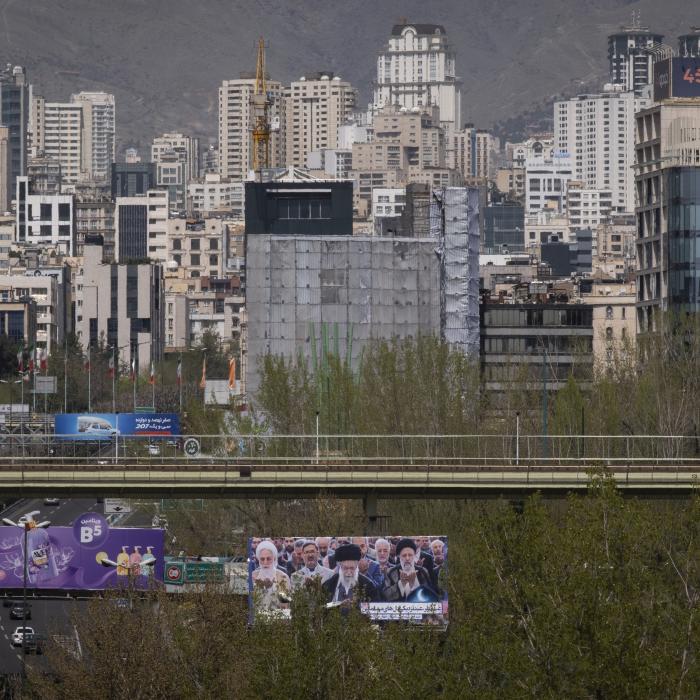
- Throughout the period 2023-2025, Iran’s ‘forward deterrence’ strategy against Israel and the US weakened as Tehran’s allies were defeated, one by one. Iran’s present conundrum is that its newly made threat to escalate any future conflict in its early stages sits uncomfortably with improving diplomatic relations with the GCC states
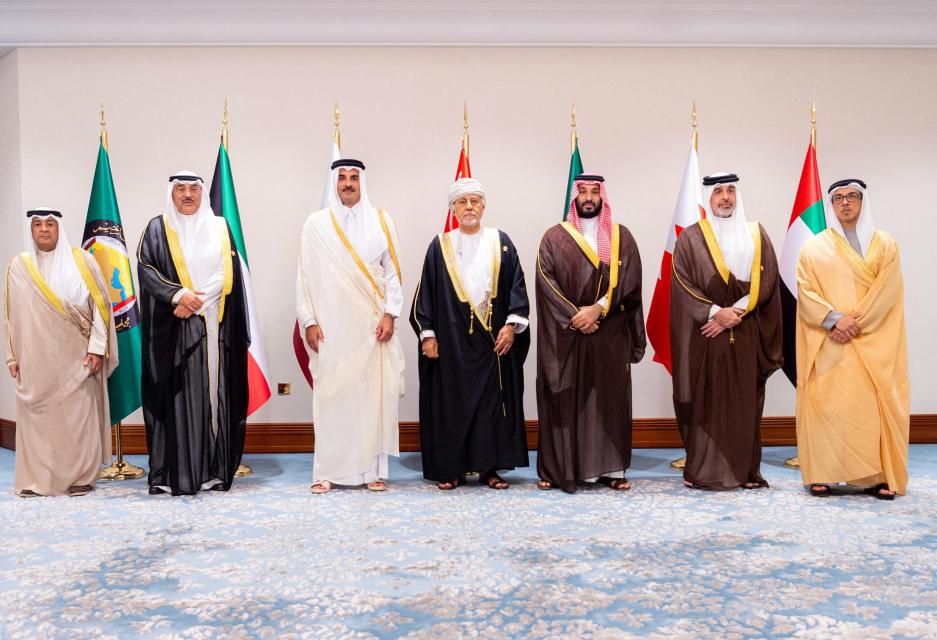
- In turn, these states are troubled by Israeli and US-enabled mass destruction and death toll in Gaza and appalled by the Israeli attack on Doha. They are nevertheless stuck with the US as unreliable security provider in the near term but also hedge by improving relations with Iran. Yet, key GCC states do not trust Tehran, which puts limits on how far preventive diplomacy can go
- Ultimately, neither Iran’s nor the GCC’s defensive posture is stable due to a lack of internal coherence and external credibility. This means that renewed Israeli (or even US) military action remains possible and will be highly destabilizing, at least until Iran and/or the GCC can consolidate their defense strategies
By Javad Heiran-Nia - Director of the Persian Gulf Studies Group at the Center for Scientific Research and Middle East Strategic Studies
Editor’s introduction
In September 2022, the death of Mahsa Jina Amini marked a major turning point for Iran. The event sparked lengthy nationwide protests across socio-economic classes and population groups whose demands rapidly evolved from discarding controversial hijab regulations to calls for the overthrow of the Islamic Republic. The Iranian government responded with repression, killing over 400 protesters in late 2022 and early 2023, according to human rights groups.
The Clingendael blog series ‘Iran in transition‘ explores power dynamics in four critical dimensions that have shaped the country’s transformation since: state-society relations, intra-elite dynamics, the economy, and foreign relations. This blog post examines the nature and quality of relations between Iran and the Gulf Cooperation Council countries after the Iranian and Israeli attacks on Doha, as well as the US, Turkish, Qatari and Egyptian mediated cease fire in Gaza.
A re-ordering of regional power relations, with a twist or two
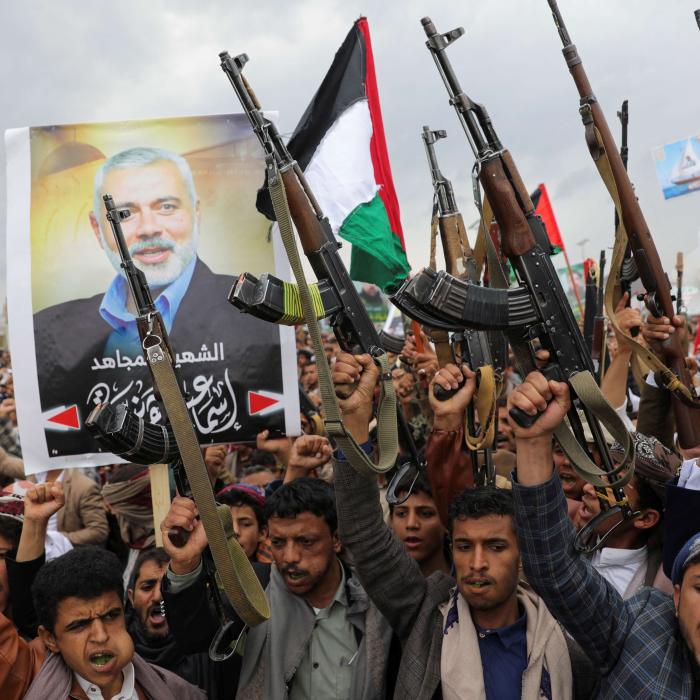
Relations between Iran and the member states of the Gulf Cooperation Council (GCC) – especially Saudi Arabia and the United Arab Emirates - have undergone significant transformation in the aftermath of Hamas’s 7 October 2023 attack on Israel. These shifts derive both from underlying structural drivers and regional events. The analysis will demonstrate how the regional order of the Middle East was structurally moving toward a deeper alignment between the Arab states on the Persian Gulf and Israel before 7 October. It also points out that these same Arab states were simultaneously hedging their bets by avoiding antagonizing Iran in matters of security.
On the one hand, this alignment was manifested in the Abraham Accords—which normalized relations between Israel, the United Arab Emirates and Bahrain; Israel’s official transfer from the U.S. European Command (EUCOM) to U.S. Central Command (CENTCOM); and the creation of strategic frameworks such as I2U2 (a strategic partnership between the US, India, Israel and the UAE in utilities, infrastructure and health/food security) and the India‑Middle East‑Europe Economic Corridor (IMEC).
On the other hand, the lack of a U.S. response to the Houthi attack on Saudi Aramco in 2019 and the sabotage of cargo ships anchored in UAE’s Fujairah waters forced the Arab states on the Persian Gulf to initiate a process of diplomatic de-escalation with Iran. Moreover, they need Iran to resolve the war in Yemen and deeper alignment with Israel could have further provoked Tehran—potentially making the GCC states targets of retaliation in any conflict involving Iran, the US and Israel. It was largely for the same reason of prudence that Saudi Arabia and the United Arab Emirates refrained from participating in the US-led naval coalition in the Red Sea against the Houthis in 2023.
However, US-Israel-Gulf alignment tightened behind the scenes regardless. Iran saw this trend as detrimental to the “Axis of Resistance” and its own interests, but was unable to block it. Also, it was more concerned with Gulf military convergence plans such as a joint air-defense system for the GCC states and Israel under U.S. guidance. Another dimension of US-Israeli-Gulf alignment was the subordination of the Palestinian issue. One of the aims of the 7 October 2023 attack by Hamas on Israel was to halt this this trajectory, especially Saudi-Israel normalization. The ‘Saudi normalization deal’, mooted before 7 October, was that Riyadh and Tel Aviv would normalize relations in exchange for US security guarantees to Saudi Arabia and the provision of advanced weapons systems as well technical help with setting up indigenous uranium-enrichment.
After the 7 October 2023 attack, Israel entered into direct confrontation with Hamas in Gaza (2023-2025), Hezbollah in Lebanon (2024-2025), the Houthis in Yemen (2024-2025) and, ultimately, Iran (2025). The fall of the Assad regime shifted the regional balance further against Iran and, consequently, reduced the deterrence value of its “forward-defense” strategy. On 13 June 2025, Israel executed a series of air assaults on Iran - targeting nuclear and missile sites, senior military officials and prominent nuclear scientists. Vali Nasr, a former Middle East advisor in the Obama administration, argues that the 12-day war was designed to cement Israel’s dominance as the pre-eminent power in the Middle East, with Washington’s backing. The episode ended with an Iranian strike against the American al-Udeid Air Base in Qatar. Even though Iran did not strike an Arab state on the Persian Gulf directly, the action was strongly condemned by GCC members. Yet it brought the message home that American military bases—originally intended to safeguard the Gulf monarchies—risked becoming strategic liabilities. This revived domestic debates in the GCC states about the utility of hosting such facilities.
Cooler heads prevailed, but harm has been done
Ultimately, neither the Israeli/US assault on Iran nor Iran’s strike against the Al-Udeid airbase in Doha nor Israel’s attack of Hamas its leaders in Doha escalated. Ultimately, all parties involved, except perhaps Israel, realized that any continuation of hostilities would impose significant costs in the form of regional instability, a reduction in maritime trade and jeopardizing energy flows. These risks are particularly elevated for the Arab states on the Persian Gulf. In fact, the June 2025 war provided a salutary warning: when airspaces across the Gulf closed, regional stock markets sharply declined. A two- to three-year conflict between Israel, the US and Iran could impose a cost of between US$730 billion and US$1 trillion on the economies of the GCC states. These costs would consist of reduced economic growth, a decline in foreign direct investment and delays in the execution of large-scale projects.
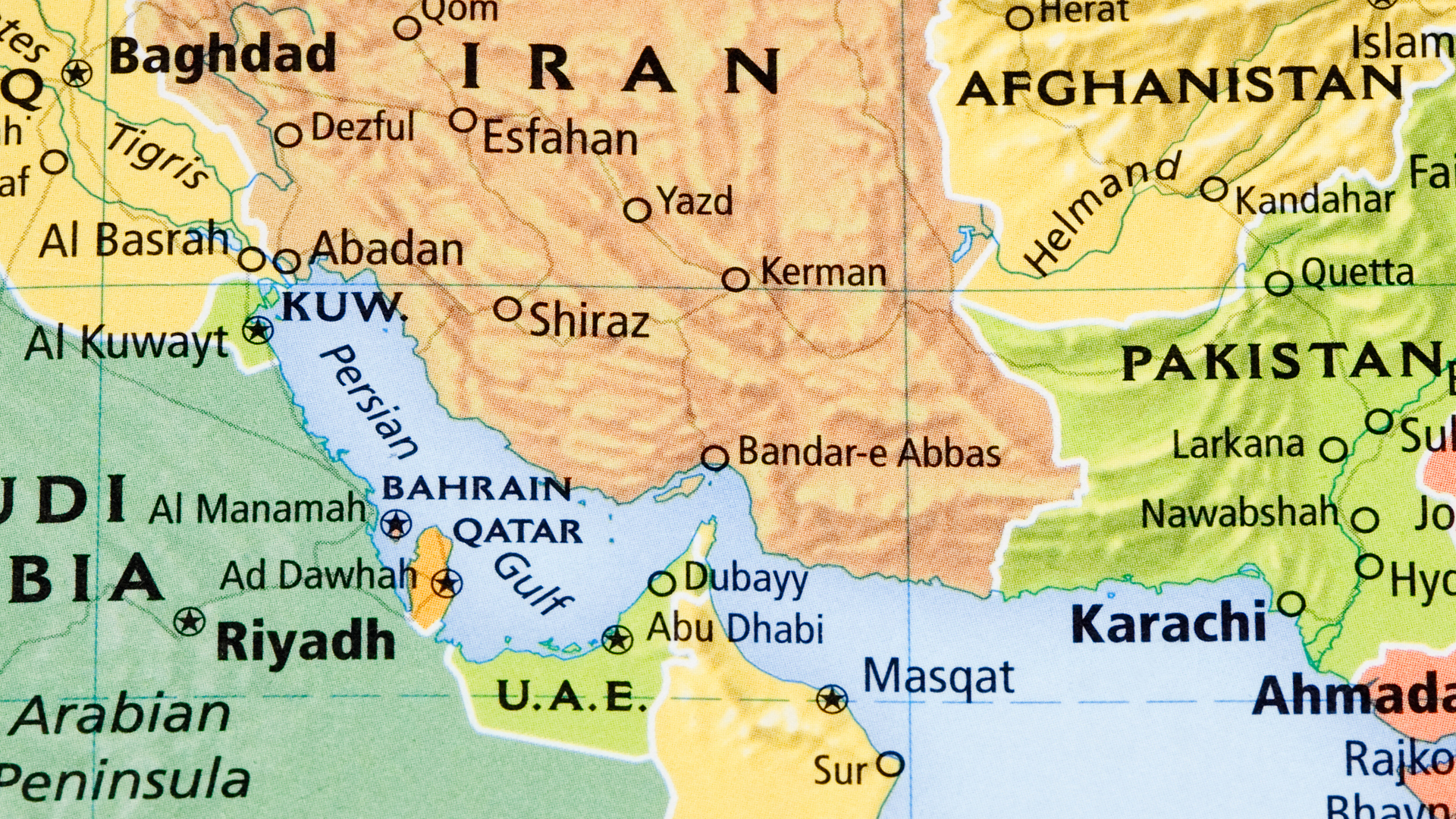
It is precisely for this reason that the GCC states have established communication channels with Iran that shield them, to some degree, from the worst consequences. The fact that Tehran has so far generally refrained from targeting Gulf interests or closing the Strait of Hormuz is typically attributed to such diplomacy, even though the Hormuz-closure-argument must also recognize that such a move would amount to Iran shooting itself in the foot as well. An upside for the GCC of its recognition of these risks is that it has increased Iran’s reliance on regional relationships to withstand US pressure, especially regarding sanctions evasion, which gives the GCC somewhat greater leverage.
A more important structural factor driving GCC-Iranian rapprochement is the growing understanding among the GCC states that the policy of isolating Iran from the regional security order will not create the stability necessary to realize the economic growth they seek. This view was prominent in remarks of Sayyid Badr bin Hamad Al Busaidi, Foreign Minister of Oman, at the Manama Dialogue 2025, where he warned against the dangers of isolating Iran. During the dialogue, his stance was echoed by several other Gulf officials, albeit in more cautious language.
While the Arab states on the Persian Gulf have generally welcomed the weakening of Iran’s missile and nuclear programme, they are also alarmed by Israel’s continued advances in the region — most notably when it attacked a gathering of Hamas leaders in Qatar. Netanyahu’s grand vision of a “Greater Israel” and his threat to Mohammed bin Salman about establishing a Palestinian state on Saudi soil highlight the risk of Israel seeking to impose itself as a regional hegemon at the cost of the GCC states. Such statements by Israel were even too much for the Trump administration, especially as they risk pushing the GCC states closer to Iranian views on the Palestinian issue. However, even though the GCC states have called on the U.S. to restrain Israel’s regional aggression, a complex interplay of strategic, economic and domestic considerations — including security concerns, public opinion, and geopolitical calculations — will likely stop them from bringing greater pressure to bear.
Iran’s perspective
Iran views recent events as an opportunity to dilute Isreal’s regional dominance and offset the risk of deeper GCC-US alignment. Specifically, it enables Iran to frame Israel as a regional threat and to legitimize its own discourse of resistance. Masoud Pezeshkian, President of Iran, clearly stated at an emergency meeting following Israel’s attack on Doha, Qatar: “The attack on Doha has overturned many mistaken calculations and assumptions, demonstrating that no Arab or Muslim country is safe from the aggression of the Tel Aviv regime. Tomorrow could be the turn of any Arab or Islamic capital. The choice is clear: we must unite.” In the aftermath of the attack, Iran also emphasized that Israel would show no restraint toward other regional states. It moreover sought to convey that the “Axis of Resistance” does not take aim at the sovereignty of countries in the region, but at Israel alone, and framing the Axis’s existence as a major check on Israeli expansionism. Finally, Iran made it clear to the GCC countries that normalizing relations with Israel and hosting U.S. military bases does not guarantee their security.
Following the attack, Iran proposed the formation of an Islamic-Arab coalition (an “Islamic NATO”) as an alternative to a U.S. security umbrella for the GCC. This initiative outlined a framework for regional cooperation independent of the “Abraham Accords” model. Iran even supported the Saudi-Pakistan defense pact to the extent that Masoud Pezeshkian welcomed the agreement in his speech at the United Nations General Assembly. Iran has also expressed interest in joining this pact.
In the short term, therefore, Iran has managed to leverage the Gaza war and Israeli regional aggression to reduce perceptions of the threat it poses – at least relative to Israel. Tehran has also managed to engage in more extensive diplomatic dialogue with the GCC countries and claim a stabilizing role, in part by having decided not to escalate. Nevertheless, the GCC remains reliant on U.S. security capabilities in the short term. While its countries pursue a multi-vector foreign policy that includes engagement with powers such as China and Russia and holding observer status in the BRICS group, GCC states have no alternative to the United States as their traditional security partner. To prevent this situation from changing and repair some of the damage, a recent executive order of President Trump declared any attack on Qatar’s territory or sovereignty a threat to U.S. security.
Possible pathways forward
The likelihood of the GCC states maintaining their traditional security partnership with the US was underlined by the Saudi – US defense pact of November 2025. Even if Saudi Arabia and the UAE continue to diversify their arms procurement and develop domestic defense industries, these processes will take decades to mature. At present, the benefits of continuing to rely on the U.S. security umbrella outweigh its drawbacks. In addition, there is an aspect of being ‘locked in’ regarding major weapon systems, their maintenance and military training in the short to medium term. Moreover, security convergence with Iran is by no means on the GCC agenda as they continue to perceive it as a threat even when increasing their conflict prevention-oriented diplomatic efforts. Historical mistrust and a long record of hostility will prevent genuine cooperation between Iran and GCC states in the near term. Finally, if Trump prevents the expulsion of Palestinians from Gaza and blocks annexation of the West Bank, some GCC governments may return to the idea of normalizing relations with Israel. Israeli observers have noted that Arab leaders pressured Hamas to accept the Trump agreement, interpreting this as a signal that normalization could be back on the agenda.
Meanwhile, Iran is focused on preserving such forces as it has left. These include Hezbollah in Lebanon and the Popular Mobilization Forces (PMF) in Iraq. Safeguarding what is left of these forces can be helpful in a potential future large-scale conflict with Israel or the United States, even though returning them to their former strength is difficult at present due to domestic opposition, U.S. pressure and the closure of the ‘resistance corridor’ through Syria. Iran’s policy toward its proxies is therefore best characterized by “strategic patience,” i.e. avoiding direct pressure on key groups to protect them. Iran essentially seeks to maintain its political base positions in Lebanon and Iraq so that it may expand them when conditions become favorable. On balance, in the short-term Iran-linked forces across the region are unlikely to act as significant levers in any renewal of armed conflict, but in the medium- to long-term their capabilities and posture can regain relevance.
Given the weakening of Iran’s traditional “forward defense” deterrence model, Iran now threatens to impose high costs on aggressors early on in the event of full-scale war instead, which includes expanding it to the GCC countries. By threatening regional energy infrastructure, transit and trade, Iran aims to raise the costs of war and thereby reinforce deterrence. However, both the threat and the actual execution of such measures would push Tehran’s neighbors and trade partners away and strengthen their security alliances with the U.S. In other words, Iran’s new deterrence could reinforce its image as a threat rather than deter attack. It also sits incongruously with Iran’s rhetorical emphasis on regional cooperation.
Consequently, Iran’s macro-level defense policy will likely gravitate towards “extending the diplomatic window” until it can create, or better control, conditions on the ground. While Israel has achieved tactical gains, it has yet to secure a decisive strategic victory or establish a new regional order. Meanwhile, the GCC states are watching wearily and try to keep up their balancing act.