About the unravelling of Iran's social contract
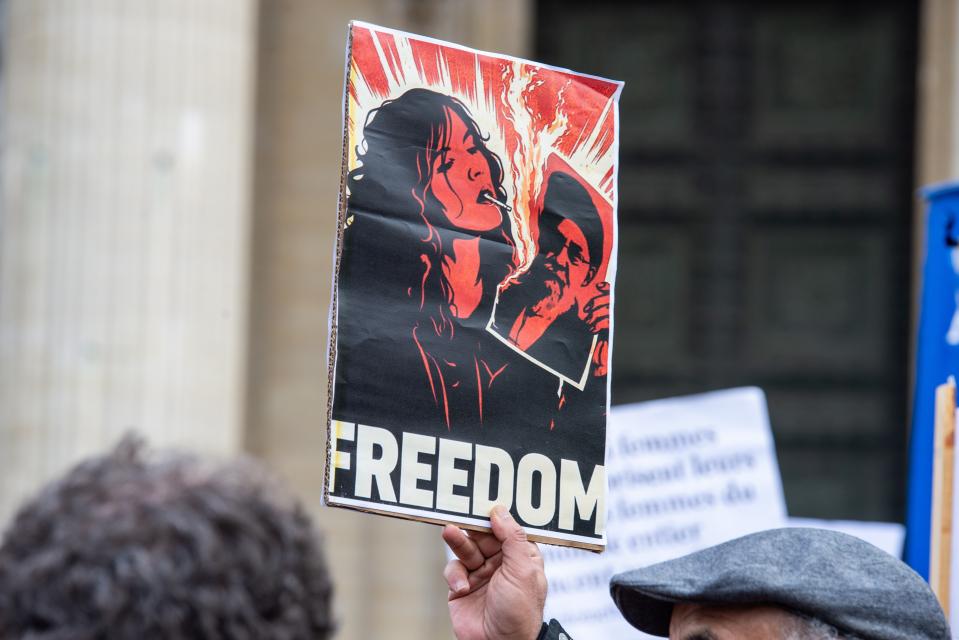
- The recent protests in Iran stood out for their intensity and speed of diffusion while also exhibiting continuities with previous rounds of protest in terms of their (social) geography and fragmentation of the opposition
- Protests took place during a perfect storm that consisted of the failure of earlier reform efforts, poor economic management, international sanctions, and an indecisive foreign policy that has produced major setbacks for Iran’s regime
- The fundamental challenge now facing Iran’s ruling elites is that both their support base and strategic options are narrowing. As they seem incapable of reform and regime change is not on the immediate horizon, more protests and repression are only a matter of time
By Hamidreza Azizi and Erwin van Veen
Editor’s introduction
In September 2022, the death of Mahsa Jina Amini marked a major turning point for Iran. The event sparked lengthy nationwide protests across socio-economic classes and population groups whose demands rapidly evolved from discarding controversial hijab regulations to calls for the overthrow of the Islamic Republic. The Iranian government responded with repression, killing over 400 protesters in late 2022 and early 2023, according to human rights groups.
The Clingendael blog series ‘Iran in transition‘ explores power dynamics in four critical dimensions that have shaped the country’s transformation since: state-society relations, intra-elite dynamics, the economy, and foreign relations. This blog post examines the nature, dynamics and meaning of the protests of late December 2025 and January 2026.
‘Facts and figures’
The recent protests in Iran stood out for their intensity and speed of diffusion while also exhibiting continuities with previous rounds of protests. In their social composition and spatial distribution, the protests largely mirrored those of 2022-2023. Other notable similarities included the fragmented nature of the opposition, the recurring appearance of pro-monarchy slogans (among others) and the convergence of economic grievances with broader political demands.
Protest intensity, however, was much higher than in 2022-2023. First, the government imposed a near-complete communication blackout to the effect that phone lines became only partially operational once again after about a week, internet access remained almost entirely cut off and Starlink regularly jammed. Second, death toll estimates range from roughly 5,000 to as many as 20,000, which is far greater than 2022-2023. In addition, officers of Iran’s security forces and its paramilitaries have also been killed at a higher rate, which indicates a more violent episode overall. Third, official discourse shifted from acknowledging ‘legitimate grievances’ to labeling protestors as ‘rioters’ and even ‘terrorists’. This indicated that the authorities viewed the protests as an existential threat, unlike earlier episodes. Fourth and finally, constituencies went onto the streets that had long been viewed as pillars of regime stability, in this case especially segments of bazaar-based merchant networks.
Zooming out, one can argue that the 2025-2026 protests represent a major turning point in the deepening trajectory of unrest in Iran. The Green Movement of 2009 was primarily political in nature, demanding reform within the parameters of the Islamic Republic’s existing power structure. The protest waves that followed in 2017-2019 were largely economic, driven by the deteriorating state of the economy and declining livelihood prospects. The “woman, life, freedom” movement of 2022-2023, in turn, mobilized against the lack of civil liberties, high levels of repression, and the strict religious-ideological ordering of society. But the protests of 2025-2026 combined political and economic grievances, including heightened securitization and repression following the Israeli/U.S. strike against Iran in June 2025 and deteriorating economic conditions. The merger of political and economic motives to take to the street is now complete and reinforces one another, which widens the social basis of protest and contributed to their greater intensity.
The Islamic Republic’s brutal use of violence has probably only paused this downward spiral of protest by signaling that it is willing to kill as many demonstrators as necessary to ensure regime survival. This is a viable strategy as long as its security forces remain loyal. As the regime has not (yet) resolved any of the country’s underlying economic problems while its legitimacy has plummeted to new depths, it is not a given that this situation can continue indefinitely. It is, in fact, doubtful that the current regime can restore either economic performance or political legitimacy while also maintaining a confrontational foreign policy that ensures economic sanctions as well as a large gap between state and society remain in place.
Overall, the protests signify a deepening erosion of Iran’s social contract. On the one hand, its government can no longer provide basic security against foreign attack or ensure a minimal yet reasonable level of existence. On the other hand, many Iranians are no longer content to conform to the ideological precepts of the Islamic revolution. Erosion is accelerating due to a ‘perfect storm’ having arrived that the regime in Tehran is ill-equipped to face (see below). It narrows strategic response options and is likely to shrink the regime’s support base even further.
Protests and a perfect storm
The current protests unfold amid – and in part because of – a perfect storm consisting of the failure of earlier reform efforts, poor economic management compounded by international sanctions, and an indecisive foreign policy that has produced major security and reputational setbacks for the regime. We take a brief look at each dimension:
The failure of earlier reform efforts
Since the Green Movement, Iran’s Supreme Leader has pursued a policy of further centralizing political authority in his own office, key command centers of the Islamic Revolutionary Guard Corps (IRGC), and ideologically loyal groups drawn from the hardline/conservative camp. This trajectory has been visible, for example, in the growing number of candidates – primarily relative moderates and reformists – that have been disqualified from running for political office during recent rounds of elections, as well as in the expanding dominance of the IRGC over the ‘commanding heights of the economy.’
It is also worth noting that reform efforts were kept in check or neutered even prior to the Green Movement as soon as they touched on the outer boundaries of the Islamic Republic’s political economy. The ultimate failure of President Akbar Hashemi Rafsanjani’s economic liberalization efforts in the 1990s, as well as the frustration of Mohammad Khatami’s social and political reform agenda in the late 1990s and early 2000s, illustrate the structural limits to reform that have been imposed by the entrenched hardline/conservative elite networks that ultimately run Iran.
Poor economic management and sanctions
Compounding the failure of earlier reform efforts has been the long-term decline of the Iranian economy resulting from the combination of poor economic management and international sanctions. Poor economic management has taken the form of systemic corruption, entrenched insider privileges, and a lack of innovation and competition, much of which stem from a state-dominated economic model in which regime loyalty and elite clientelism have displaced entrepreneurship and merit-based advancement.
International sanctions, in turn, originate from the United States’ assessment of Iran’s nuclear program as posing not only a threat to regional stability – Israeli security in particular – but also a global proliferation risk. Washington mobilized its allies against Iran’s nuclear program through sustained economic warfare, restricting both the level of technology and managerial expertise Iran can import and the type and volume of goods it can export, especially oil. Although multilateral UN sanctions were lifted following the conclusion of the Joint Comprehensive Plan of Action (JCPOA) in 2015, the United States withdrew from the agreement during Donald Trump’s first term in 2018 and reimposed sanctions unilaterally. Subsequent efforts to revive the deal under the Biden administration failed. At the same time, growing European friction with Iran – particularly over Tehran’s support for Russia in the Ukraine war – eventually led the E3 to trigger the “snapback” mechanism in September 2025, which reimposed UN sanctions based on resolution 2231 (2015).
Indecisive foreign policy
As long as Iran projected an image of strength across the Middle East, it did not have to worry about much interaction between external military pressure – such as direct strikes or credible threats thereof – and internal challenges - such as mass protests. This was in large part because Tehran had constructed a network of regional influence through its so-called “axis of resistance,” which underpinned a deterrence posture based on the logic of “forward defense.” This discouraged direct foreign intervention in Iran. In turn, this enabled the regime to contain internal unrest at relatively low external costs. This image of strength, however, suffered a series of serious blows between 2023 and 2025, which was less a direct consequence of Hamas’s attack on Israel on 7 October 2023 and more a result of Iran failing to employ its axis of resistance as a cohesive and coordinated warfighting instrument while remaining indecisive about the future direction of its nuclear program.
Knowing that Israel would turn its attention to Hezbollah at the latest after having dealt with Hamas, Tehran nonetheless failed to translate this insight into a viable military strategy. Rather than enabling Hezbollah to engage Israel decisively for a sustained period – or in select theaters – while the fighting in Gaza was at its most intense, Iran lost momentum and leverage by engaging in tit-for-tat exchanges of rockets and drones along the Israeli-Lebanese border, operating on the assumption that this would preserve a manageable equilibrium vis-à-vis Israel. In the end, Hezbollah suffered the most severe blow in its history, and its weakened state enabled Israel to strike Iran directly in June 2025.
Similar indecision characterized Tehran’s handling of its nuclear program. Iran has steadily refused to curtail its program despite mounting economic costs and international isolation, as well as hesitating to militarize its program. While Iranian officials repeatedly signaled that Tehran might move toward weaponization if attacked by the United States or Israel – hoping that such threats would act as substitute deterrent – this approach heightened adversaries’ threat perceptions instead. Ultimately, it contributed to preventive action against Iran. As a result, Iran has largely lost its enrichment capability for the moment without, however, having obtained sanctions relief in return.
A broken social contract
For decades, the Islamic Republic compensated the shortcomings of its economic performance, low quality governance, and poor social provision by projecting itself as a guarantor of security. Official discourse consistently framed the regime as a bulwark that spared Iran the fate of “failed states” such as Syria or Iraq. It argued that whatever restrictions citizens had to endure in their daily lives were offset by internal stability and protection from external aggression. This narrative remained central even as economic grievances deepened and foreign policy results grew more ambiguous. The June 2025 Israeli/U.S. strikes shattered it. The fact that Iran was attacked directly, resulting in the death of roughly a thousand people, widespread injuries, and significant material damage undermined the regime’s claim of shielding society via effective deterrence that required an aggressive foreign policy.
In the immediate aftermath of the strike against Iran, society did not mobilize against the government, however. Instead, a deeply embedded sense of patriotism shaped by historical memory and rejection of war, as well as foreign intervention, triggered societal restraint and even support. However, Iran’s government misread this dynamic as evidence of renewed legitimacy and popular consolidation. It did not use the narrow opening that existed after the Israeli/US strike to rebuild trust by easing social controls, addressing elite predation, and rethinking the implicit social contract. Instead, the state executed what some Iranian analysts described as a “reset to factory settings” within months, i.e. abandoning even tentative reforms and doubling down on coercion. By subsequently framing renewed protests as an extension of the war with Israel, the regime deepened the contradiction at the heart of its own narrative: if unrest is now war, where is the security that justified years of sacrifice? In this sense, the protests also tore down another pillar in the regime’s narrative of legitimacy.
The risky business of foreign military intervention
President Donald Trump’s repeated threats to strike Iran over its crackdown on protesters have been accompanied by a growing U.S. military presence in the region and the warning that “all options are on the table.” Before any military action can be meaningfully undertaken, however, the Pentagon and Department of State have to resolve a series of fundamental questions. First, what to target? Striking nuclear facilities is an easier task than attempting to degrade the instruments of domestic repression, or Iran’s broader security infrastructure. Second, how would the United States manage the risk of escalation, given Iran’s considerable missile arsenal and the proximity of U.S. bases? Third, how would Trump justify direct intervention to regional partners such as Qatar, Oman, and Saudi Arabia, all of which have bet heavily on stable relations with Washington? Fourth, what form could a strike take? Approaches modeled on the “Venezuela playbook” – aiming at a rapid decapitation or regime change – are difficult in Iran because of the institutional cohesion and interdependence of the ruling elite and security apparatus, which leaves few openings to exploit. Finally, would military action risk amplifying, rather than reducing, protest repression? Only the most overwhelming campaign could help disintegrate Iran’s layered security apparatus. Anything less and repression might well be maintained.
These uncertainties are amplified by the erratic and fluctuating nature of official U.S. messaging, which has shifted between urging Iranians to keep protesting, suggesting assistance was on the way, threatening strikes if executions occurred, and then softening rhetoric depending on developments inside Iran. For a society already traumatized by extensive loss of life, severe repression, and pervasive information blackouts, such oscillation does not bolster confidence. It raises expectations of foreign intervention and exacts its own psychological toll. The risk lies arguably less in a military confrontation and more in how a foreign intervention can become the focal point of domestic contestation during a moment of profound uncertainty. It risks distorting protest dynamics and broader strategic calculations without contributing to meaningful change.
Is regime change on the horizon?
In light of such considerations, regime change does not appear imminent as long as Iran’s ruling elites remain relatively coherent, its security forces loyal, and the opposition fragmented. One should not forget that the regime still retains a substantial constituency beyond the security forces, including segments of the clerical establishment and state-linked economic actors, as indicated by the 13 million votes (approximately 20 percent of eligible voters) cast for Saeed Jalili, the hardline candidate, in the most recent presidential election. This equation could change, for example, if foreign powers were to begin arming opposition movements in Iran’s peripheral regions in a structural manner – a course that would carry enormous risks, not least the prospect of a protracted civil conflict with destabilizing regional consequences – or if a further deterioration of economic conditions were to erode the loyalty of the security forces. Either process requires time to take hold.
The more fundamental challenge facing Iran’s ruling elites is that both their support base and their strategic options are steadily narrowing. Support erodes as formerly loyal constituencies, such as bazaar-based merchant networks, join new waves of protest. At the same time, strategic options are constrained by vested interests, reduced state capacity, reputational damage, and deepening international isolation. Without a simultaneous revival of the economy – which requires sanctions relief as well as a serious internal overhaul of economic governance and privilege – and a relaxation of social restrictions – which risks triggering an escalatory dynamic of demands reminiscent of the late Soviet experience in 1991 – further protests are likely. Given the tenfold-plus increase in the level of repression in 2026 compared to 2022-2023, space for peaceful political change has also narrowed. This makes more violence probable.
What is clear is that the regime now governs via a combination of ideological appeal and dominance over a shrinking core constituency on the one hand, and the pervasive use of coercion against large segments of society on the other hand. Both parts are separated by a ‘bystanding middle’. Such an approach will be unstable over time. Change, in this sense, appears unavoidable. Its course only needs to play out.