America and Israel against Iran: Strategic results during the ceasefire
- Iran’s warfighting assumptions for the first phase of the war were more accurate than those of the US or Israel. Tehran proved sufficiently resilient under fire to impose mounting cost on the US, which ultimately brought a ceasefire about.
- So far, the American and Israeli assault on Iran has imposed significant cost on the rest of the world without having achieved either the surrender or the collapse of Iran’s government. This makes the war reckless in addition to illegitimate.
- Escalation, maintaining the status quo nor a pretend kiss-and-make-up moment is likely to shift fundamental parameters of the current stalemate. This suggests that variations of more of the same lie in store in the medium-term.
By Hamidreza Azizi and Erwin van Veen
Editor’s introduction
In September 2022, the death of Mahsa Jina Amini marked a major turning point for Iran. The event sparked lengthy nationwide protests across socio-economic classes and population groups whose demands rapidly evolved from discarding controversial hijab regulations to calls for the overthrow of the Islamic Republic. The Iranian government responded with repression, killing over 400 protesters in late 2022 and early 2023, according to human rights groups. The protests of January 2026 reflected the same public discontent and reinforced the negative spiral of government underperformance and popular legitimacy. They also increased the external and internal pressures on Iran’s government compared with the protests of 2022/2023.
The Clingendael blog series ‘Iran in transition‘ explores power dynamics in four critical dimensions that have shaped the country’s transformation since 2022: state-society relations, intra-elite dynamics, the economy, and foreign relations. This blog assesses the strategic position of the US, Israel and Iran during the initial ceasefire from 8 to 22 April 2026, as well as the strategic effects of the US and Israeli assault on Iran for the combatants themselves, the region and the world at large.
From words to bombs
On 28 February, the United States and Israel launched their second attack against Iran within 8 months while negotiations about the nuclear issue were showing progress. According to the Omani foreign minister and the British national security advisor, they were even nearing a reasonable compromise, were the 2015 nuclear deal to be the yardstick. This course of events suggests that the real stakes of the current war are the pursuit of US/Israeli hegemony over the Middle East by eliminating Iran as a capable adversary. This is what Israeli Prime Minister Benjamin Netanyahu alluded to when he described Israel not only as a “regional superpower” but also, “in some respects, a global superpower.”
The problem with this stratagem is that even a ‘successful’ war against Iran, i.e. one that results in a form of capitulation, is insufficient to establish regional hegemony since two further hurdles remain. The first is the difficulty of including Saudi Arabia and Qatar in the US-Israeli-UAE-Bahrain soft power architecture of the Abraham Accords due to the Israel’s destruction of Gaza - enabled by the United States - combined with Israel’s uncompromising violence against Palestinians on the West Bank. The second hurdle is the need to limit Turkey’s role in the Middle East to northern Syria and Iraq. Militarily, Israel has contained Turkey so far, but economically and diplomatically it is less relevant due to its overbearing approach. The strategic problem is that an Israeli/US victory over Iran brings regional hegemony closer, but it will remain elusive as long as they are incapable of conducting more sophisticated forms of win-win diplomacy.
Either way, the war against Iran is not going well by any standard of performance other than the level of material destruction wreaked on Iran. And even in this dimension Iran has done notable damage to US military assets (mostly radars, bases and enabling aircraft). The ceasefire that started on 8 April 2026 is backgrounded by the risk of renewed military action guided by the logic of ‘escalating to de-escalate’, meaning the belief that more force can bring about conditions that make a more favourable deal possible. For example, President Trump tacitly threatened to use nuclear weapons to achieve escalation dominance on 7 April, which helps explain why Iran accepted the ceasefire in the first place.
Testing strategic warfighting assumptions under fire
It is in this context that we examine key frames and effects of the war to assess the strategic position of the combatants during the ceasefire that started on 8 April 2026. It has become clear that Israel painted an overly rosy picture of rapid victory via decapitation of Iran’s political and military leadership followed by protests and ‘regime change’. Even though the CIA considered this analysis ‘farcical’, it gelled with President Trump’s expectation that the threat or application of overwhelming military force could quickly bring Tehran to heel. Such thinking was likely reinforced by the successful US operation against Venezuelan President Nicolas Maduro. It explains why the US gathered substantial military forces in the Sea of Oman and the Arabian Sea and strengthened air defences in Israel and the Gulf countries while it negotiated with Tehran. Before talks could conclude, Israel and the US unleashed a massive aerial campaign with around 900 bombardments in the first 12 hours of the war at an estimated cost of USD 11 billion for the first 6 days (and about a billion a day thereafter).
In contrast to their earlier assault on Iran in June 2025 that caught it by surprise, Tehran was prepared this time. In fact, it turned out to have fully revised its war fighting strategy based on the concepts of decentralization, dispersal and guaranteed tit-for-tat retaliation in an asymmetric and disproportional manner if necessary. In addition to direct attacks against US forces in the region and Israel, Iran also opened fire on military and civilian facilities in the Gulf states with the justification that these countries host major US military assets. Ultimately, hosting US military assets turned out to be sources of risk rather than protection. Washington worsened the situation by prioritizing delivery of interceptors to Israel. Iran’s larger strategic intent of targeting the Gulf states was to distribute the cost of war more widely.
Meanwhile, the result of killing Iran’s Supreme Leader Ali Khamenei, Mohammad Pakpour (IRGC Commander in Chief), Abdolrahim Mousavi (Chief of Staff of the Armed Forces), Ali Shamkhani (Secretary of the National Security Council), Aziz Nasirzadeh (Minister of Defence) and many others was a leadership transfer to a more radical and aggressive group of IRGC officers, and a further consolidation of power by this organization. This new group is simultaneously more assertive and more pragmatic. It views Iran’s cautious and calibrated responses to past incidents like the Israeli bombing of Iran’s consulate in Damascus in April 2024, or the assassination of Hamas political leader Ismael Haniyeh in July of the same year, as errors that created a perception of weakness. Nevertheless, the ceasefire negotiations also show that Iran’s new leaders are willing to engage, but on their own terms and while pursuing a hard bargain.
While US military power has met the so-far immovable object of Iranian resilience and asymmetric retaliation, Israel simply followed a logic of maximum destruction by gradually extending its attacks from military to civilian infrastructure like bridges, industrial plants and scientific facilities. As in Gaza and Lebanon, Israel did not consider itself bound by the laws of war and has sought to fully degrade Iran’s military capabilities and governability in a grinding campaign of attrition.
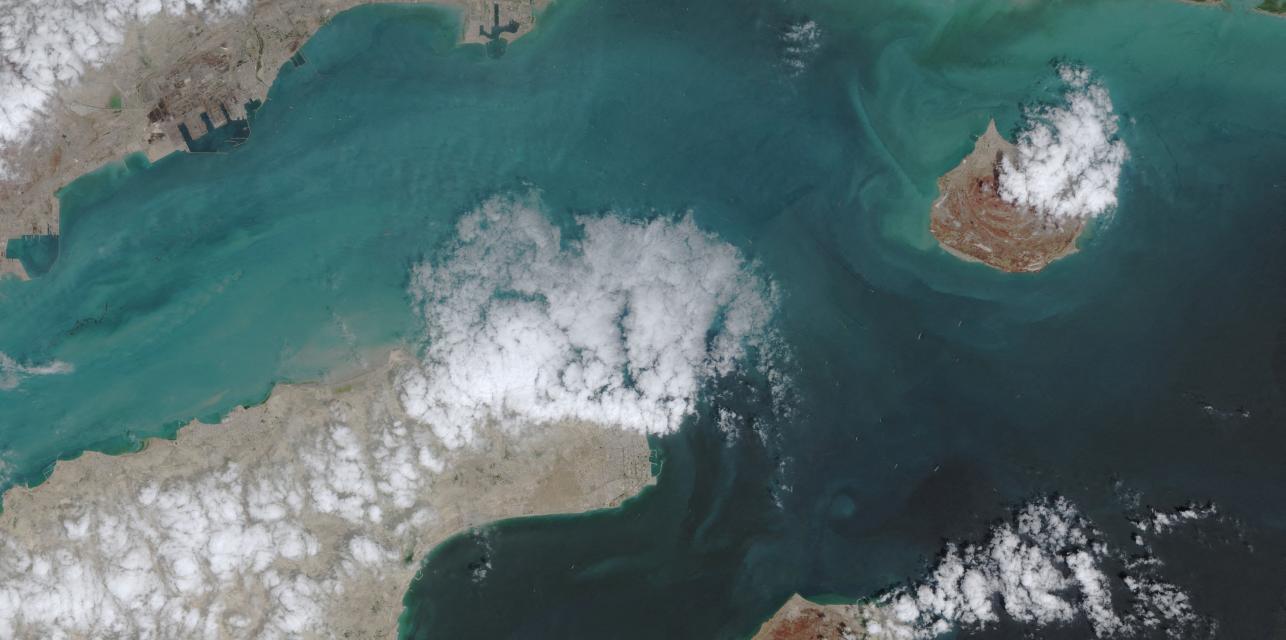
However, at the same time as Iran had to surrender the skies to its adversaries and had no choice but to absorb the punishment they meted out, it established its own dominance over the Strait of Hormuz. Copying the Yemeni Houthi’s experiences in the Red Sea, Iran did not impose a full blockade but merely created a sufficient risk of being attacked to raise insurance prices and cause shipping companies to reconsider passage. This move was as predictable as it was effective. The closure of Hormuz ultimately impacted the American cost/benefit calculation of the war and paved the way for a ceasefire by raising global energy prices and threatening inflation. As both are key to the cost of living in the US, these developments are likely to loom large during the mid-term elections.
In addition to the material damage to US radar and air assets, the perilous position of the Gulf states and the closure of Hormuz, a failed special forces raid between 3 and 5 April in the vicinity of Esfahan turned out to be the nail in the coffin of the initial US warfighting effort. The observable evidence is limited to a downed F15-E, two burned-out C-130 transport aircraft and multiple MH-6 Little Bird helicopters on a makeshift landing strip in the Esfahan region. Competing hypotheses include a standard Combat Search and Research mission as well as a special forces raid to extract highly enriched uranium from nearby underground tunnels. The second hypothesis may be linked to Defence Minister Pete Hegseth’s removal of the US army chief and several US generals from their positions on 3 April, who presumably resisted the intervention. Either way, the operational result disproved the idea that the US can insert ground forces into Iran at will and at limited cost.
Ultimately, Iran’s warfighting assumptions for the first phase of the war turned out to be more accurate than those of the US or Israel. Tehran proved sufficiently resilient under fire to impose mounting cost on the US via the Gulf states and the Strait of Hormuz. This caused the US first to threaten to destroy Iran and then to agree to a ceasefire, initially from 8 to 22 April (later extended), and which Israel had no choice but to follow. Although the survival rate of Iran’s military assets has been sufficient to enable continuous military responses, Tehran self-assessed the cost of the damage to its military and civilian infrastructure so far at USD 270 billion. Also, about 1,700 Iranian civilians were killed by enemy fire, including over 160 girls at a primary school in Minab that was targeted by an American strike in the very first hours of the war.
Interpreting the Islamabad negotiations and the ceasefire
The ceasefire ran into three major problems from the very start, however. The first was that Israel sought to derail negotiations by launching a large-scale attack against Beirut on 8 April after the ceasefire came into effect that consisted of 100 airstrikes in 10 minutes causing hundreds of civilian casualties. As it was clear that Iran tied progress in its talks with the US to an extension of the main ceasefire to Lebanon, Israel’s action can be understood as a major provocation. Iran kept Hormuz closed and bid its time, however. Using the unexpectedly fierce resistance from Hezbollah that Israel encountered and the growing international outcry over the destruction of south Lebanon, President Trump duly brought about a delayed ceasefire in Lebanon on 16 April 2026.
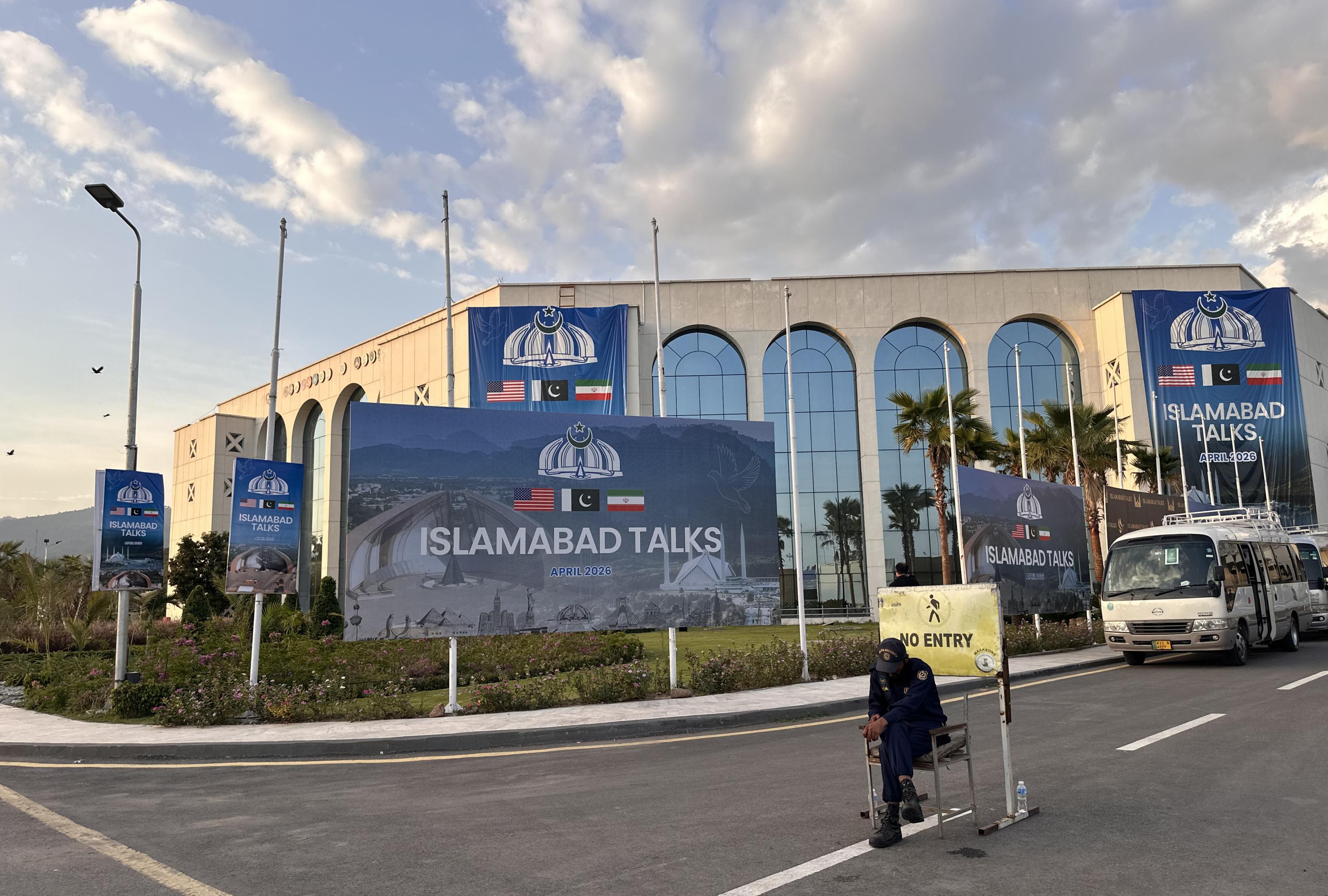
The second problem was that both parties behaved as if they were victorious during the first round of talks in Islamabad on 11-12 April 2026. Both the US and Iran put lists of respectively 15 and 10 maximalist demands on the table that transgressed known red lines of their interlocutors. But neither the military situation nor the military outlook at the time supported the idea that major concessions were on offer compared to pre-war positions. If anything, the strategic stalemate that led to the ceasefire favoured Iran because the US cannot re-open the Strait of Hormuz without a large-scale and risky ground operation.
The final problem of the ceasefire period was that Iran re-opened Hormuz only conditionally from the beginning – coordination with the IRGC remained a requirement, as was sailing along Iran-approved routes – while the US instigated a naval blockade of Iranian ports on 14 April. Initially, this seemed mostly symbolic, but the US navy tightened the blockade on 18 April when it started to return and even impound Iran-linked vessels. In response, Iran closed the Strait of Hormuz completely.
On balance, limited spoiler acts, maximalist negotiation tactics and confidence reducing measures brought Iran and the US back to square one to the end of the initial ceasefire period, i.e. seemingly unbridgeable differences over the nuclear issue. Iran appeared willing to agree to a verifiable five-year freeze in uranium enrichment and dilution of its highly enriched uranium on Iranian soil, but not to US demands for a twenty-year freeze and export of its highly enriched uranium to the US. Meanwhile, the US positioned more military forces in the wider Persian Gulf area and increased economic pressure by taking its blockade global.
Strategic cost of the war at the time of the ceasefire
Even though this essay does not provide a full analysis of the different types of strategic cost that the war had produced by the time of the ceasefire, Table 1 below does outline the main cost categories. This helps to start thinking about the war’s longer-term effects, but also about what might come after the ceasefire.
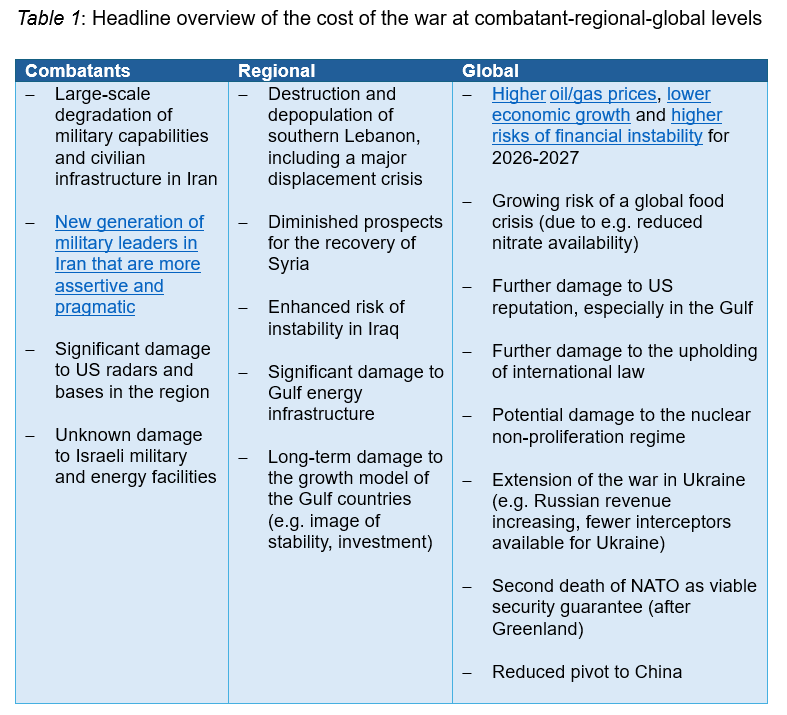
Zooming out, the table suggests that a key effect of the war can be a further diminishment of America’s status as a global power due to the damage it is doing to Washington’s relations with the Gulf states (a lack of protection and lack of consideration of its interests) and Europe (increasing energy prices and wider economic consequences). While it may seem early days for such observations, it should be born in mind that such relational damage is likely to manifest gradually due to short-term EU and Gulf dependencies on the US. Yet EU and Gulf political leaders now seriously discuss security relations with the US, dependence on the US and reliability of the US, which was inconceivable even months ago.
A second major effect of the war is the destabilizing effect it will have on the Middle East irrespective of its outcome. If Iran’s present government survives the US and Israeli military and economic assault, it has reason to prepare for more of the same in the not-too-distant future. This can bring the region back to the regional competition from before 7 October 2023 but also bring Tehran to pursue the development of a nuclear weapon. If Iran’s present government collapses or capitulates, the country will likely enter a prolonged phase of unstable governance. Together with major crises in Lebanon, Syria, Palestine and Iraq, this is likely to create a more amorphous set of security threats across the region. Especially since both Israel and the US excel at speaking the language of force and domination, but not that of compromise and reconstruction.
A third major effect of the war is that Israel has not just become more dependent on a single country – the United States – but on a single person – President Trump. In the short term, West-Jerusalem feels empowered to realize its agenda of annexation of the Palestinian territories, setting up depopulated buffer zones in Lebanon, Syria and Gaza, as well as pursuing regional hegemony. It seems able to get away with a growing list of unspeakable atrocities with American blessing, support from several European and Gulf countries, as well as tacit tolerance of much of the rest of the world. Exceptions like Turkey, The Hague Group, Hezbollah, Palestinian resistance groups and, for its own reasons, Iran, are few. Yet, in the medium term this makes Israel vulnerable to a decline in US political support. Consider for example a change of mind on the part of the president, midterm elections results or a new president entering office. It also makes Israel vulnerable to any belated translation of global popular disgust with Israeli actions into political or economic consequences. Imagine, for example, the EU deciding to suspend trade privileges after all, banks and pension funds disinvesting or The Hague Group initiating a government-led sanctions campaign.
Stepping back from the brink or steering into the vortex?
The American and Israeli assault on Iran has imposed significant cost on the rest of the world without having achieved either surrender or collapse of Iran’s government so far. This makes the war reckless in addition to illegitimate. While the US and Israel have options for conflict escalation, including a resumption of aerial bombardment, a ground offensive and, in extremis, the use of a nuclear weapon, so does Iran. Tehran can destroy much of the energy and desalination infrastructure on the southern littoral of the Persian Gulf and Israel, work with the Houthis to block the Bab al-Mandab and raise the global energy crisis to the next level or try to destroy the Yanbu oil pipeline crossing Saudi Arabia and bypassing the Strait of Hormuz to the same effect. Iran has the asymmetric advantage of ‘only’ having to endure to ‘win’ the war. Discounting extreme events, it looks unlikely that escalation will shift fundamental parameters of the current strategic stalemate.
But one should not underestimate the psychological factors at play, consisting mainly of President Trump’s inability to deal professionally with perceived slights to his ego and Tehran’s rock-bottom trust in the US due to having been bombed twice during negotiations. As a result, an off-ramp beyond continuation of the status quo or a superficial deal is difficult to see. All three options – escalation, maintaining the status quo and a pretend kiss-and-make-up moment – promise different versions of more of the same in the medium-term. Brace for impact.