


Behind the Ballots and the Bluster
Decoding Votes on Ukraine Resolutions at the UN
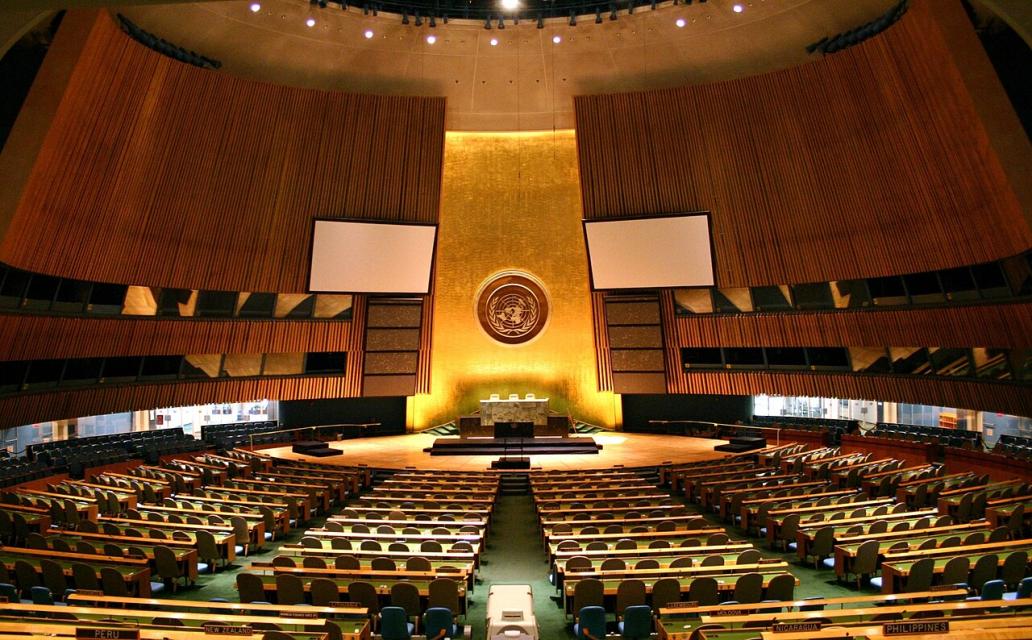
- Ukraine is not only fighting Russia on the battlefield, but also trying to obtain international diplomatic support
- United Nations General Assembly votes reveal a gradual decrease in support for Ukraine since the full-scale invasion
- By analysing voting patterns, some countries emerge as being more likely to be receptive to diplomatic efforts
- Policy makers and diplomats need to understand and delve into voting motivations to effectively convince states to vote in favour of Ukraine
Four years after Russia’s full-scale invasion of Ukraine, an end to the war remains elusive. Ukraine is not only fighting Russia on the battlefield, but also in the diplomatic arena to secure international support. This report analyses the way this diplomatic war has unfolded by looking at two dimensions: votes in the United Nations General Assembly (UNGA) and attendance of the peace conference in Bürgenstock.
A closer look at voting patterns in the UNGA reveals a gradual decrease in support over the past few years. Immediately after the invasion, 141 states voted in favour of pro-Ukrainian resolutions; in December 2025, this number had dwindled to 79. Ukraine and its supporters in its diplomatic struggle against Russia could benefit from a careful analysis of the various reasons behind these shifting levels of support.
This report therefore presents a clustering of voting patterns, which can help identify both the nations that hold fixed positions and those who vary in their voting behaviour and stated positions. A better understanding of the motivations behind these positions is crucial for a diplomatic strategy that aims to convince them to support Ukraine.
The approach in this study is two-fold: it first discusses the narratives that have been promoted by both Russia and Ukraine and then analyses why these may or may not appeal to different states across the world. While Ukraine rightfully claims that the invasion is a violation of international law and posits itself as a democracy that has fallen victim to a brutal act of aggression, Russia instead promotes a narrative of defence against supposed threats by the West. While most countries around the world generally and rhetorically support international law, the narrative of the ‘threatening West’ also finds support across the world and particularly in the grouping of countries sometimes referred to as the ‘Global South’.
However, the appeal of the Russian narrative is only part of the puzzle. Practical reasons are perhaps much more important to determine the level of support; many countries may have their own reasons to either support Russia or at least not jeopardize their relationship with Moscow. These include food security, maintaining trade relations with Russia, strategic voting considerations, or a preference for a multipolar world order.
For any diplomatic strategy to be effective in convincing countries to support Ukraine, it requires listening to their individual concerns and addressing those to the extent possible. Understanding does not imply agreement as not all arguments have moral equivalence and some may not be put forward in good faith, but the West should also be wary of its own biases.
A convincing argument should address both the narrative as well as the practical interests driving state positions. It should furthermore realise that there is no one-size-fits-all solution: while there are common patterns across the world, the different elements present themselves in different combinations for each individual nation. A convincing diplomatic strategy begins with listening.
Authors


Related
See all
Assessing the strength and stability of the Russian regime
Freedom isn’t Free: A cost-benefit analysis of support for Ukraine
