Gradual integration of candidate countries into the European Union
Pushing the impossible, delaying the inevitable?
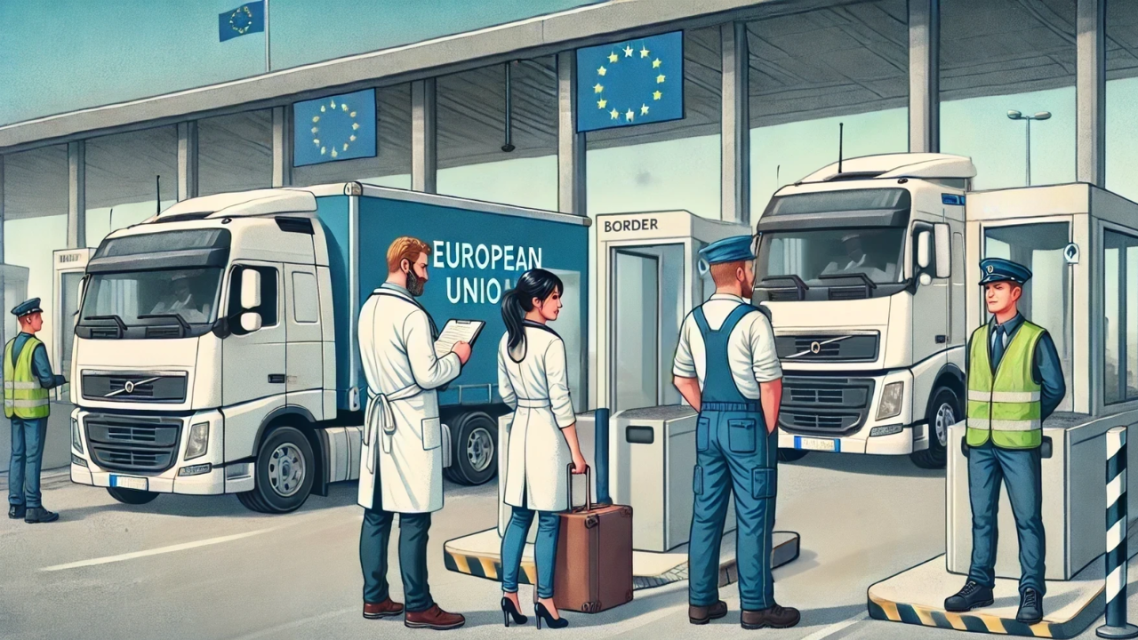
- The EU is considering initiatives that allow candidate countries to gradually integrate in policy areas, such as transport and labour mobility, in exchange for reforms.
- Gradual integration could sustain geopolitical enlargement momentum, incentivise reforms and create economic opportunities for candidates and the EU.
- However, when preconditions like anti-corruption measures, enforcement capacity and financial resources, are not met, such initiatives could undermine market integrity and EU values.
- A set of questions and criteria weigh each initiative on its merits, risks and feasibility helps governments in reaching balanced decisions.
The gradual integration of candidate countries into the European Union (EU) could help sustain the renewed enlargement momentum that emerged after the Russian invasion of Ukraine, without compromising the EU’s stringent accession criteria. This is true not only for gradual integration with Ukraine and Moldova, who were granted candidate status a few months after the invasion in 2022, but also for the Western Balkans which have long remained in the EU’s waiting room. The shifting geopolitical landscape, marked by an aggressive Russia and assertive China, has prompted the European Commission (and most Member States) to speed up the EU accession process. At present, however, the current candidate countries do not yet meet the so-called Copenhagen criteria for EU accession. The EU thus faces a significant dilemma: how can it sustain this renewed momentum without compromising its stringent accession criteria?
In this context, politicians, policymakers and researchers increasingly cite gradual integration as a promising solution. Building on the 2020 revised enlargement methodology, gradual integration allows aspiring EU Member States to progressively integrate into selected policy areas, either before or after achieving EU membership. By adopting this approach, the EU aims to break the enlargement stalemate and counteract enlargement fatigue in (mainly Western) EU Member States and reform fatigue in (Western Balkan) candidates. The latter are incentivised to accelerate their reform processes by gaining early access to specific pre-membership benefits. At the same time, the EU can strategically deprioritise more sensitive areas that might otherwise obstruct progress in the accession process.
Authors


Related
See all