Standardisation with Chinese Characteristics?
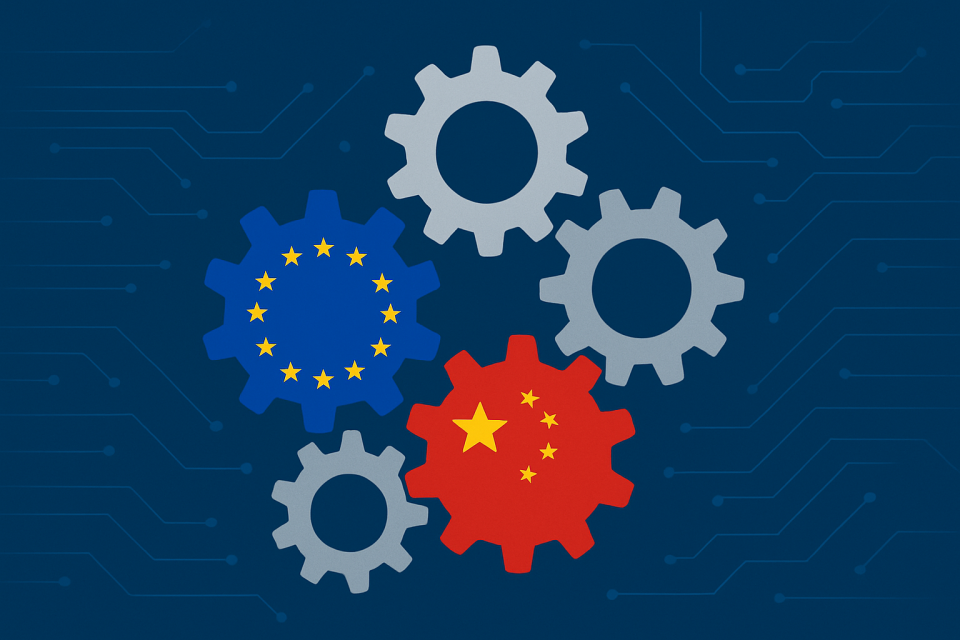
- Europe must see standardisation not as a niche technical field, but as a key site of geopolitical contestation and opportunity
- Europe has historically occupied a central position in international standardisation, but is losing influence over time
- China has aligned industrial champions, state institutions and global diplomacy behind a shared objective: embedding Chinese standards in the global economy of tomorrow
- This report proposes a Blueprint for Action on standardisation along programming, promoting, protecting, partnering and process. These parallel paths should help reorient the stance of the EU and its Member States on standardisation
The Missing Pillar in Rebooting Europe’s Industrial Policy
Standardisation is emerging as a strategic battleground in global technological competition. Once confined to the realm of technical experts and engineers, standard-setting now plays a central role in shaping industrial ecosystems, global trade, interoperability, innovation flows and dependencies embedded in digital infrastructures and applications, ranging from 5G to AI chips and from steel quality to digital public passports. As the geopolitical dimension of technology becomes more pronounced, the ability to influence standards is a key driver to competitiveness and sovereignty.
Europe has historically occupied a central position in international standardisation, starting from the founding of the Geneva-based International Telecommunications Union (ITU) way back in 1865. While the European Standardisation Strategy of 2022 signalled newfound political attention on the topic, the current posture of the EU and its Member States remains out of step with the pace and coordination of other global actors – mainly China. Through an integrated strategy that connects domestic industrial policy and foreign affairs through long-term planning, China has transformed from a reactive standards-taker into a proactive standards-maker since 2018. Initiatives such as ‘China Standards 2035’, in tandem with the Belt and Road Initiative, have enabled China to align industrial champions, state institutions and global diplomacy behind a shared objective: embedding Chinese standards in the global economy of tomorrow.
The European Union and its Member States remain largely reactive. Despite a strong base in research, industry and international engagement, the EU’s 2022 standardisation strategy still lacks key implementation steps. Its approach is fragmented, under-resourced and slow to align technical influence with broader economic and political goals. As a result, Europe risks ceding control over future rule-making processes in areas ranging from digital communications to automotive chips. This report argues that Europe must see standardisation not as a niche technical field, but as a key site of geopolitical contestation and opportunity.