The Northern Sea Route 2030–2040
Three-part series on the Arctic's strategic future
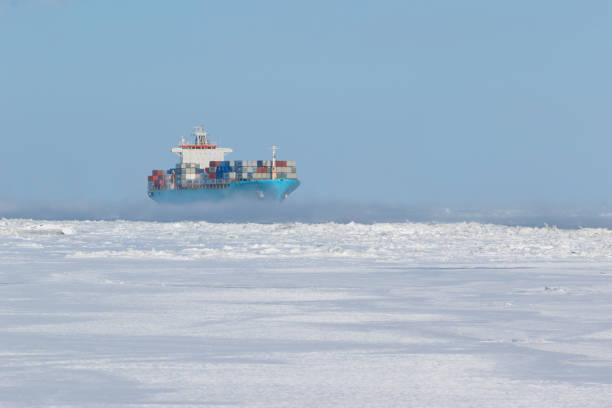
- The Northern Sea Route (NSR) is gaining strategic significance amid growing Arctic competition among Russia, China, the United States and NATO
- The NSR will not reliably rival Suez shipping in 2030–2040, despite greater seasonal access, due to costs, infrastructure and variability
- Absent a fundamental Russia–Europe rapprochement, the NSR will remain a selective corridor focused chiefly on Russian Arctic resource exports
- Russia is developing the NSR as managed access, shaped by legal claims, permits, infrastructure, services and military presence
- The Netherlands should prioritise economic security, navigation rights and allied freedom, not routine NSR use, through EU, NATO and Arctic partners
The Northern Sea Route is often portrayed as a future shortcut between Europe and Asia. Climate change is increasing seasonal accessibility, but physical access does not automatically create a commercially reliable or politically open shipping corridor. For commercial operators, predictability, insurance, infrastructure and schedule stability remain more important than potential distance savings.
At the same time, the NSR has wider geopolitical and legal significance. Russia’s Arctic strategy combines economic development, regulatory control, infrastructure, surveillance and military power. China’s involvement strengthens the route’s relevance for Arctic energy exports and strategic competition, while the United States and NATO are placing greater emphasis on the European Arctic, Greenland, the GIUK gap and the protection of North Atlantic sea lines of communication.
The challenge is not adaptation to a new Arctic shipping highway, but ensuring that Arctic developments are integrated into broader assessments of economic security, allied planning and the evolving security environment in the High North.
This three-part series of policy briefs analyses the NSR in the period 2030–2040 from a Dutch strategic perspective.
The parts:
Cold Waters, Strategic Contestation: The Northern Sea Route in Arctic Power Politics
The Northern Sea Route (NSR) increasingly functions as a strategically significant maritime corridor at the intersection of Arctic change and great-power competition. As sea ice retreats, access to this shipping route and adjacent natural resources is expanding, while Russia is consolidating control through infrastructure, regulation and military capabilities. At the same time, growing interest from China and renewed attention from the United States and NATO are embedding the NSR within a wider geopolitical and military landscape linking the Arctic and the North Atlantic.
For the Netherlands, these developments extend beyond commercial considerations. They affect economic security, supply-chain resilience, the stability of the law of the sea and the
future role of defence, particularly the Royal Netherlands Navy.
Cold Ambitions: The Northern Sea Route between economic reality and strategic leverage.
The Northern Sea Route (NSR) is unlikely to become the Arctic alternative to the Suez Canal often envisioned in public debate during the 2030–2040 period. Although climate change is increasing seasonal accessibility, the route remains constrained by climate variability, limited infrastructure, high operating costs, Russian regulatory control and, above all, a lack of predictability and operational reliability. For commercial operators, reliability and schedule stability generally outweigh the route’s potential distance savings. Its most viable function therefore continues to be as a corridor for Arctic resource exports, particularly oil and gas. Beyond 2050, continued Arctic warming could increase navigability further and create conditions for more substantial Arctic shipping. Such developments remain highly uncertain and fall outside the scope of this assessment. Limited commercial use does not imply limited strategic significance. The NSR provides Russia with an additional export corridor for Arctic resources, strengthens its connectivity to Asian markets and increases its resilience against disruptions affecting other maritime routes. Its significance therefore lies less in the cargo it carries than in the strategic options it creates.
For the Netherlands, the implications are primarily strategic rather than commercial. The route is unlikely to alter trade patterns fundamentally or challenge Rotterdam’s position as Europe’s leading maritime hub. Its relevance lies instead in its implications for economic security, Arctic energy flows, sanctions-sensitive trade and the evolving security environment in the Arctic and North Atlantic.
Cold Passage: The Northern Sea Route between Legal Ambiguity and Strategic Competition
Russia treats the Northern Sea Route (NSR) as both an economic corridor and a strategic instrument. Legal claims, administrative requirements, control over key services and military presence give Moscow significant influence over navigation along its Arctic coast. For foreign states and commercial operators, navigational rights under international law do not automatically translate into usable access. They must weigh the political, operational and logistical costs of operating along a route where Russia retains substantial leverage over permits, infrastructure and support services.
For the Netherlands, the NSR is relevant as a test case for the law of the sea, allied cohesion and freedom of action in the wider European Arctic and North Atlantic. Dutch policy should therefore focus on preserving navigational rights, strengthening legal-operational expertise and supporting allied readiness through the EU, NATO and close cooperation with Arcticallies.
Authors



External authors

Related
See all
China's Arctic strategy in Iceland and Greenland