


UNESCO and the Culture of Peace
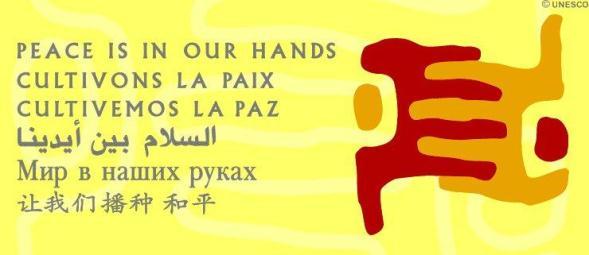
Culture of Peace shows UNESCO both at its best and at its worst. The recognition by the founders of UNESCO that lasting peace cannot be built on political and military measures is UNESCO at its best. It remains of fundamental importance to recognise that lasting peace requires a fundamental different look at matters of war and peace, i.e. a change of culture. But its action programme for a Culture of Peace shows UNESCO at its worst, bombast instead of concrete action.
When UNESCO was founded in the aftermath of the Second World War, the overriding objective was to lay the foundations for lasting peace. The Preamble of UNESCO’s Constitution therefore starts with the recognition “That since wars begin in the minds of men, it is in the minds of men that the defences of peace must be constructed”. It is in the same spirit that the United Nations General Assembly (UNGA) declared 2000 the International Year for the Culture of Peace and 2001-2010 as the International Decade for a Culture of Peace and Non-violence for the Children of the World. When the UN UNGA adopted in 1999 a Declaration and Programme of Action on a Culture of Peace (A/RES/53/243), it pointed to the important role of UNESCO plays in the promotion of a culture of peace.
That explains why Culture of Peace is presented as the first of the two Overarching Objectives of UNESCO. But what is UNESCO actually doing to promote this objective? This paper will answer that question by having a closer look at UNESCO’s action programme for a culture of peace for 2012 and 2013. After noting that this programme is unrealistic and impracticable, suggestions will be made for a different approach.
Related
See allConditions for success: NATO as an example for UNESCO
