The EU's response to Israel's assault on Iran: The justified, the hypocritical and the vacuous
- Israel's and America’s assault on Iran violated international law. By supporting these violations, key European leaders took sides. The effect of their action is that it risks sidelining Germany, France, Great Britain and the EU institutions even further in future nuclear negotiations with Iran. It also exposes European interests to similar aggression and no-holds-barred violence in the future.
- Moreover, by aligning with Israel and the US without having meaningful leverage over Iran, key European countries now lack a viable strategy to prevent proliferation – snapback threats included - just when Israeli and US strikes have increased the risk of Iran actually developing nuclear weapons.
- The recent Israeli assault on Iran also suggests that the EU’s policy, practice and toolkit for engaging in preventive diplomacy need rethinking, especially as the recent NATO summit has pushed the Union’s understanding of security towards having greater military capabilities.
By Hamidreza Azizi and Erwin van Veen
Editor’s introduction
In September 2022, the death of Mahsa Jina Amini marked a major turning point for Iran. The event sparked lengthy nationwide protests across socio-economic classes and population groups whose demands rapidly evolved from discarding controversial hijab regulations to calls for the overthrow the Islamic Republic. The Iranian government responded with repression, killing over 400 protesters in late 2022 and early 2023, according to human rights groups.
The Clingendael blog series ‘Iran in transition‘ explores power dynamics in four critical dimensions that have shaped the country’s transformation since: state-society relations, intra-elite dynamics, the economy, and foreign relations. This blog post explores the position and role of the European Commission, France, Germany and the United Kingdom (as it was part of the ‘E3’ that negotiated the 2015 nuclear deal and still operates together with France and Germany) towards the Israeli assault on Iran from 13 to 24 June 2025.
What was the conflict about?
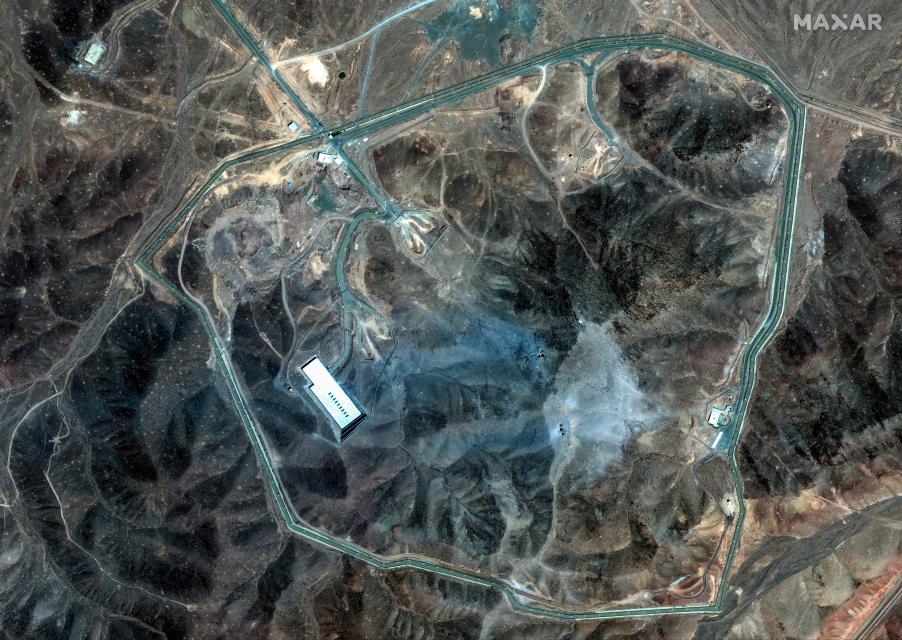
The official Israeli justification of its aerial assault on Iran was the presumed imminence of Iran’s acquisition of a nuclear weapon and the existential threat this would pose to Israel. Hence, operation ‘Rising Lion’ sought to substantially degrade or destroy the main facilities of Iran’s nuclear program and reduce Tehran’s ballistic missile capabilities. The validity of Israel’s justification requires proof that Iran had the intention and was capable of launching a nuclear strike in the very near future. In other words, the threat of Iranian military action would have had to be imminent as well as overwhelming, and a pre-emptive strike would have had to be the only possible course of action to stave off disaster.[i] As it happened, Israel used the censure motion of the International Atomic Energy Agency (IAEA) of 12 June 2025 as casus belli, arguing that Iran was in breach of its obligations under the Non-Proliferation Treaty (NPT) and hence on the cusp of acquiring nuclear weapons. However, Israel’s narrative is incorrect on key points.
To begin with, Iran had not engaged in weaponization, as even the head of the CIA recently testified to Congress. In fact, Iranian policy had been to stop well short of weaponization until Israel struck on 13 June. In other words, no weapon = no immediate threat. The risk of weaponization in the future does not create a right to strike, neither on the basis of Article 51 of the UN Charter (it only authorizes self-defense after foreign attack has already taken place), nor pre-emptively on the basis of international customary law. A right to preventive strikes does not exist in international law.
In addition, it remains a core premise in different strands of nuclear deterrence theory that first strikes are not the point of having nuclear weapons. Instead, it is to prevent large-scale foreign assault against one’s territory. Over the past years, Iran has actually been rather cautious in its military interaction with Israel as the exchanges of fire between Hezbollah and Israel in the first months after 7 October 2023 showed, as well as Tehran’s own missile strike against Israel after its devastating attack on Iran’s consulate in Damascus in April 2024. In other words, there was no proven intention either.
Moreover, Iran was engaged in nuclear talks with the US, which meant there might still have been a diplomatic solution instead of just a military one. Another round of talks had actually been scheduled for the Sunday following the Israeli strike of Friday 13 June. Israel never viewed these talks as credible to begin with, while the US clearly played a double game that probably started between the third and fourth round of talks when Washington pivoted with regards to its acceptance of Iranian domestic uranium enrichment for civilian and research purposes (a right that all signatories of the NPT enjoy). But none of this reduced Iran’s engagement in efforts to find a solution through diplomacy. In other words, a strike was not yet needed as a measure of last resort.
Finally, the IAEA motion that Israel used as casus belli censured Iran for unresolved issues regarding its nuclear program ranging from 1995 to 2018, and criticized Tehran’s recent lack of cooperation. The resolution moreover gave Iran time to address the problems it noted. Remarkably, the same IAEA assessed Iran to be in compliance with its JCPOA obligations between 2015 and May 2019. It was moreover the US that quit the JCPOA in 2018 and reimposed sanctions, not Iran. In other words, the casus belli was a distortion of the censure motion and the recent history of nuclear diplomacy with Iran.
Analysis leaves little room but to conclude that Israel launched a war of aggression against Iran, i.e. a power play that it seeks to disguise as a lawful operation. US defensive support for Israel by deploying major military assets to the Middle East - such as fighter wings, aircraft carrier battle groups and air defense batteries - together with the B-2 bomber run on Fordow on 22 June 2025, show that Israel’s assault was fully coordinated with the US from the beginning.
Reactions by key European leaders
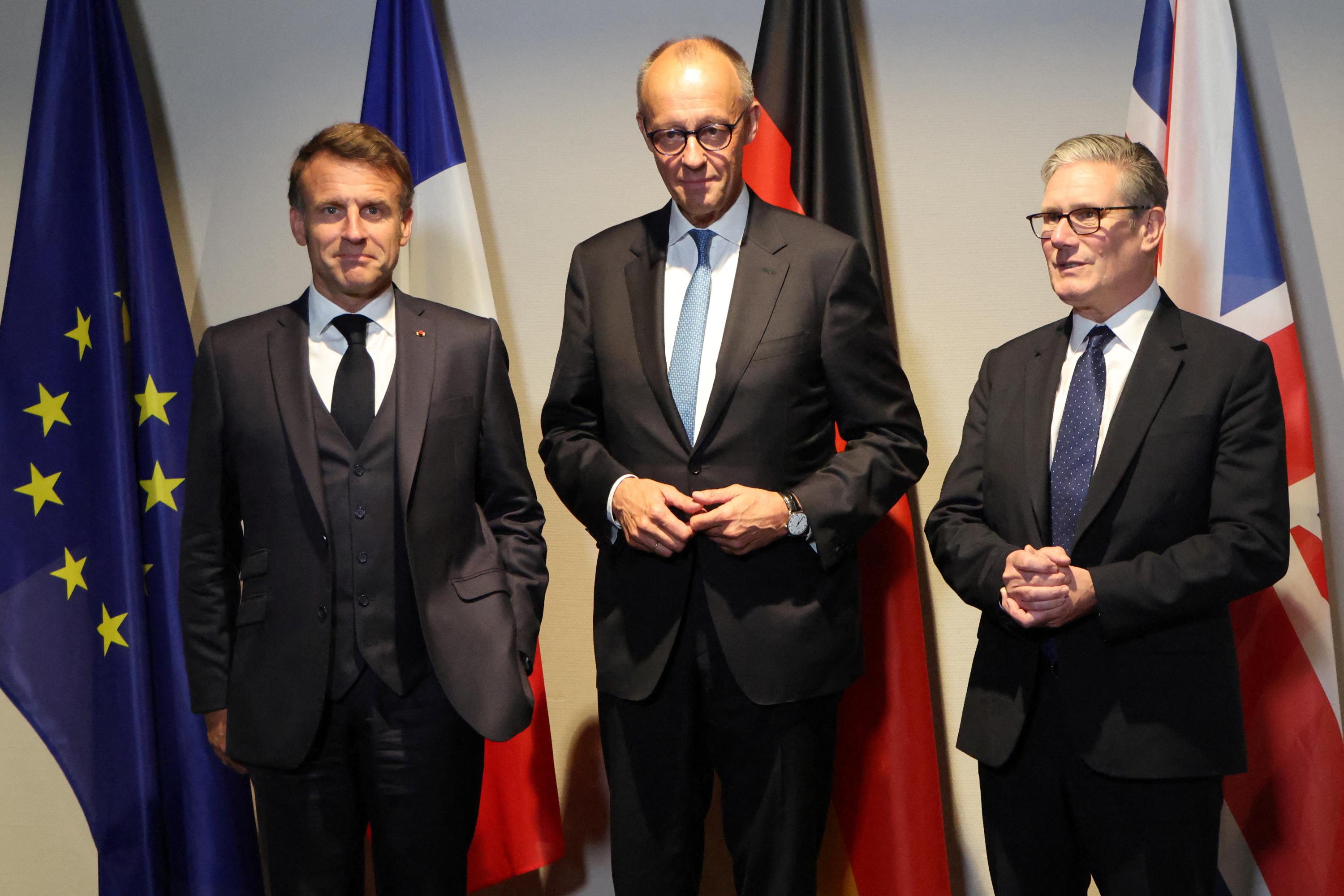
Despite these facts being widely known and publicly available well in advance of the strikes, key European leaders repeated Israel’s justification for its assault without hesitation or major caveats. Germany’s chancellor, Friedrich Merz, expressed his support for Israel’s right to defend itself and later added that Israel was ‘doing the dirty work for all of us’. The French President, Emmanual Macron, similarly underlined Israel’s right to defend itself while also emphasizing the need for dialogue – apparently having missed the fact dialogue had still been ongoing. The entire G7 echoed Israel’s right to defend itself on 17 June. The president of the European Commission, Ursula von der Leyen, even went as far as labelling Iran as the main cause of regional instability while also underlining Israel’s right of self-defense and calling for dialogue. On 23 June, Secretary-General of NATO, Mark Rutte, moreover stated that he did not consider the US strikes on Iran as violating international law. Such statements must in part be considered in light of Europe’s interest in making the NATO summit of 23-26 June a success with a view to Ukraine. Nevertheless, key EU member states chose to let Realpolitik-style considerations override diplomatic and legal norms. Assessing the consequences of this choice requires separating the justifiable, hypocritical and vacuous bits of Europe’s reactions.
The justifiable bits…
Iran pursued a protracted hedging strategy between roughly 2000 and 2015 to reach nuclear threshold status by balancing its obligations under the NPT with pushing the boundary of deviance the international community was prepared to tolerate. Between 2015 and 2019 it stuck to its obligations under the JCPOA that it had agreed to despite US withdrawal in 2018, harsh new sanctions and Europe’s failure to act. After May 2019, Iran restarted its hedging strategy. European countries do not generally seem to be concerned about NPT members reaching nuclear threshold status since Germany, Japan, South Korea and Brazil attained this point years ago without raising any issues. Rather, their concern centered on regional proliferation risks until 2015 and, more recently, on the intentions they ascribe to Iran’s potential nuclear posture, in particular vis-à-vis Israel. But this concern overlooks the key function of nuclear weapons, which is deterrence. It also ignores Iran’s rational-pragmatic security policies of the past decades. Nevertheless, some concern is understandable.
Another area of justifiable European concern with Iran has been the latter’s support for the regime of Bashar al-Assad and its atrocities during the Syrian civil war (2011-2024); its support for Hezbollah since the 1980s that undermines the overall performance of the Lebanese state in addition to posing an unwarranted threat to Israel; as well as Iran’s support for the Houthis of Yemen by means of intelligence and advanced missile technology to disrupt Red Sea shipping and threaten several neighboring countries, including the risk of disrupting global energy markets that are vital to European economic stability. Concerns about Iranian support for Hamas and for armed groups in Iraq are less justifiable as Hamas emerged as a response to Israel’s occupation of the Palestinian territories and had quite strained relations with Iran during much of the Syrian civil war. Iran’s position in Iraq, in turn, is mostly due to America’s military invasion of 2003 that was ‘justified’ by a fabricated claim of Saddam Hussein possessing Weapons of Mass Destruction. It is of interest to recall that Germany and France disagreed with the US assessment at the time and refused to join the invasion.
Moreover, European security services have identified and (mostly) disrupted Iran-linked plots targeting dissidents or Israeli/Jewish assets on Europe soil between 2018–2023, for example in Denmark, France and Germany. This represents another justifiable concern as it poses a risk to domestic law and order. However, arguably the main European concern with Iran, which tilted its attitude over the past years from ‘Iran-is-far-away-lets-be-pragmatic’ to one of geopolitical enmity, was Tehran’s decision to supply Shahed drones and technology to Russia for use in its war against Ukraine. Given that Europe considers the war in Ukraine as a threat to its own security and prosperity, the impact of this move has been significant.
The hypocritical bits…
Beyond these justifiable bits of European reactions to Israeli and American strikes on Iran, they also contain substantial bits of hypocrisy. One is the preceding failure of the E3 (France, Germany and the UK) and the European External Action Service (EEAS) to uphold their obligations under the nuclear deal (JCPOA) after the US quit the arrangement and reimposed sanctions in May 2018. The E3’s commitment was to enable FDI and trade with Iran by re-integrating it into the global economy. However, instead of setting up a European scheme to purchase Iranian oil outside US reach, getting INSTEX off the ground quickly with comprehensive coverage and/or providing stronger incentives for European companies with limited expose in the US to remain engaged in Iran through guarantees, the EU accepted Iran’s disconnect from SWIFT, sat on its hands and essentially refused to engage in a diplomatic and economic fight with the US. Yet, 2018-2019 was a moment of principle in which the EU could presumably have rescued the nuclear deal. Instead, it chose not to and disregarded its obligations. Today, it applauds Israeli and American attacks.
Another element of European hypocrisy has been its consistent refusal to recognize Iran’s right to defend itself, for example when its consulate in Damascus was attacked, its scientists were covertly assassinated and when it was recently attacked by Israel and the US without basis in international law. In brief, key European countries grant Israel a right of self-defense when it is not applicable while denying a similar right to Iran when it is actually applicable. In the context of the stark – and justified – European condemnation of Russia’s war of aggression against Ukraine, this denial compounds another major European violation of international law, namely to keep aiding and abetting Israeli atrocities in Gaza (e.g., Germany, the UK, the Netherlands and the European Commission). In addition to further undermining the international legal order, European support for the recent Israeli and American strikes states against Iran have also indirectly legitimized preventive war doctrines.
Similar hypocrisy can be identified at the micro-level when European leaders justly condemned Iran’s strike on the Soroka Medical Center in Beersheba (Israel), but remained silent in the case of an equally condemnable Israeli strike on the Farabi hospital in Kermanshah (Iran). Such difference in its responses damages Europe among the Iranian public as well, not just its government, as it sees EU governments condemning the Iranian government for killing of hundreds of protestors in 2022-2023 – rightly so given Iran’s obligations under the ICCPR - but condoning Israel doing the same through unlawful air strikes.
The vacuous bits…
The larger strategic question hanging over Europe’s cheerleading of Israel and the US is why and how European leaders expect Iran to return to the negotiation table in good faith when Israel’s and America’s strikes duplicitously interrupted ongoing mediation efforts to get to a new deal without a word of criticism about the ‘might makes right’ logic of the Israeli/US action. US duplicity during the recent Iran-US talks may also strengthen the view in Tehran that it is now legitimate to covertly develop nuclear weapons under the guise of renewed negotiations, or even after signing a new deal. It is true that the condonement of Israeli and US strikes by key European states is consistent with the E3’s post-2019 pattern of implicitly following US policy, but this is not a strategy for achieving its original aim of preventing regional proliferation. Today, the outcomes of the strikes remain uncertain, Iran has major incentives to go nuclear and it probably retains the better part or all of the 400 kg of highly enriched uranium. It is not clear how Israel or the US would prevent it from doing so short of a ground invasion. Europe has far less leverage.
The main leverage the E3 thinks it does have, is to threaten the re-imposition of sanctions via the JCPOA-mandated “snapback” mechanism. This is seen as a way to get Iran to agree to zero domestic uranium enrichment, thus foregoing civilian and research benefits. Apart from ignoring the irony that Iran complied with the nuclear deal longer than the E3, Tehran has also threatened that a snapback referral will see it exit the Non-Proliferation Treaty. The Iranian parliament has already ratified a bill that suspends cooperation with the IAEA until the agency can vouch for the safety of Iran’s nuclear facilities from further assault. Moreover, why would Iran surrender its nuclear program due to the threat of snapback when it refused to do so after twelve days of war?
Hence, the strategic question is how the E3 would respond to such a move and how this relates to its main objective of preventing regional proliferation. Beyond snapback, the E3 has no further leverage and neither does it offer Iran any positive incentives to accommodate its policy objectives. The E3 could for example offer EU-specific sanction relief. All this makes a non-committal or negative Iranian response likely. Iranian Foreign Minister Abbas Araghchi already indicated that triggering snapback will end Europe’s role in nuclear diplomacy with Iran.
Conclusion
It is clear that key European states have chosen to follow Israel and the US in their ‘might is right’ based approach to curtailing Iran’s nuclear program. While some of Europe’s concerns about Iran are justifiable, others are hypocritical or even vacuous. This mix creates three risks going forward.
At the strategic level, the E3 have made it clear to the world that international law is valid for everyone except for Israel, the US and themselves. This sets a risky precedent for the nature of future violence that may be brought against the E3 by any enemies – from Russia and China to radical extremists. Such risk encompasses their companies, diplomatic staff and service(wo)men in the Middle East.
At the policy level, key European states have now clarified their position vis-à-vis Iran’s nuclear program, but they lack a meaningful strategy to realize it while having burned their credibility and relations with Tehran. They are event-takers in case Israel and the US decide to restart bombing Iran and will have to accept negative externalities resulting from such a scenario.
At the tactical level, the E3 and EU High representative missed an opportunity by not leveraging their meeting with the Iranian foreign minister Araghchi in Geneva on 20 June 2025 to convince the US to forego its strikes against Fordow, Natanz and Esfahan three days later. Just when Iran sought to talk under conditions of duress, the US slammed the door shut while the E3 watched. Perhaps it is too much to expect, but the E3’s greater proximity to any regional conflagration might have occasioned more effective and more serious preventive diplomacy.
[i] International customary law established three principles for legitimate pre-emptive self-defense: imminence, necessity and proportionality on the basis of the 1837 Caroline Affair and the 1842 Webster-Ashburton agreement that have been in force ever since. In more elaborated form: the foreign attack needs to be anticipated in the very near future, it must be overwhelming in nature and it cannot be averted by other means than a military response. The response must also be commensurate to the scale and type of the anticipated attack.