


Managed disorder: The hard road to a modest peace with Russia after Ukraine
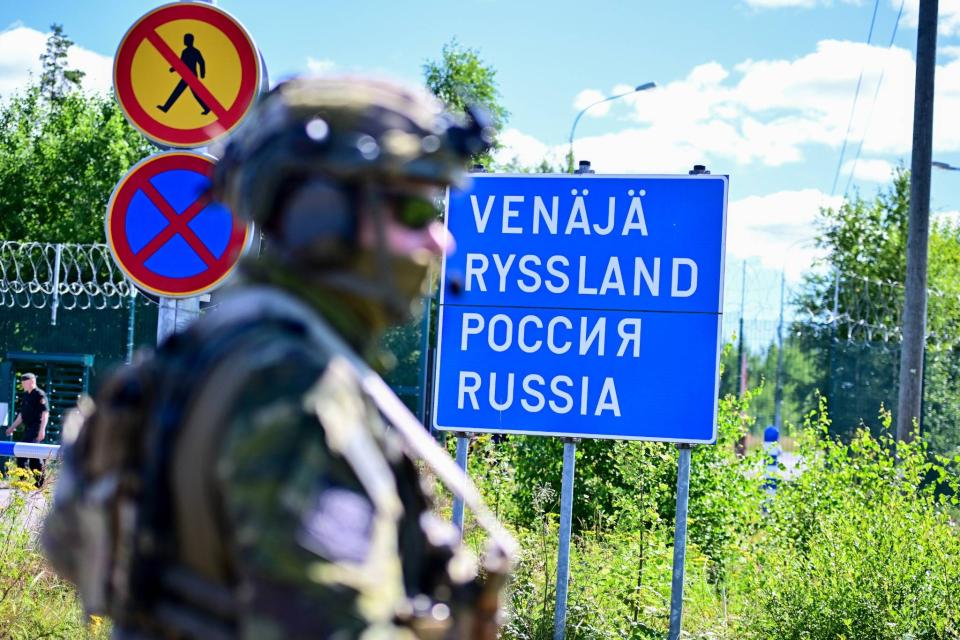
- The war in Ukraine will eventually end, but probably in a ceasefire that leaves Russia, Europe and America locked in open-ended, low-grade, chaotic confrontation.
- Europe has the greatest stake. It is closest to the conflict and would carry much of the cost should it escalate. America will still have an interest in maintaining stability, but other, more pressing priorities will likely come first.
- American and European policymakers should keep that confrontation stable enough to prevent it from tipping into another war. They should aim for a state of “managed disorder”, where rivalry continues but becomes less likely to escalate.
- They can achieve managed disorder through a staged framework that combines credible deterrence, compartmentalised cooperation and conditional, reversible incentives.
- To succeed, the framework will need to accommodate divisions between America and Europe, and within Europe itself. It will also need to give Ukraine, Russia, China and other players in the region clear incentives to comply with the framework, and clear costs for defecting from it.
By Jeremy Shapiro (European Council on Foreign Relations) with contributions by Samuel Charap (RAND), Bob Deen (Clingendael Institute), Hiski Haukkala (Finnish Institute of International Affairs), Ivan Krastev (Institute for Human Sciences, Vienna), Hanna Notte (James Martin Center for Nonproliferation Studies, Berlin), and Jim O’Brien (European Council on Foreign Relations)
After the ceasefire
It is 2028. The war in Ukraine ended in an uneasy ceasefire eighteen months ago. Russian forces remain in occupied territories, and Ukrainian forces hold defensive positions, armed with American weapons and European money. The ceasefire talks failed to establish either a buffer zone or an observer mission because the parties could not agree on the terms. Europeans have given vaguely formulated “security guarantees” with an ill-defined American backstop, but NATO has no clear presence near the contact line.
One morning, Ukrainian intelligence detects Russian armoured movements towards the ceasefire line. The government in Kyiv claims Russia is preparing for invasion; officials in Moscow insist it is routine repositioning. Within 48 hours, shooting starts and each side blames the other. Russian forces cross the ceasefire line at three points. Calls go out to European capitals and Washington, but no one agrees on what the intelligence shows. The security guarantors reach for the ceasefire documents and find they say different things depending on who is reading them.
Nobody knows what to do—whether NATO should respond militarily, whether European states should act alone, or whether America, focused since 2027 on a series of interventions in Latin America, should engage at all. Nobody has agreed what the rules are, what triggers intervention, what constitutes a proportionate response or who decides.
The outcome of this scenario is chaos and escalation driven by uncertainty and domestic political pressure. These are the conditions that precede catastrophic wars. The goal of this paper is to help prevent that scenario or, more precisely, to ensure clear answers exist before the shooting starts. The post-war environment in Europe will be unstable in the near term and perhaps for a generation or more because the war will almost certainly end without a genuine peace settlement that resolves key questions of sovereignty, security, power or identity. The wounds are too deep and the sides too evenly matched to agree on a comprehensive peace.
This is not an unusual situation after inconclusive wars. To adapt the historian Michael Howard’s insight, the end of fighting does not itself create peace. Between war and peace lies a large and dangerous space of armistices, frozen conflicts and unstable political settlements. The task for American and European policymakers will be to build enough structure around that dangerous space to prevent it from producing the next war.
America and Europe can do this by transitioning from chaotic confrontation with Russia to “managed disorder”: a state in which rivalry remains, but becomes less vulnerable to accident, panic and domestic political pressure.
To achieve this state of managed disorder, this paper proposes a staged framework built on verification, certification and conditional incentives. The framework would temporarily freeze facts on the ground, but not legitimise them, and give the main actors reason to adhere to agreements. This would help American and European policymakers maintain stability in Europe, defend Ukraine and deter further revisionism while reducing the risk of escalation. It would also give Russia a sense of safety and a seat at the table to discuss European security. Hostility would persist but it would be channelled into rules, limitations and predictable behaviour.
Managed disorder does not imply legitimising territorial conquest or rewarding aggression. It also falls well short of a durable settlement. Importantly, it does not require “trust”, a commodity that is generally lacking in international affairs and particularly in relations with Russia.
However, building such a system will be politically hard. Russia may prefer chaos to managed disorder. Ukraine may reject any arrangement that appears to freeze partition. European states will disagree over deterrence, sanctions, reconstruction, enlargement and engagement with Moscow, and the US may remain indispensable but unreliable. But these are not objections to managed disorder; they are the reasons it is needed. Its purpose is precisely to manage these political pressures through rules, incentives and procedures before a crisis makes improvisation the only option.
This paper traces the hard road to the modest achievement of managed disorder. It first outlines the sources of disorder after the war in Ukraine and why the key players might find managed disorder preferable to the alternatives. It then describes a staged plan to get from a ceasefire in Ukraine to a hopeful but realistic stability. The plan accepts that the future is contingent and will certainly surprise us. It therefore seeks to adapt to circumstances even as it keeps in mind where we want to go and what we want to avoid.
Authors

External authors

Related
See all
Assessing the strength and stability of the Russian regime
