


Intro
In our constantly globalising world, it can be challenging to reach effective intercultural communication with colleagues or partners from different cultural backgrounds. This course combines awareness and skills to understand and improve the influence of culture on how you act, think, and communicate with others.
What will you learn?
- Understand how cultural patterns influence communication
- Increase awareness of your own cultural perspective and bias
- Acquire competences that improve communication across cultural barriers
Is this course for you?
This course is designed for professionals working in international or multi-organisational contexts who want to enhance their communication skills and increase their effectiveness in professional settings. Participants in this course are for example:
• Professionals in multilateral environments
• Expatriates adapting to a new cultural setting
• Individuals collaborating with international business partners
Previous participants
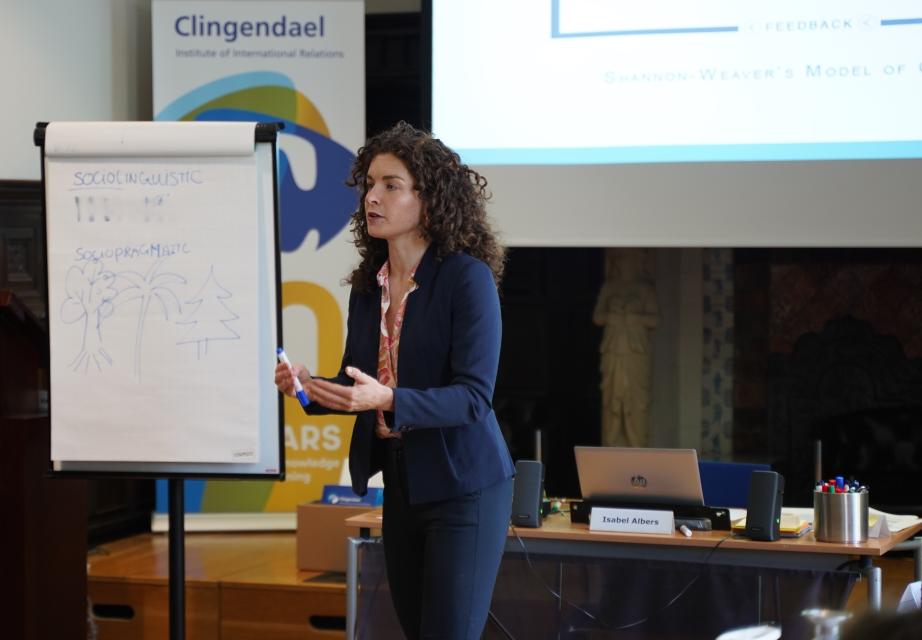
Previous participants of this training programme work in environments ranging from technical companies to ministries, and from global academia to NGOs. They bring unique experiences to the training room, which offer a good basis for valuable discussion. At Clingendael, learning extends beyond the trainers—participants also gain insights from one another.
Which methods will be used?
We have developed a theoretical framework which we use to form all of our intercultural communication trainings – PACIS Model of Intercultural Competence. We believe that intercultural awareness is achieved when knowledge of behavioural pitfalls, cultural clusters, processes of interaction and increased sensitivity are combined, as visualised in the PACIS Model of Intercultural Competence.
Modules
On day 1, we’ll focus on
• Pitfalls: behaviours and perspectives that decrease intercultural efficacy
• Awareness: awareness of how culture conditions our behaviour and interpretations of others
On day 2, we’ll focus on
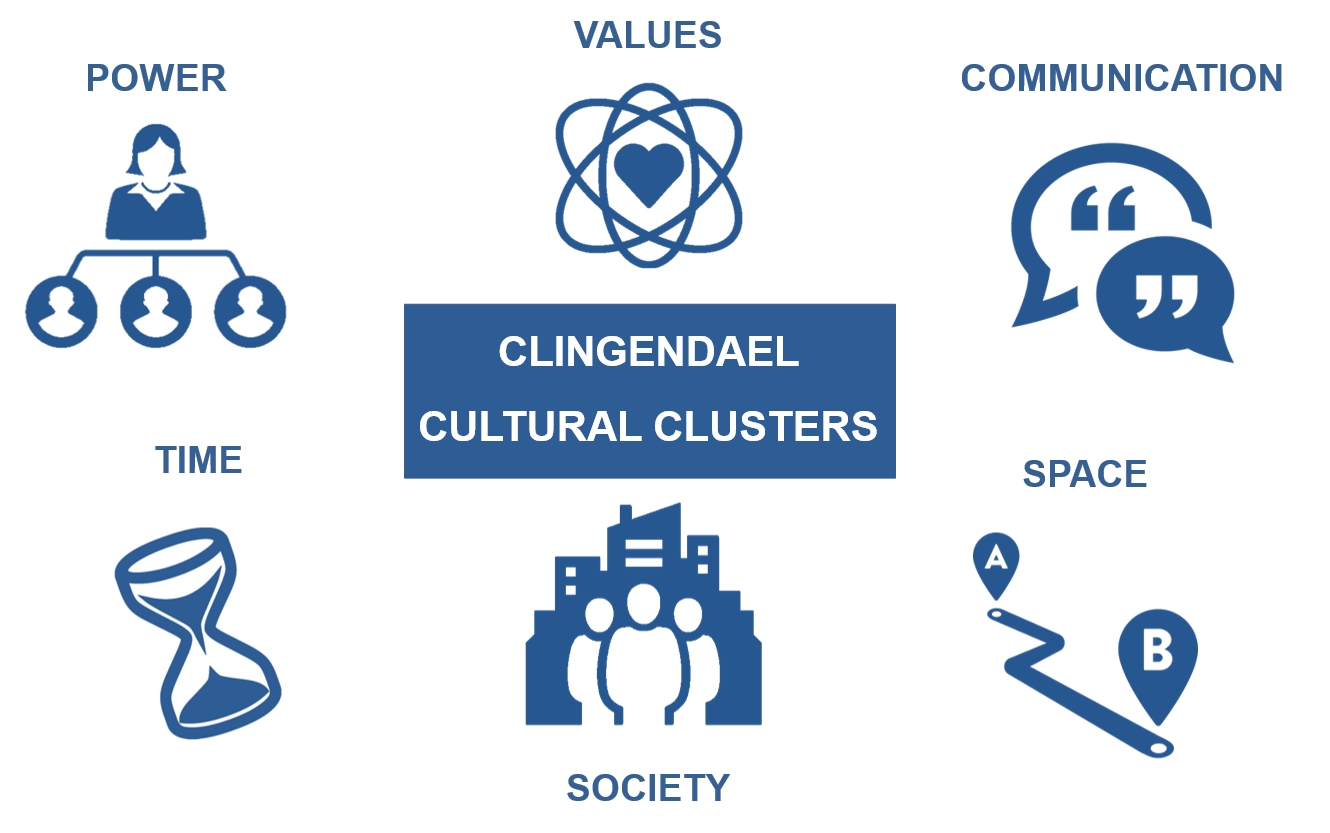
• Clusters: We have grouped various research findings to explain behavioural patterns influenced by culture.
• Interaction: insight into the influence of cultural conditioning in processes of social interaction
And on day 3, we’ll bring everything together in key skills to ensure effective intercultural sensitivity
• Sensitivity: Recognising cultural sensitivities and ability to sensibly adapt communication and behaviour to the context
Download our Guide: Navigate effectively between different cultural contexts. Find the Dutch translation here.
The general terms and conditions apply.




By the numbers

"If I encounter an unfamiliar culture tomorrow, I now feel better equipped to engage in meaningful conversations."

''The course does not simply focus on established cultural principles. Cultures are fluid, this training teaches you to move between them''

''Sometimes I can be too decisive in my proactivity. I have learned, particularly in role-playing, to ask questions in a multilateral environment and gently probe how someone is in the game.''

''I now find it easier to find the root cause of miscommunication''

"Inspiring days at the Clingendael Institute and grateful for taking the Intercultural Communication course in order to improve my intercultural knowledge, awareness and skill-set."
How our alumni put their skills into practice




What else you need to know
